
“This is the fifth year we’ve been testing adaptive multi-paddock (AMP) grazing. We’ve experienced dry and wet years, and the system performs well in both conditions. I find it more resilient than other types of grazing”, says Didier Touillon, a farmer raising Charolais cattle in Palinges, Saône-et-Loire.
Yet when the farmer discovers this grazing, he is far from enthusiastic. “As an administrator of my cooperative, I was approached to take part in the Paturond project, coordinated by McDonald’s and Pilgrim’s Europe Orléans, says Didier Touillon. I had a choice of grazing method: continuous, rotational or adaptive multipaddock. I chose AMP because, if I was going to do it, I might as well try something new.”
However, the farmer does not know exactly what he is committing to: the goal is to move the animals into a paddock at the stem elongation–heading stage, with a grass height greater than 13 cm, leave them there for one to five days, then move them to another paddock, leaving 50% of the biomass standing, with a grass height greater than 7 cm, and ensuring a minimum rest period of 40 days, without mowing the rejected forage.
“I wasn’t enthusiastic at all, and neither was my employee, the farmer recalls. We try to have the animals graze the grass at the optimal stage and avoid wasting any. AMP is the exact opposite, so it does raise questions! I had serious concerns about the animals’ growth.»
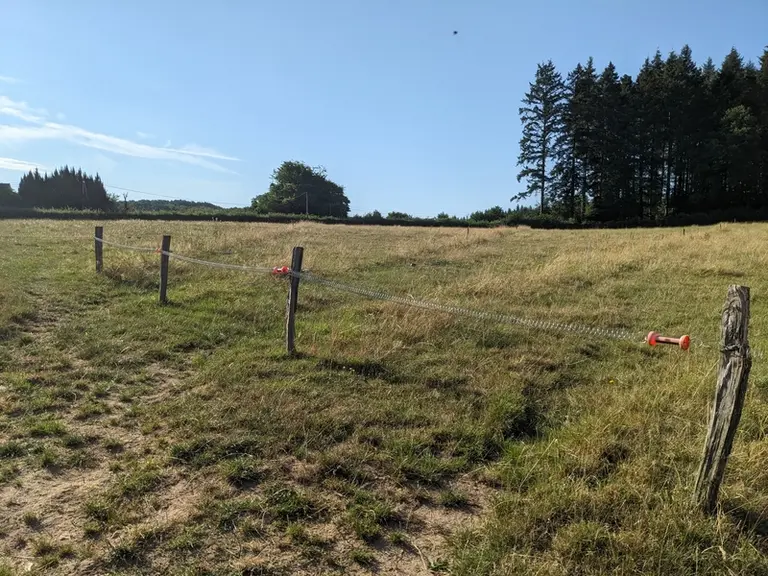
Didier Touillon is implementing adaptive multi-paddock grazing on a group of 12 heifers, and a plot of 4 ha, divided into 17 plots of approximately 20 ares. “We discussed the arrangements with Robin Russias, who coordinates the project: which plot, the number of animals, and how to divide the paddocks. My system was somewhere between free grazing and simple rotational grazing; I wanted management to remain as simple as possible, with paddocks and fixed watering points.” In the end, the paddocks are laid out so that only a handful of gates need to be opened and another handful closed to move the heifers. For the first four years, the animals drank directly from a watercourse; an installation was built in the fifth year.
“Not grazing low is very difficult”
Committed to a research project with technical and financial support, the farmer sets about following the experimental protocol. He measures the entry and exit heights with the herbometer, “it was very hard not to graze low. Instinctively, I would regularly have left the animals for one more day”; he does not cut the rejected vegetation, even at the end of the season. “For three years, I kept thinking: what a waste! When the animals leave the plot, there is a lot of material on the ground; it is frightening. Without the framework of the research project, I would not have dared to continue,” the farmer admits.
However, time passes, and Didier Touillon finds advantages in the AMP grazing method. “With some perspective, it’s a resilient system that improves productivity! The initial results also point to greater carbon storage. The soil is protected, and the pasture regrows well beneath the remaining biomass. I gain days without having to provide supplemental feed. Last year, this was the only group I didn’t provide supplemental feed to, and this year, I still have some standing forage,while on the other plots, I will soon start feeding forage,” he explained on 25 June 2026. The growth of the heifers in the AMP grazing group is also equivalent to that of the other heifers. “With a higher stocking rate on the AMP plots, because, unlike the other groups, I don’t expand the grazed areas during the season. Also, if I don’t feed forage, this avoids a dietary transition,” the farmer explains.
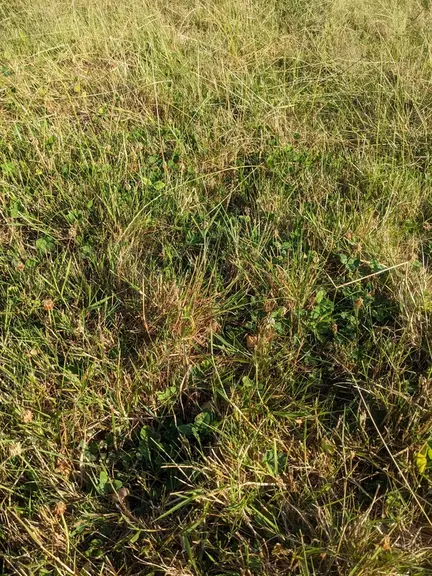
In a wet year, Didier Touillon has not noticed any particular issues related to trampling. “It’s true that 12 heifers on 20 ares trample a lot, but it’s for a maximum of two days, followed by a long rest period, and the pasture recovers well,”he explains.
Less foxtail, thistle, and dock
Another advantage is that it takes rather less work compared with other grazing systems. “There was only a peak in workload in the first year, of around forty hours, to set up the system. Since then, it has been less time-consuming: no pasture maintenance, less forage, the fences are five years old and are holding up well. We don’t mow under the wires”, says Didier Touillon.
Stay up to date in real time!
Follow topics, legislative projects, companies, and public figures to be notified as soon as we publish an article.
The farmer was also concerned that adaptive multi-paddock grazing might worsen a problem of foxtail and thistle already present. In the end, he observes the opposite instead. “The thistles have virtually disappeared, the docks have decreased, and so has the foxtail. With a high concentration of animals on a small area, I think the heifers have no choice but to eat the foxtail,” he explains. Overall, the pasture also has less bare soil, more diversity, and no large areas of rejected vegetation to manage. Previously, the farmer used to mow 2 ha every year.
Didier Touillon also highlights how calm the animals are when managed under AMP grazing. “The heifers are docile, and the time spent putting up fences and opening paddocks is made up for later when handling them,” he estimates.
These various benefits prompted him to rethink how he manages grazing on other plots.“I keep more standing forage, extend the rest periods, and increase the grass height at entry and exit, the livestock farmer says. I’m considering reducing the size of some rotational grazing plots, going from 1 ha to 0,5 ha.” Didier Touillon now wants to apply some AMP principles to cows with calves at foot. However, he remains cautious: “I think we’ll still need to turn the animals out in a large field first, so the young ones can let off steam, and then move them to smaller paddocks; otherwise, I’m afraid they’ll wreck everything, the farmer tempers. I’m also waiting to see how the calves’ growth develops.”
Access to water: a limiting factor in expanding AMP
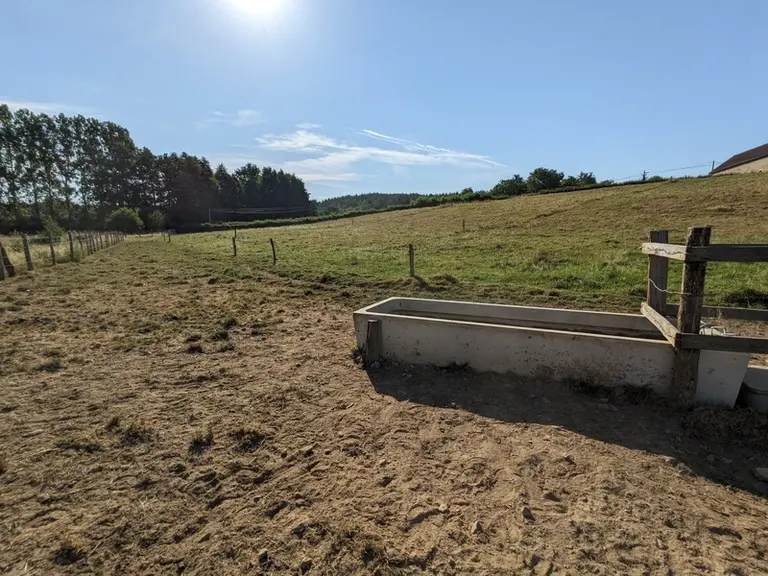
The plots dedicated to adaptive multipaddock grazing are organized around two fixed water points, with lanes serving several plots. “Neither my employee nor I could imagine moving electric fences or water troughs almost every day,” Didier Touillon says. The farmer believes that water availability could hinder the development of this practice on other areas of his farm: “I’m thinking in particular of a 8-ha plot, with its water point in one corner. I can’t really see how to set up 20-are paddocks there while keeping a suitable distance so that the animals can access the water.”
Farm profile
SCEA Touillon
190 calvings in the Charolais breed
Average age at calving: 26 months
101,6% calving success rate
160 ha of grass
2 UTH: Didier Touillon and Thibaut Boussand, employee