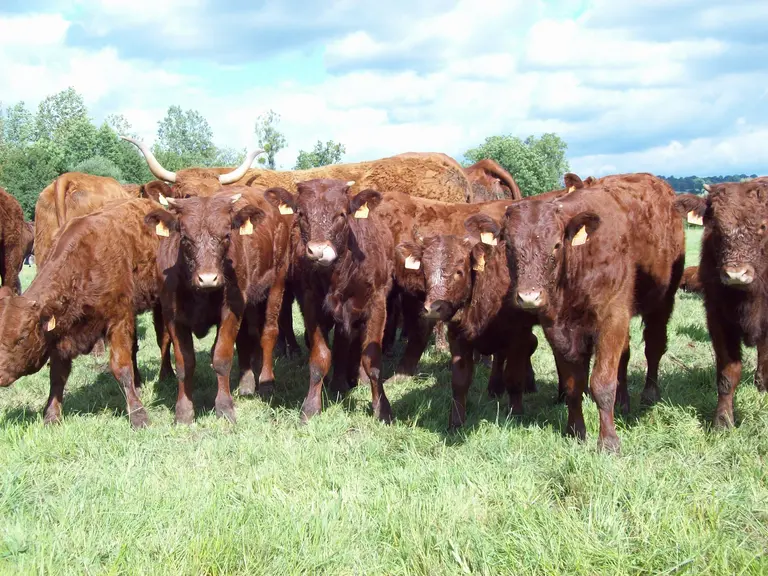
Young cattle: 15 to 20 ct€ less per week
Already beginning last May, followed by summer stabilization, the decline in young cattle price has resumed strongly in September. “For the past three weeks, we’ve been losing 15 to 20 cents per week!”, laments Paul Soubrier,
farmer in Saint-Martin-sous-Vigouroux and head of the meat group of the Jeunes agriculteurs du Cantal. A decline inversely proportional to that of farm input costs: fuel, fertilizers, forage... “Everything is exploding — including feed, which has risen by 35 € per tonne regardless of supplier”, illustrates the young union representative.
On this issue too Young Cattle Price: Enough of This Heist
Guilty Speculation
The drought, which has deprived animals of grass for nearly three months, has further aggravated the situation: “We are forced to draw on our winter stocks, which are already significantly depleted, and many have had to purchase
forage to hope to get through the winter”, he recalls. Forage whose prices have continued to rise, driven by speculation, provoking outrage among the Jeunes agriculteurs. “Low-quality hay is being sold at 2023, even 2022, per tonne at exorbitant prices! We must end this infernal speculation and appeal to
agricultural solidarity
”, urges Paul Soubrier. To the solidarity of the profession and to the responsibility of the supply chain: “Buyers, operators, exporters, finishers... the entire supply chain must recognize the seriousness of the situation instead of profiting from it!”, stresses the JA representative. Warning that this price drop will not be without consequence: decapitalization
— which last year’s price recovery had halted — has returned, driven jointly by this price collapse and forage shortages. Stay informed in real time!
Follow topics, legislative projects, companies, and personalities to be notified as soon as we publish an article.
Also read Have you had to de-capitalize due to climatic hazards?
Downstream losing strategy
"Farmers are forced to send many animals to slaughter — both for life and for death — including still-light bullocks," observes the young farmer. Because the math is simple: "It’s not worth keeping them if it means losing even more money feeding them." With certainty, all these de-capitalized cows will not return, and just as many bullocks will be missing from a market that remains in demand. "They’re sawing off the branch they’re sitting on," summarizes Paul Soubrier.
And he warns: the situation is far too serious, and distress and anxiety far too acute, to continue tolerating the fire-sale of bullocks. "If nothing changes very quickly, we will be forced to take action. We would prefer that sector stakeholders wake up and react on their own, without having to resort to blockades of exporters, markets..."