
|
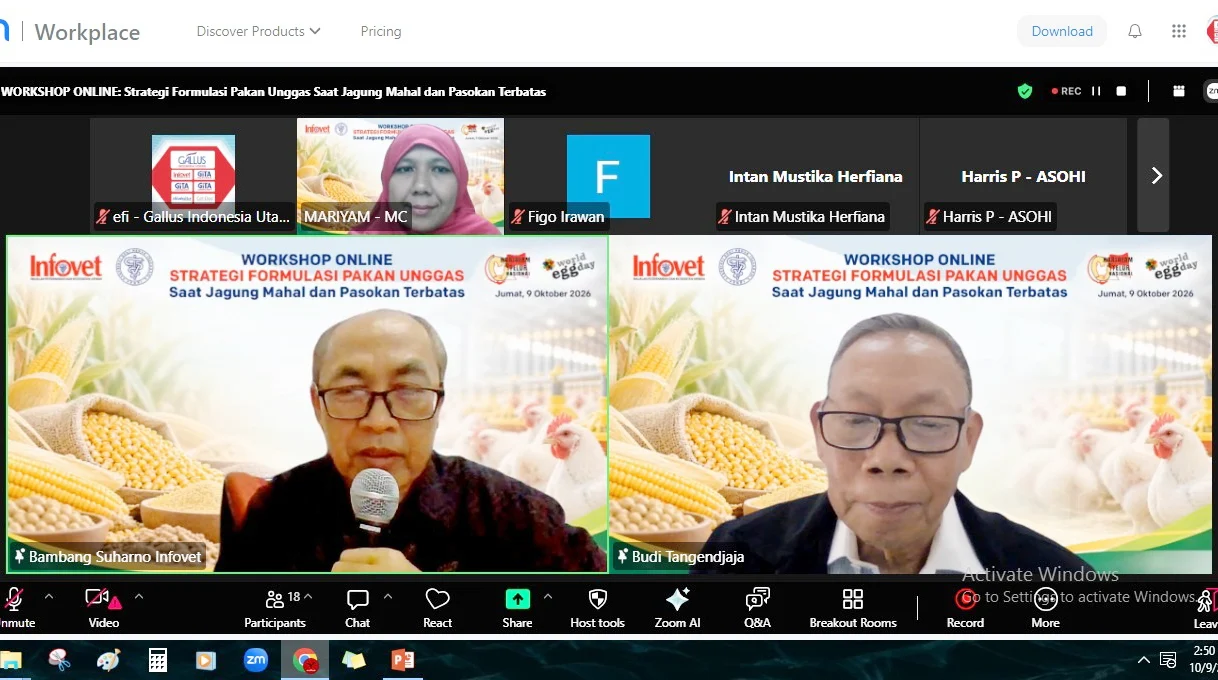
| Bambang Suharno (left) and Prof Budi Tangendjaja in a feed formulation webinar. (Photos: Infovet documentation) |
The poultry farming industry is once again facing a serious challenge as corn prices soar and supplies available on the market remain limited. In response to this challenge, to mark National Chicken and Egg Day (HATN) and World Egg Day (WED) 2026, Infovet Magazine held an Online Workshop titled “Poultry Feed Formulation Strategies When Corn Is Expensive and Supplies Are Limited”, Friday (9/10/2026).
The event featured a poultry nutrition consultant, Prof Dr Ir Budi Tangendjaja MSc MAppl, who is also Chair of the Expert Council of the Indonesian Veterinary Medicines Association (ASOHI), as the main speaker. The event was also attended and officially opened by Gallus President Director and Infovet Editor-in-Chief Bambang Suharno, as well as ASOHI Chairman Drh Akhmad Harris Priyadi.
In his opening remarks, Bambang emphasized that feed is the largest cost component in poultry farming. As corn prices continue to rise and supplies dwindle, industry players are required not only to seek available raw materials, but also to devise efficient formulations.
“The challenge facing the industry is not only how to obtain raw materials, but also how to formulate feed that remains efficient, meets livestock nutritional requirements, and maintains production performance,” Bambang said.
He further emphasized the importance of mastering substitution strategies and making use of alternative raw materials. With a sound understanding of nutritional balance, farmers can reduce production costs without sacrificing productivity or poultry performance.
On that occasion, Prof Budi discussed various tactical solutions for feed formulators and livestock industry players. He outlined the potential use of raw materials to replace corn, including barley which can serve as an alternative energy source with adequate nutritional content, and sorghum grain, which can be relied upon to meet the carbohydrate requirements of feed rations.
There are also cassava-derived products to meet energy requirements, or the use of dried distiller's grains with solubles (DDGS), which is a nutrient-rich by-product with potential for use in poultry rations.
Prof Budi explained that these ingredients remain nutritionally suitable, containing carbohydrates, protein, fat, vitamins, and minerals essential for the growth and health of poultry.
In addition, in his presentation, he also outlined a simulation for calculating feed raw materials and their prices to help farmers, companies, and self-mixing formulate feed cost-effectively and anticipate fluctuations in raw material prices.
|
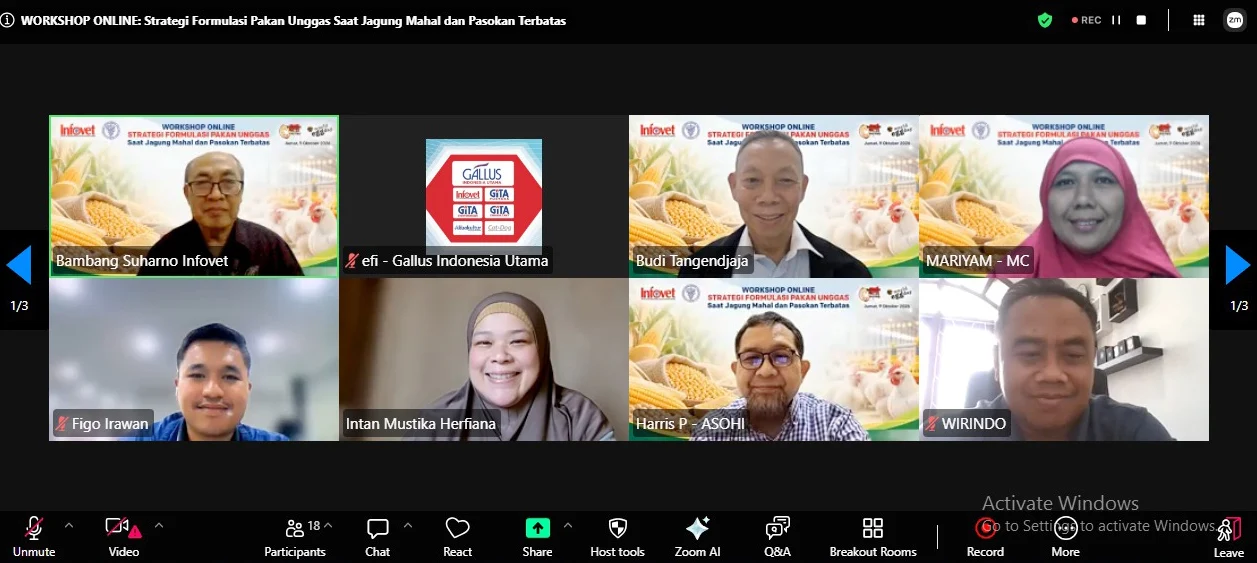
| Group photo after the webinar. |
As a follow-up to online workshop, Infovet Magazine also offers companies and business groups a broad opportunity to deepen their expertise in this field. Infovet provides intensive training programs as well as in-house training specially designed for nutrition teams, formulation teams, production departments, and companies’ technical teams.
Training materials and delivery methods can be flexibly adapted to specific needs in the field. This initiative is expected to have a long-term impact on improving human resource competencies in the national livestock sector and maintaining the stability of Indonesia’s poultry industry. (RBS)