
one of the biggest problems during corn harvesting: a lack of up-to-date and accurate information about the degree of kernel processing. Such shortcomings can lead to poorer lactation results.
The importance of the CSPS indicator and the difficulties of traditional measurement
The CSPS (Corn Silage Processing Score) indicates the percentage of corn kernels processed into particles smaller than 4,75 mm. A high degree of processing makes starch easier for cows to digest in the rumen, directly affecting milk production. The optimal CSPS level should be around 70 percent. However, scientific studies and analyses by industry institutes indicate that only around 60 percent of the silage tested meets the appropriate processing parameters.
Traditional assessment of the degree of kernel damage in the field carries a high risk of error. During the corn harvest, farmers usually assess the degree of kernel processing visually. Taking material from the transport trailer (most often near the ramps) means that the samples include the heaviest and coarsest fractions rolling down the pile, including the least crushed kernels.
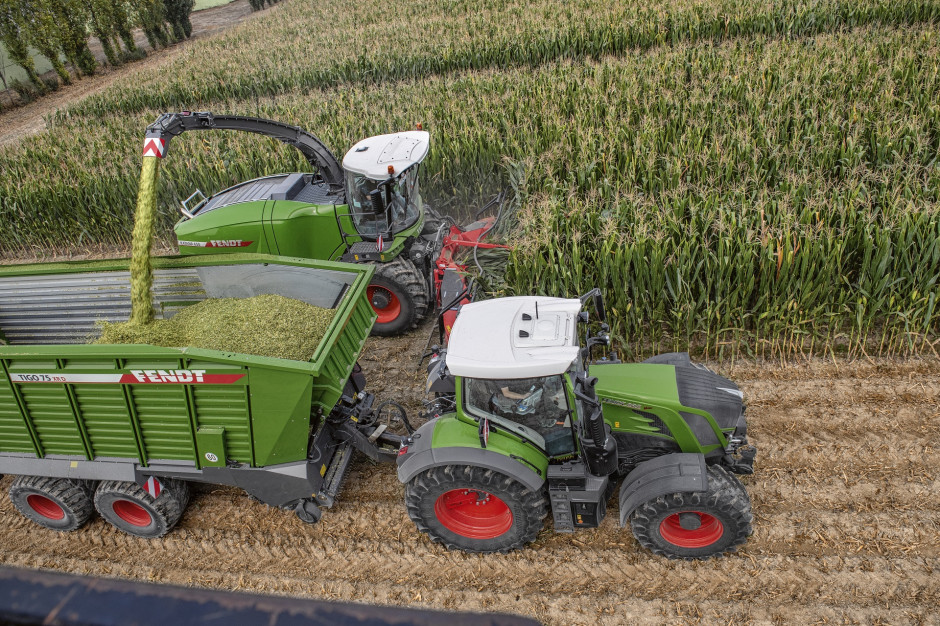
So what is the solution to this problem? Fendt engineers considered this question and proposed a solution.
ForageQualityCam system, i.e. real-time monitoring using AI
The answer to these challenges is the ForageQualityCam system, developed by Fendt and awarded a silver medal at Agritechnica.
A camera recording 13 frames per second has been installed on the discharge chute of the Katana forage harvester. The captured material is sent to a separate control unit that also serves as a display. Dedicated artificial intelligence (AI) algorithms analyze the images and continuously calculate the current CSPS index.
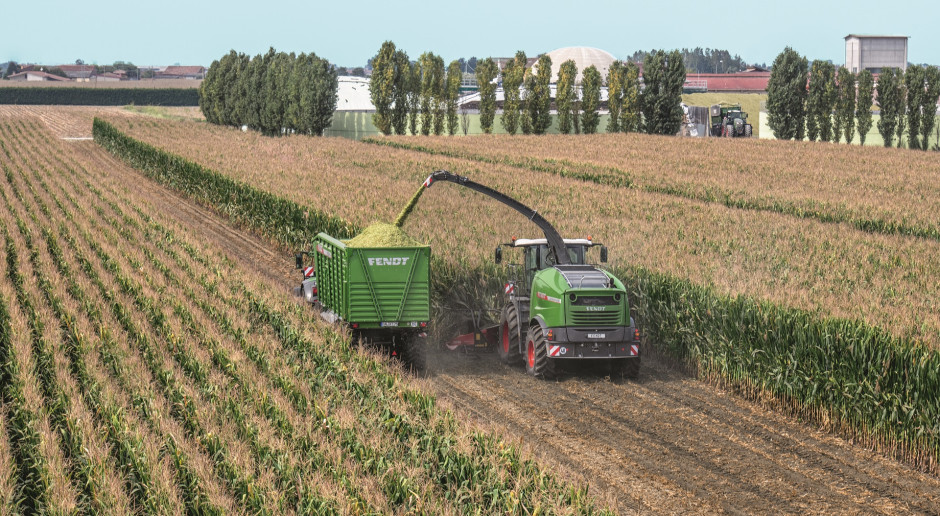
Economic balance of the crusher settings
Precise adjustment of the roller gap directly affects the economics of harvesting. Insufficient crushing means that the energy from starch is not fully utilized, resulting in losses in feeding or gas production. Conversely, a gap that is too narrow can lead to an unnecessary increase in diesel consumption, a decrease in field capacity, and accelerated wear of the crushing rollers, which in turn increases service costs.
The effect of dry matter content on chop length and process automation
The timing of maize harvesting is determined mainly by its dry matter content, with the optimum range being from 30 percent to 35 percent. As the plants mature, dry matter and starch levels increase, under favorable conditions by as much as 0,5 percent per day.
The maturity of the maize determines the appropriate chop length. More mature material (with a higher dry matter content) requires a shorter chop, which makes it easier to compact in a clamp or silo and reduces the risk of feed spoilage. Less mature maize can be chopped into longer pieces.
Fendt Katana forage harvesters use an NIR sensor to continuously measure the moisture content of the harvested material. The system operates based on the following parameters: the operator enters the minimum and maximum chop lengths and the target dry matter range on the terminal. Depending on the moisture readings for a given section of the field, the machine automatically adjusts the rotational speed of the hydraulically driven feed rollers. The resulting data on the harvest and feed parameters are recorded by the VarioDoc system, from which they can be exported to external farm management software.
This solution produces perfectly chopped corn, which can be compacted well in the silo. This ensures proper ensiling conditions and low feed losses.