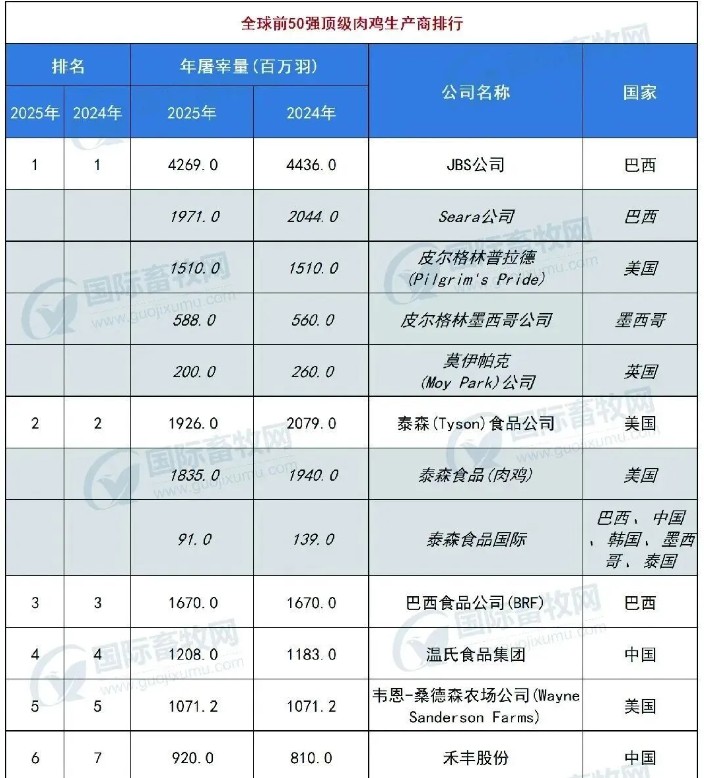
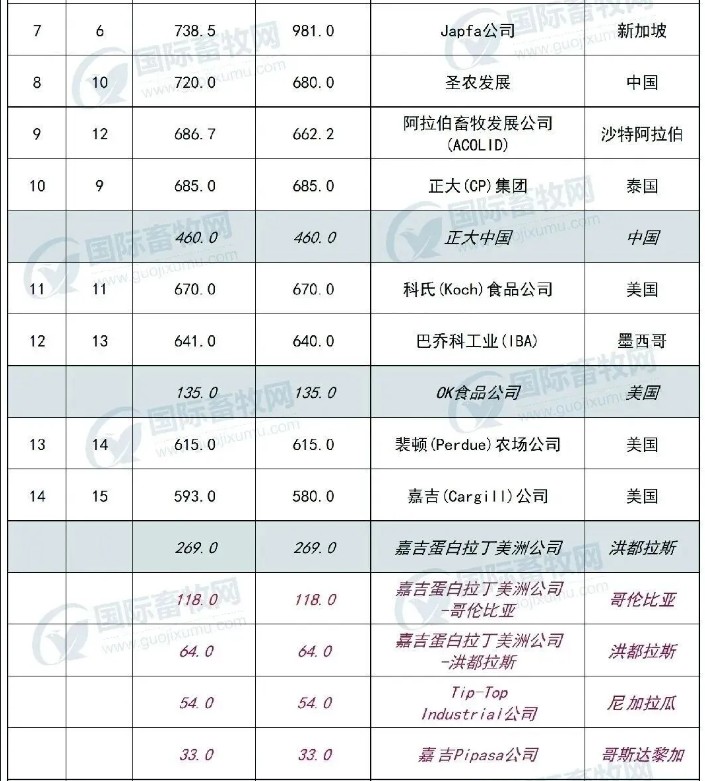
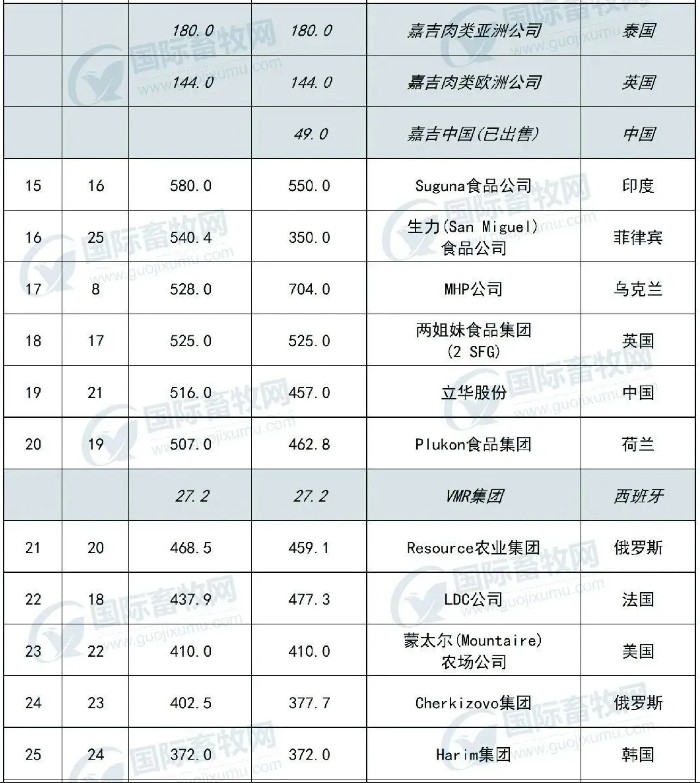
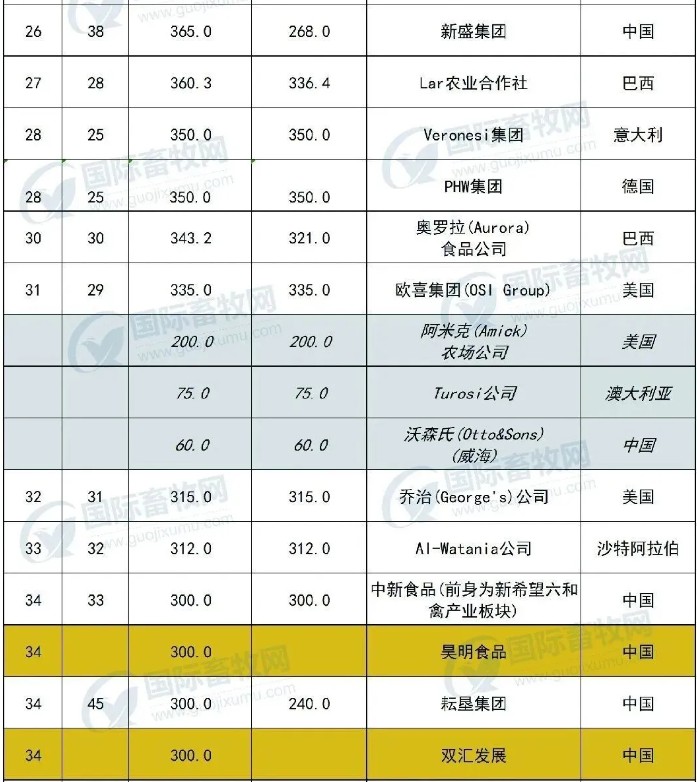
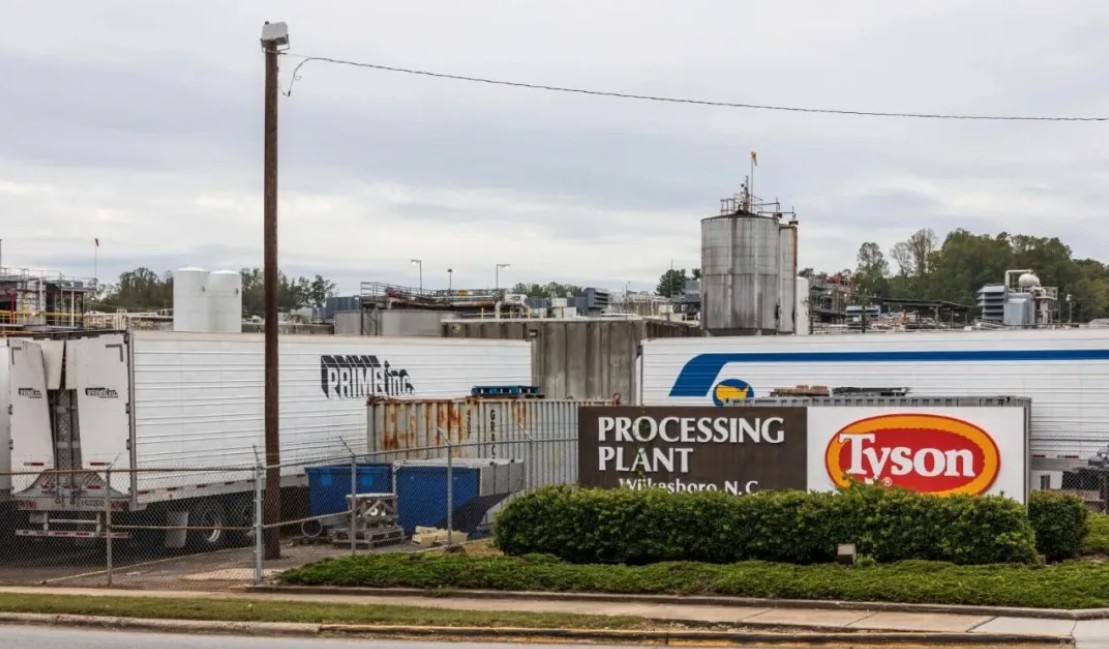
On 11 16,global chicken giantTyson Foods (Tyson Foods) announced its results for fiscal year 2026. Revenue for the full year was 564.19 billion U.S. dollars, up 3.6% from the same period last year. In the fourth quarter,operating profit in the chicken segment was adjusted from 5.62 billion U.S. dollars in the same period last year to 3.89 billion U.S. dollars, while the segment's sales volume grew 9.9% year over year.Tyson Foods said growth in its prepared foods business and steady performance in its chicken business supported its full-year results.
For fiscal year 2027, Tyson Foods expects total adjusted operating profit for the year to be between 17 hundred million and 21.5 billion U.S. dollars. The chicken segment is expected to contribute 13 hundred million(approximately 86 billion renminbi)to 16 billion U.S. dollars (approximately106 billion renminbi)in adjusted operating profit.
prepared foods business,chickenbusiness segment highlights
The chicken business segment reported quarterly sales of 48.1 billion U.S. dollars, up 9% from 44.1 billion U.S. dollars in 2025, and total sales for the year of 175.6 billion U.S. dollars, up 4% from 168.4 billion U.S. dollars the previous year.
Meanwhile, sales and operating income in the Prepared Foods segment once again reflected positive quarterly and annual performance. The business unit generated operating income of 3.44 billion dollars this quarter, up 48% from the same period in 2025, with an operating margin of 12.5%, compared with 9.1% in 2025. Full-year operating income exceeded 13.2 billion dollars, an increase of more than 6%. Sales this quarter were 27.5 billion dollars, up nearly 8% from 25.5 billion dollars a year earlier, while full-year sales for the segment were 105 billion dollars, up nearly 6% from 99.3 billion dollars in 2025. Volume grew 7.4% this quarter and 2% for the full year.
Chief Operating Officer Wes Morris said Prepared Foods delivered strong quarterly and annual performance.
“Pricing improved, aided by a favorable mix shift toward branded retail,” he said. “That was enough to offset higher beef and pork trim costs, higher transportation costs, and incremental investments behind our brands.”
He added that as commodity costs ease, it takes time for the benefits to flow through the supply chain, and the results may be realized in fiscal year 2027.
“We continue to invest behind our brands because that is key to protecting our share momentum,” Morris said. “The earnings cadence of this business has also become more balanced, making performance steadier and more predictable.”
He added that growth in the company’s Chicken segment this quarter was partly weighed down by an approximately 25% decline in industry cutout value. Although Tyson is not directly exposed to commodity markets, products including chicken tenders, chicken breasts, and wings faced pressure, along with higher freight costs and rising feed and grain prices. Morris said inflation over the full year posed challenges in some areas of the company’s Chicken business.
“Consumers’ caution around discretionary spending also made the foodservice environment more challenging,” he said. “Delivery growth from our top ten customers lifted net sales, driving 3.7% growth in Tyson value-added retail chicken volume.”
He said that, according to forecasts, chicken will account for up to 50% of protein consumption, warranting continued investment in the segment.
Value-added products and new chicken breeds: Two pillars of margin
The resilience of the chicken business during a period of declining prices does not come from passively absorbing the pressure; it results from two proactive efforts working together.
The first effort is value-added products. Tyson’s retail value-added chicken volume grew by 3.7% in fiscal year 2026, with expanded distribution among its top ten customers directly driving net sales. Performance from more specific new products provides supporting evidence: the Jimmy Dean high-protein platform, launched in 2026 1, recorded approximately 3800 thousand dollars in retail sales; Tyson Chicken Cups generated more than 2800 thousand dollars, with strong repeat-purchase rates. In 6, Tyson expanded Chicken Cups with three new flavors: garlic herb, BBQ, and harissa, explicitly targeting convenient, high-protein snacking occasions. These products share a common characteristic: their unit prices and gross margins are higher than those of bulk cuts, and they are not directly exposed to the day-to-day fluctuations in commodity chicken prices. Management described the brand portfolio and strategic customer relationships as factors that “protected most of the business from commodity market volatility.”
The second effort is structural cost improvement driven by the transition to a new chicken breed.Tyson is converting its live-bird flock to a breed that is larger and has a higher feed-conversion rate. According to The Wall Street Journal, the new breed “grows faster on less feed, yields more meat, and costs less than previous breeds,” and Tyson’s then-CEO, Donnie King, said on a conference call that “there is more upside ahead.” By the end of calendar year 2026, approximately 75% of the live-bird flock had been converted, with the remainder to be converted in 2027. This efficiency benefit is particularly significant in an environment where feed costs rose approximately 15% year over year in 2026—it partly offsets the impact of rising grain prices and is an important underlying factor in the chicken segment’s ability to maintain margins above 10% even as prices fall sharply.
The real pressure in 2027: not a competitiveness problem, but an industry supply problem
Tyson’s guidance for its chicken business in fiscal year 2027 is adjusted operating income of 13 billion to 16 billion dollars, with the midpoint down approximately 22% from 18.6 billion dollars in fiscal year 2026. This appears to be a substantial decline, but an examination of its causes points to an industry-wide supply expansion, rather than a weakening of Tyson’s own competitiveness.
The USDA expects domestic chicken production to grow by about 1% in fiscal year 2027. Without a demand increase of comparable strength, the marginal increase in supply will continue to put downward pressure on bulk chicken prices. At the same time, Tyson acknowledged that it would face greater pressure from grain and input costs in 2027. In other words, the margin compression in 2027 is the financial manifestation of an industry cycle characterized by “higher volume and lower prices.” Tyson can control efficiency and product mix, but it cannot control the pace of industry-wide supply.
Beef trends are worth considering alongside chicken. The adjusted beef outlook for fiscal year 2027 narrowed to a loss of 3 hundred million dollars to a profit of 1 hundred million dollars, with the midpoint improving by about 5.5 hundred million dollars compared with fiscal year 2026. However, the chicken midpoint declined by about 4 hundred million dollars, nearly offsetting most of the improvement in beef. This also explains why the market’s reaction to the earnings report was not uniformly pessimistic—Tyson’s share price rose by about 9% after the report was released. Investors saw a combined picture of “the worst in beef may be passing, while chicken is still profitable during an industry downturn,” rather than short-term fluctuations in a single segment.
At the strategic level, Tyson is directing capital expenditure toward chicken and prepared foods. Its capital expenditure guidance for fiscal year 2027 is 11 hundred million to 14 hundred million dollars, with a focus on expanding capacity in these two segments.
With the beef cycle unlikely to recover systematically in the short term, chicken’s role is no longer merely that of a “profit contributor”; it is also a source of cash flow that enables Tyson to maintain its earnings base and investment capacity during a trough in the protein cycle. A business that can sustain a double-digit profit margin during a period of falling prices has greater profit leverage when the cycle recovers. What the chicken business demonstrated in fiscal year 2026 is precisely this ability to make money in adverse conditions without relying on price increases.