
The French company Grégoire-Besson is one of the most renowned and respected plough manufacturers, and it continues to develop its designs.
Where does the name come from?
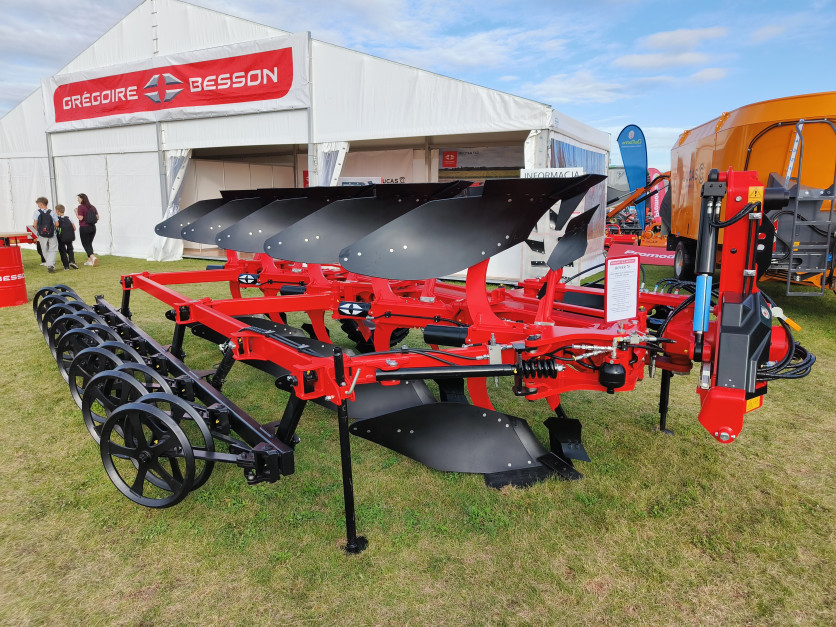
Let’s start with the name Rover for this Grégoire-Besson reversible plough model. It piques curiosity, but it comes neither from the automotive market nor has anything to do with muscle-powered bicycles.
As Jarosław Żebrowski, regional sales manager for the Grégoire-Besson brand, explains, the name Rover is actually an abbreviation of the English word “rollover,” meaning to turn over or rotate. Although this is translated literally in factory jargon, the catchy shortened form has caught on in the international market.
Safety and comfort thanks to patented suspension
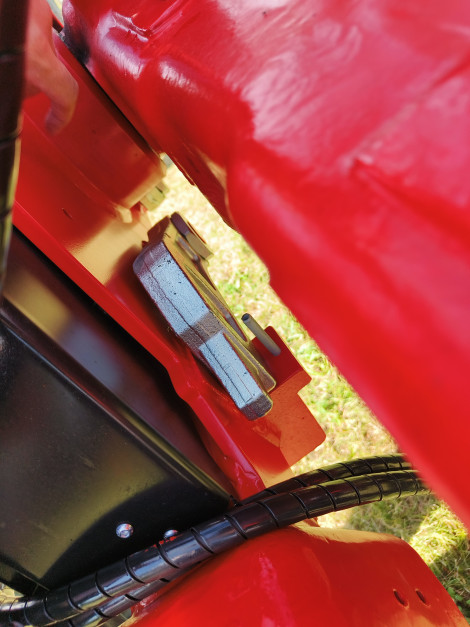
One of the most important features that sets Grégoire-Besson plows apart on the market is a unique system in the industry and the patented suspension of the front headstock.
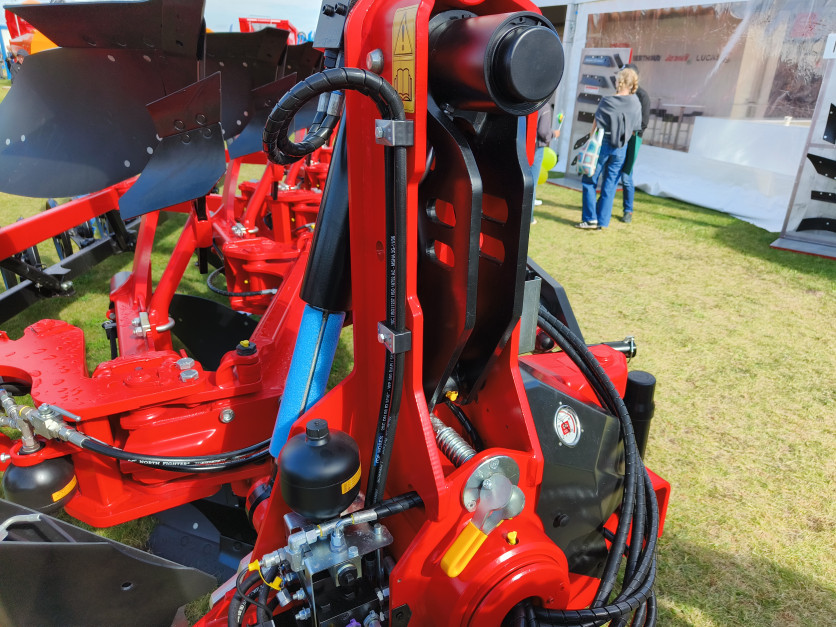
– At the top there is a hydraulic cylinder connected to a gas cylinder like the one on a front loader, a kind of gas chamber into which oil can simply “flow” as the gas contracts. If there is an overload and the pressure increases, the excess oil flows into this chamber. When the pressure equalizes, the oil flows back into the cylinder – emphasizes Jarosław Żebrowski.
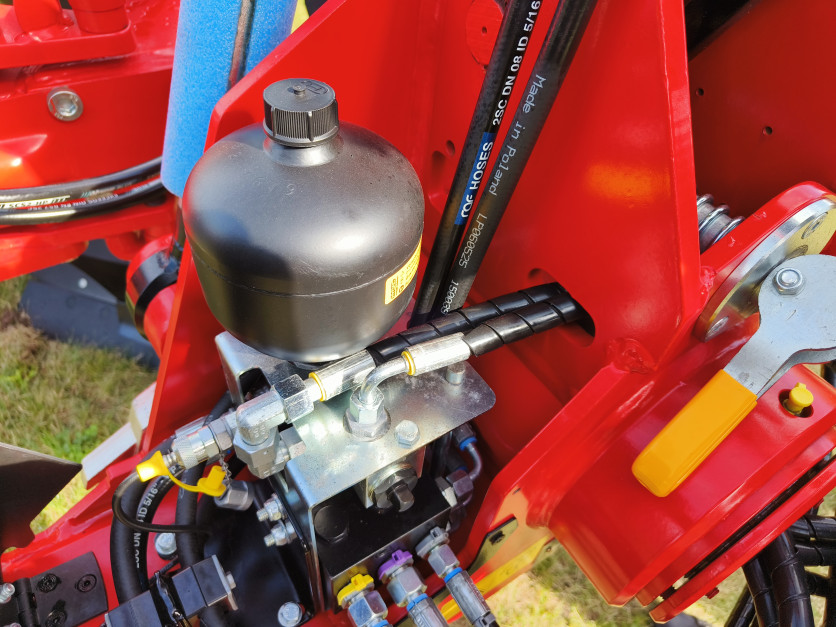
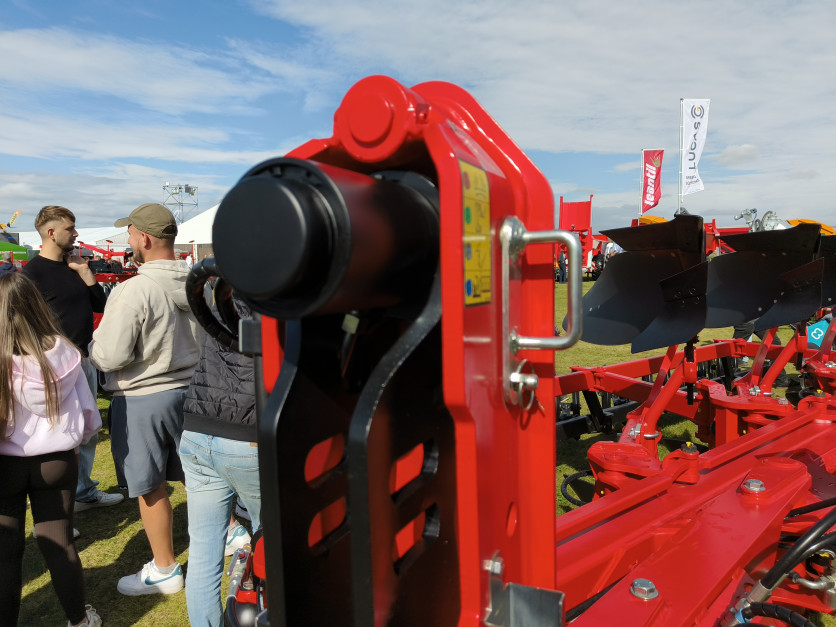
Although the stroke of the cushioning cylinder on the headstock is only 5 centimeters, due to the machine’s length, the lever effect translates this into a working range of almost 80 centimeters at the end of the plow, while the entire system effectively absorbs impacts and vibrations. What’s more, the system is equipped with a clever pin-release mechanism for transport, allowing the plow to be driven uphill without the risk of the suspension system locking up. As the expert points out, the additional cost of this system is in the range of 2–3 thousand zlotys, which, for a machine worth more than 100 thousand, is a fully justified investment, chosen by as many as 90 percent of customers.
Work precision: Vario system, new standards and headstock
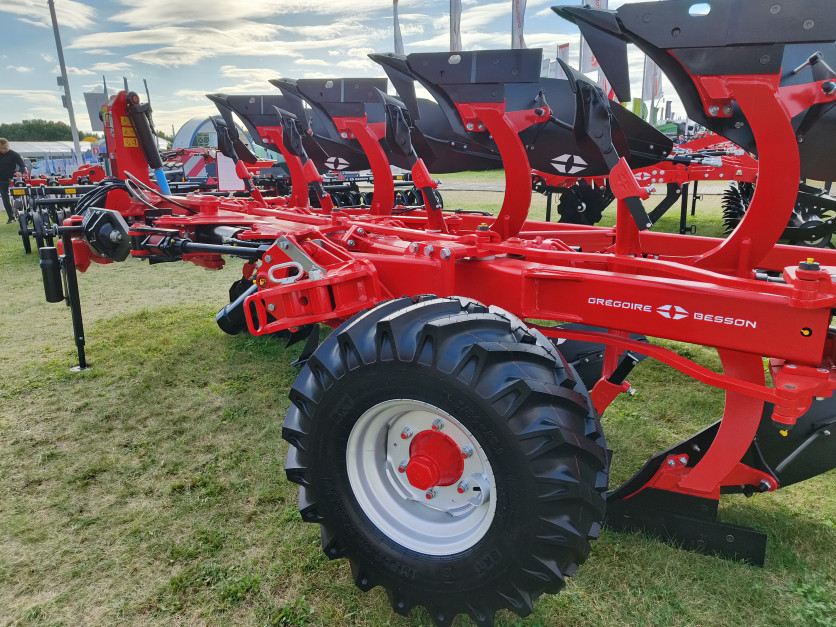
The Grégoire-Besson Rover 70 reversible plough, however, features more solutions that improve work efficiency and ergonomics. The Vario system with memory used in it allows smooth adjustment of the working width from 30 to 50 cm per body. Before each turn, the plough automatically folds to the minimum width (30 cm), and after completing the manoeuvre, it returns to the previously set parameter. In turn, the frame design—in this case, a 3+2 configuration with a “Z”-type frame—allows the number of furrows to be flexibly adjusted by adding a body in the central section.
Andpak integrated finishing roller
The plow presented in Bednary was complemented by an integrated Andpak roller with rings measuring 540 mm in diameter, working alongside a side support-and-transport wheel (size 11,5/80x15,3) with hydraulic depth adjustment. However, whether the plow can be combined with this roller depends on the specific model and the number of furrows.
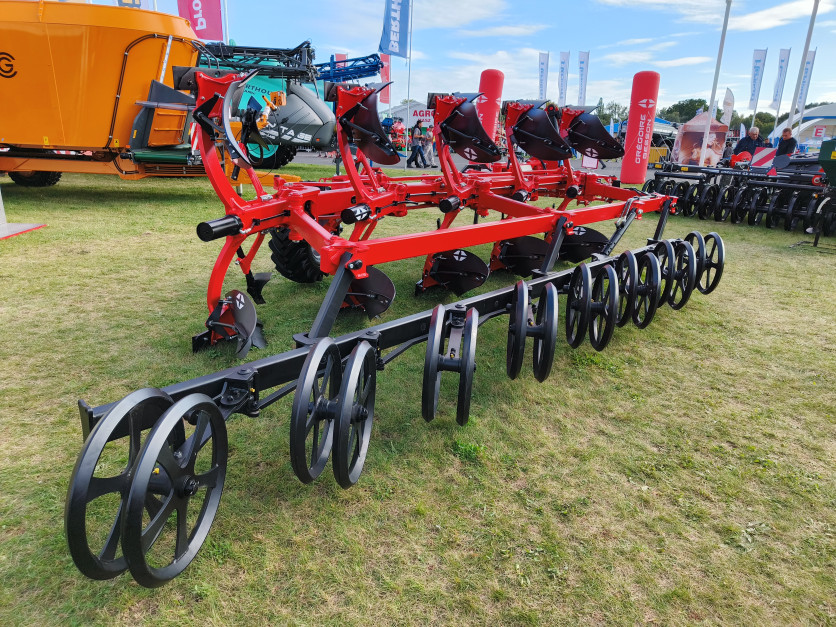
– Depending on the safety systems and model, we list our plows in a special table with guidelines that specify exactly which safety system and how many furrows allow us to add a roller. Unfortunately, this roller also has its own weight, which puts additional load on the headstock, tower and frame. With the Rover 70 model and a body spacing of 100 cm, there is no problem adding this roller to the 5-furrow version, but if we want to configure the same plow as a 6-furrow version, we can no longer install the roller because the structural strength is limited. If someone wants six furrows and an integrated roller, we have to choose a higher model, namely the Rover 80. Similarly, the lighter 60 series is subject to strict restrictions depending on the safety systems and body spacing. All of this is calculated at the factory. – our interviewee points out.
How much does a well-equipped French reversible plow cost?
The Grégoire-Besson Rover 70 is a machine tailored to the needs of modern medium-sized and large farms looking for durable, technologically advanced equipment that is also easy to operate day to day.
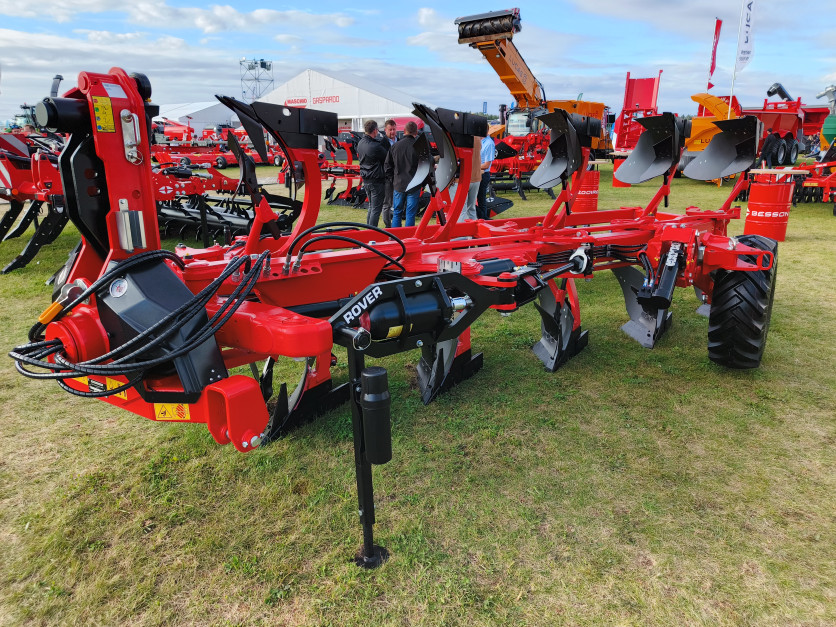
As a representative of the French company explains, the richly equipped set presented at this year’s trade fair in Bednary—combining, among other things, a reinforced 300-type head, hydraulic non-stop protection, hydraulic adjustment of the frame width and tilt angle, and an Andpak roller—costs in the region of 217 thousand złoty net.
A lot, but it is an investment that will quickly pay off in difficult field conditions with exemplary plowing quality and trouble-free operation.