
Egypt’s poultry feed costs rise 15% amid pound slide
Feed costs in Egypt have surged by around 15% since early October and by nearly a third during the last few months, putting further pressure on poultry producers already struggling with shrinking margins. The increase is being attributed primarily to the Egyptian pound’s depreciation, though continuing disruptions to global supply chains are also likely to play a role.

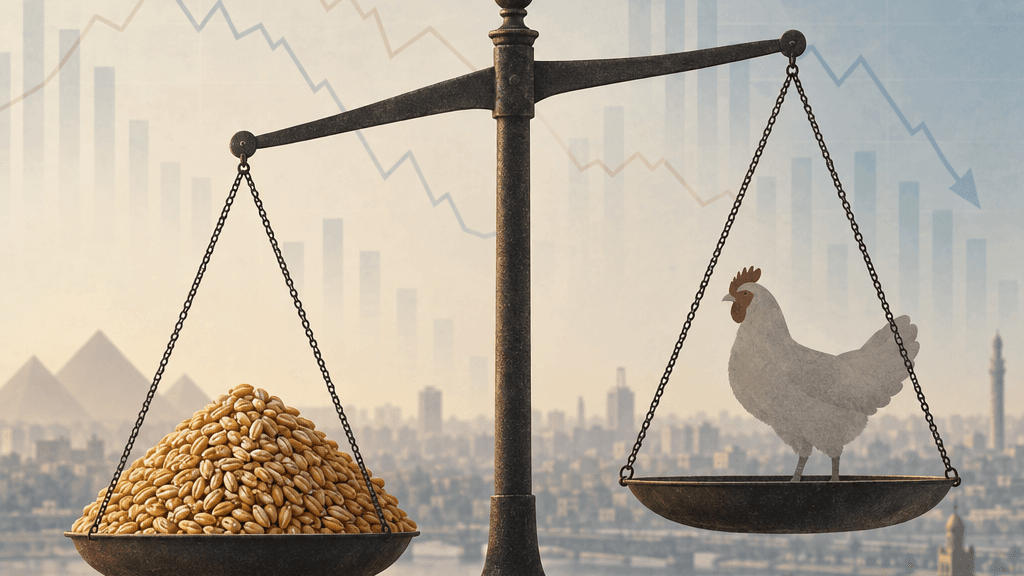
The price of a tonne of poultry feed had increased by EGP 400–600 (€6.40–€9.60) in recent weeks, Tharwat El-Zeiny, vice-president of Egypt’s Poultry Producers Union, told local media.
El-Zeiny said the Egyptian poultry industry had been severely affected by the national currency’s sharp downward rally, which has increased the cost of imported feed ingredients.
Tensions around Iran are to blame
The Egyptian pound lost around 7% of its value against the US dollar in October, falling to a record low of about EGP 56 per dollar amid fallout from the US-Israeli war against Iran.
Renewed regional tensions in October, including concerns over a possible wider confrontation involving Egypt, Saudi Arabia and Yemen’s Iran-aligned Houthis, unsettled investors, prompting further capital outflows, which increased demand for dollars and eventually accelerated the Egyptian pound’s depreciation.
A further increase expected
Poultry feed prices could continue to rise if the Egyptian pound weakened further against the US dollar.
He said the cost of producing 1 kg of poultry, currently estimated at around EGP 75 (€1.20), could increase to EGP 80 (€1.28) in the next production cycle. At the same time, the cost of producing a tray of eggs could also rise from approximately EGP 105 (€1.67) to EGP 120 (€1.91), he added.
Amid new tensions in the region, the outlook for the Egyptian pound remains uncertain.
Wael El-Nahhas, an economic expert, warned that the dollar could rise to EGP 65 (€1.04) and potentially EGP 70–72 (€1.12–1.15) in the coming weeks.
The exchange rate is particularly important for poultry producers because Egypt relies heavily on imported feed ingredients. Domestic soybean production covers less than 2% of demand, while imports account for more than half of the country’s maize consumption.
Farmers count losses
Amid expensive feed, El-Zeiny said the poultry industry alone was incurring losses of around EGP 90 million (€1.44 million) per day, reflecting the widening gap between production costs and selling prices.
He added that poultry prices would normally be expected to rise alongside feed costs, but poultry prices instead have been seen falling in recent weeks.