
Everything You Need to Know About Barn Curtain Systems
Written by: QC Supply Staff
|
November 18, 2026
|
Time to read 5 min
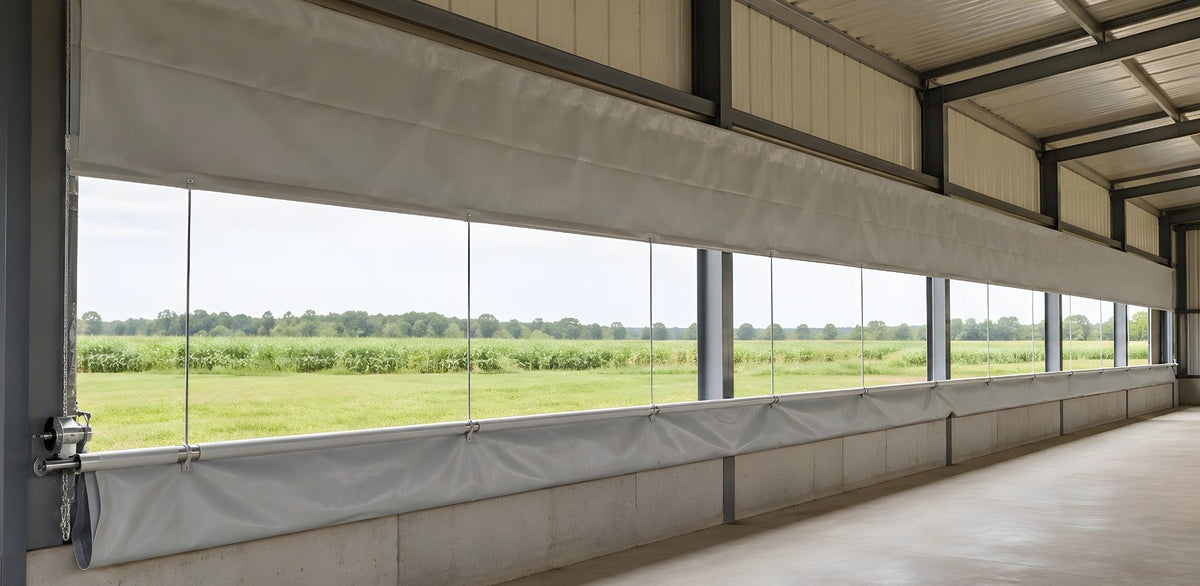
Barn curtains do more than cover an opening. In livestock, poultry, and swine barns, the curtain material, winches, cables, pulleys, and other parts work together to manage airflow and protect the barn from changing weather.
What Is a Barn Curtain System?
A barn curtain system is the collection of components that allows you to open and close your barn's sidewalls according to the weather. The curtain works as an adjustable sidewall, sometimes called an agricultural curtain wall. It moves up or down along the opening, and its position changes how much outside air, light, wind, and rain reach your animals.
A complete barn curtain system generally consists of:
- Curtain material, sized to your barn openings
- A winch or curtain machine to raise and lower the curtain
- Cable, pulleys, and brackets that carry the load
- Hardware and accessories, such as bolts and cable ties
- Repair supplies, such as seam and mending tape
Because these parts work together, a frayed cable, worn pulley, or damaged fitting can affect the system’s operation. You can browse every component on our Barn Curtain Systems page.
How to Measure a Barn Curtain System
Before ordering a curtain measure the opening carefully and check how the curtain will be installed. The required dimensions depend on the barn's design and the type of curtain system.
Measure the Opening
Measure the width and height of the opening you want to cover. If your barn has multiple openings, measure each one separately. Check whether the curtain needs additional material for its mounting and operating mechanism.
Check the Curtain's Operating Space
Consider how the curtain will move when it opens and closes. Roll-up systems may need space for the curtain to gather while other designs may have installation requirements. Check the product specifications before deciding on the dimensions.
Match the Curtain to the Existing System
If you are replacing an existing curtain, inspect the winch, cables, pulleys, and mounting hardware. Confirm that the new curtain's dimensions and weight are compatible with the operating system.
Before ordering, review the installation requirements and confirm the measurements with your supplier.
How Barn Curtains Help Manage Ventilation
Used well, a barn curtain can help you:
- Bring in fresh air and natural light when the weather is mild
- Help limit exposure to wind, rain, and cold weather.
- Manage temperature and humidity as conditions change
The right adjustment changes with the season:
- Warm weather: open curtains wider to move air through the barn.
- Cold weather: close curtains to help retain warmth, while keeping enough ventilation to manage moisture and air quality.
- Wet or windy days: adjust the curtains on the side taking the weather first.
- Spring and fall: expect more frequent changes as temperatures swing.
Curtains are one part of barn ventilation. Results also depend on barn design, fans, and heating, so plan them together.
Curtain Controls and Winch Systems
The winch is what makes a heavy curtain easy to operate. A manual brake winch uses a hand crank and holds the curtain where you stop. For curtains you adjust often, electric winches, curtain machines, and controller motors add powered operation, and some powered systems can be paired with thermostat controls to adjust the curtain automatically. The Dutton-Lainson brake winch (800 lb.) is one manual example with a built-in automatic brake. Whichever you choose, check the rated capacity and requirements on the product page so it suits your curtain and cable. Browse more in our curtain controls and winch systems collection.
Cable, Pulleys, and Accessories
Cable and pulleys carry the load every time the curtain moves. QC Supply sells cable by the roll in several diameters, so compare the breaking strength listed for each size. Stainless steel 7 x 19 cable is made from T-304 stainless steel, and galvanized 7 x 7 cable is also available.
Pulleys guide the cable, so choose ones rated for your load. The Beesley split strap pulley (1-7/8 in.) is used with livestock curtains and broiler and breeder houses. It pairs a fiberglass and nylon pulley with galvanized straps and is rated for 220 lbs.
Barn Curtain Repair and Maintenance
Regular checks catch small problems early. Look for:
- • Tears, holes, or frayed edges in the curtain
- • Worn, rusted, or kinked cable
- • Pulleys that stick or squeal
- • Loose brackets, bolts, or fasteners
- • Winches or motors that struggle, slip, or make unusual noise
Small tears can often be fixed with seam and mending tape from our repair supplies. Keeping a roll of tape on hand makes quick fixes easier. Consider replacing the curtain when damage is widespread, the material is brittle, or repairs keep failing. If the cable, pulleys, or winch are also worn, replacing them together can save repeat work.
How to Choose the Right Barn Curtain System
Before you buy, ask yourself:
- How big are the openings? Length and height decide how much curtain and cable you need.
- What do your animals need? Some barns need more light control than others.
- What is your climate like? Cold, wet, or windy sites may call for heavier or insulated curtains.
- How often will you adjust it? Frequent changes may justify powered operation.
- What can you keep? Inspect your existing cable, pulleys, and winch before replacing everything.
Final Thoughts
A barn curtain system works best when its components are suited to the barn’s needs and maintained regularly. Whether you are installing a new system or replacing worn parts, QC Supply offers curtains, winches, cables, pulleys, and repair supplies to help you keep your system operating smoothly. Checking things often and fixing them when needed can also make your equipment last longer.
Barn Curtain System FAQs
What curtains work for a dairy barn?
Choose by climate and light needs. A medium-weight milky curtain such as the Fabtex Milky Clear Curtain (5.3 oz.) is listed for dairy barns, and heavier or insulated styles are available for colder conditions.
How do I measure for a barn curtain?
Measure the length of your barn or the section you are covering, then the top-to-bottom height of the opening. Add extra height so the curtain has room to roll up. Curtain material is priced by the running foot.
What should I check before buying a curtain winch?
Look at its rated load, the cable size it accepts, and any minimum load requirement listed on the product page. The Dutton-Lainson brake winch (800 lb.), for example, lists a minimum operating load.
What cable size do I need?
That depends on your winch and curtain load. Compare breaking strength for each diameter and make sure the cable fits your winch reel. Both stainless steel and galvanized cable are sold by the roll.
What is the difference between roll-up and drop-down barn curtains?
Roll-up curtains open from the bottom and bring air in at floor level. Drop-down curtains open from the top, so air enters higher in the barn, which can be gentler on young animals unused to drafts.
How often should I inspect my barn curtains?
A good rule is once each season and again before cold weather. Raise and lower each curtain fully, and check the curtain, cable, pulleys, fasteners, and winch as it moves.
Latest News
Electric vs. Propane Garage Heaters: What Actually Fits Your Space
A Long Day on the Farm Needs the Right Boots and Coveralls

A Message from Our New Owners