
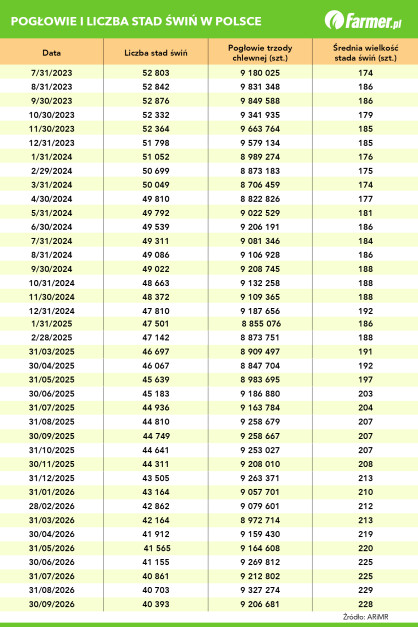
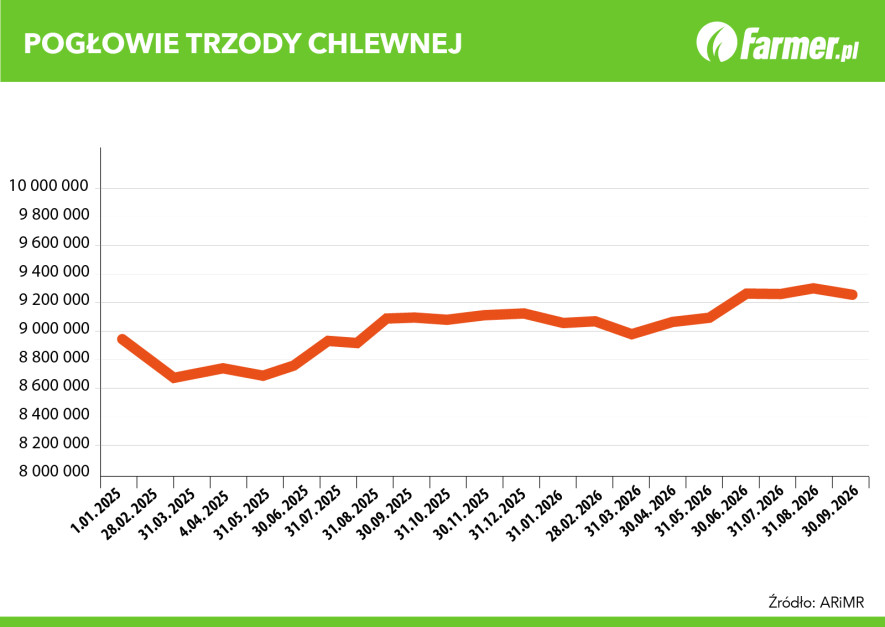
- ARiMR reports that 9 206 681 pigs were registered in the IRZ database at the end of September, over 120 thousand fewer than a month earlier.
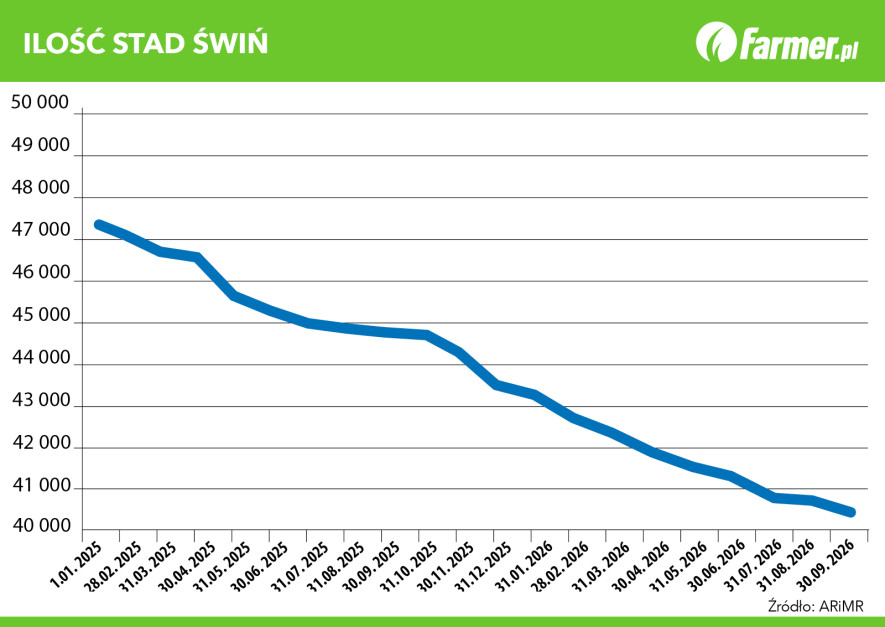
- The number of herd locations in the IRZ system fell to 40 393, meaning over 300 fewer herds and an average of around 10 herds being liquidated per day.
- The article points to an ongoing crisis in the pig market and asks whether the coming months will reverse the downward trend in pig farming.
According to data made available by the Agency for Restructuring and Modernisation of Agriculture, the number of pigs registered in the IRZ system database was exactly 9 206 681. This means that over the course of a month, the national pig herd shrank by more than 120 thousand animals. By comparison, at the end of August, the figure in question was close to 9,33 million pigs.
A sharp decline in the number of herds
While slight fluctuations in the livestock population are entirely natural, the continuation of the downward trend in herd closures is concerning. The number of herd locations registered in the IRZ system database stood at 40 393 at the end of September, making it more than 300 lower than a month earlier. Statistically, we were losing 10 pig herds per day. This is, moreover, a continuation of a long-term trend: just three years ago, more than 12 thousand more herds were kept in our country than at present.
Comparing the above data, we can see that the average size of a pig herd in Poland at the end of September was 228 animals. This is slightly less than a month earlier.
The crisis in the pig market continues
Unfortunately, it is difficult to predict whether the coming months will bring a change in the above trends. The past few months have been a very difficult time for farmers. This year, there were basically two short periods (in spring and in the second half of summer) when producers could make any profit at all. Much more often, they were operating at a loss or, at best, breaking even. This situation does not encourage producers to expand production, or even to continue it.