
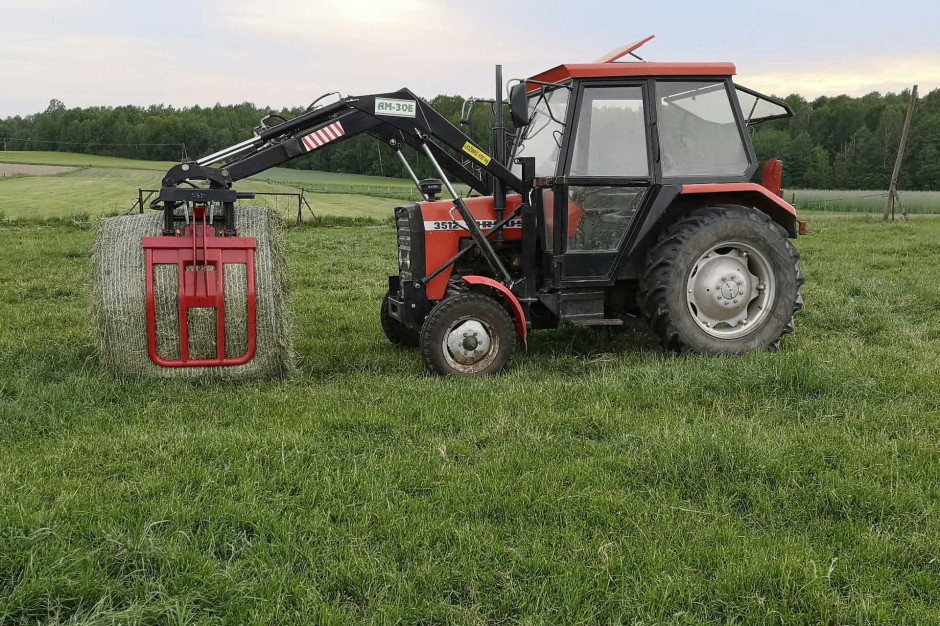
- The Ursus 3512, bought in 1998 for 35 100 zł, was the main tractor on Tomasz Lewicki’s approximately 6-hectare farm for 26 years and now has approximately 2750 operating hours.
- The upgrade in 2021—a three-section front loader—significantly increased the uses of the Ursus 3512, although heavier loads required added weight on the rear axle.
- The owner points to limitations in the hydraulics (the loader and hitch cannot operate simultaneously) and plans to install power steering with an orbitrol for approximately 3 thousand zł.
At the end of the 90s. Ursus was no longer in the best position. The Warsaw factories were undergoing difficult restructuring, and the tractors on offer were increasingly feeling the competition from more modern, though decidedly more expensive, Western designs.
The Ursus 3512 itself was also not a technical novelty at the time—its roots lay in the licensed Massey Ferguson 255 tractors introduced into production back in the 80s. After the license expired, the tractors were renamed from MF to Ursus, but the design remained practically unchanged and was subjected only to minor modifications in subsequent years. Nevertheless, for a farmer switching to an Ursus 3512 from a C-330 or C-360, this change represented a noticeable step forward.
The tractor offered slightly greater comfort at work, more convenient gear changes, high maneuverability, and a hydraulic system that was quite capable for its era. At the same time, it retained what was most important for many farms—a simple design, low fuel consumption, and low operating costs.
From the C-360 to the Ursus 3512
It was just such a tractor that appeared on the farm run today by Tomasz Lewicki, a farmer from Przasnysz County, in 1998. The Ursus 3512 replaced the C-360 on the farm at the time.
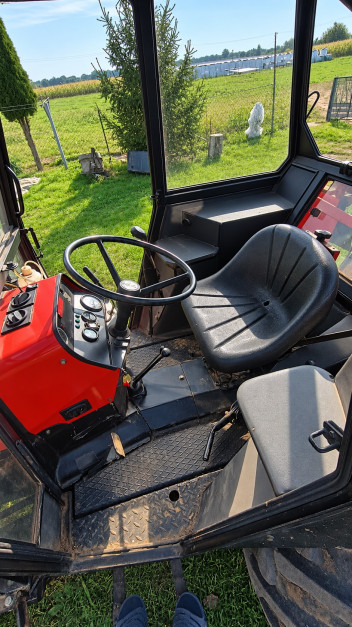
“In those years, it cost 35 100 PLN. The price included a comfortable cab with heating and a flat floor, as well as wide rear tires,” the owner recalls.
The new cab from Koja also provided a reasonable degree of noise insulation, as well as a tilting sunroof and a rear window. The partially flat floor made it more comfortable to get in and work. The heating also worked quite well.
For the next 26 years, 3512 served as the main tractor on the approximately 6-hectare farm. It has clocked around 2750 engine hours to date, so it cannot be said to have been used intensively.
In the meantime, the farm expanded its acreage and another, larger tractor was added. However, the Ursus was not put out of service. It is now used mainly as an auxiliary machine, although it has been upgraded somewhat.
The loader transformed the tractor’s work
One of the most important upgrades was the installation of a three-section front loader with attachments in 2021. This significantly expanded the range of applications for the small Ursus.
The loader was connected to the tractor’s two rear hydraulic outlets. To use it, you need to set the hydraulic diverter lever under the seat appropriately and set the lift to a constant pump flow.
The manufacturer’s stated maximum lifting capacity of the loader is around 650 kg, but the owner admits that he has also lifted loads weighing around 700–750 kg. For heavier work, the rear axle needs to be weighted appropriately. In this case, the farmer used a homemade weight made from an old barrel.
“With a heavier load or very wet silage, especially in winter when it’s slippery, a weight like this works well,” the farmer explains.
Hydraulics have their limitations
The loader also revealed what the owner considers the biggest design flaw of 3512. The original hydraulic system does not allow the loader and the rear lift to be operated at the same time.
“That’s really the only downside I notice. When you’re using the front loader, you can’t operate the rear lift,” says Tomasz Lewicki.
This is not a solution that can compete with the hydraulics of modern tractors, but on a small farm it still allows many tasks to be carried out efficiently. The rear hitch alone 3512 had a lifting capacity exceeding 1,3 t, while the basic hydraulic system had a pump flow rate of around 17 l/min.
The next step – power steering
After the loader was installed, the lack of power steering became more noticeable. Therefore, the next change planned by the owner is to install a hydraulic system with an orbitrol.
Complete kits designed for this model are available on the market and can also be installed by the owner. According to the owner’s research, the cost of this upgrade is around 3 thousand zł. As the owner says, installing power steering itself should not cause any problems, as there is no difficulty either with installing the power steering pump or replacing the steering column with an orbital steering unit.
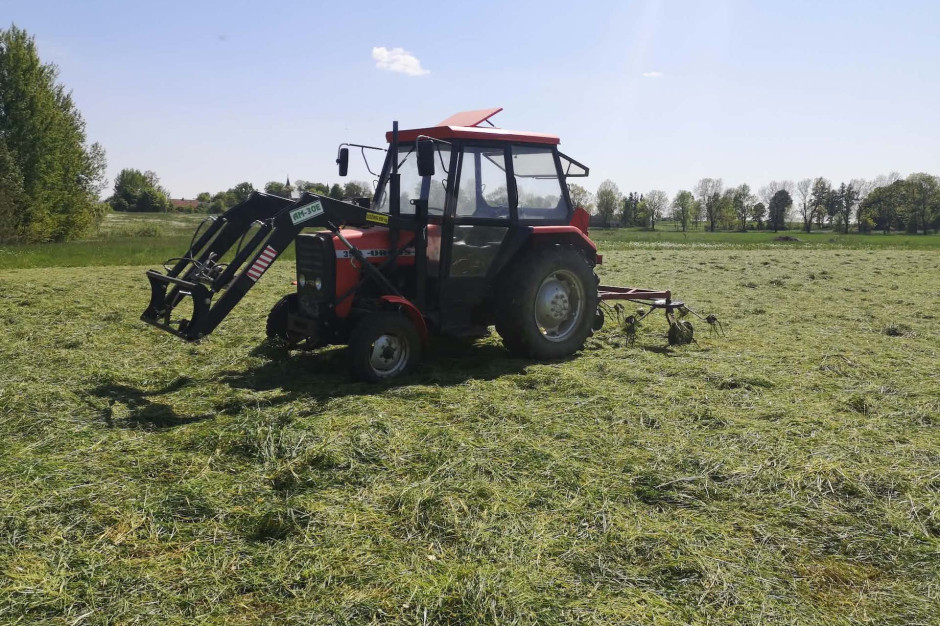
Today, 3512 no longer has to do all the heavy work on the farm. It most often works with a front loader and a rotary mower. So, despite its age, it still has a job to do.
“An advantage, especially in these times, is that this tractor is very economical. Parts are available and inexpensive,” concludes Tomasz Lewicki.