
The digitization of cattle accompanying documents—the passports and ASDA—is enshrined in law, with deadlines set. “In 2026, we are moving from planning to implementation,” said Philippe Paquet, deputy advisor for digital security at the DGAl at a conference at Sommet de l’élevage.
The State is responsible for overseeing and funding this system. “The aim is to create a tool that is simple and suited to work in the field. We met 80 stakeholders in the sector across the country during the study phase.”
Read also: The digitization of cattle passports is on the horizon
There is no requirement to do away with the paper passport: the digital passport can coexist with the paper passport “to bring everyone on board, each at their own pace.” “We are preparing a smooth transition”the ministry representative announced.
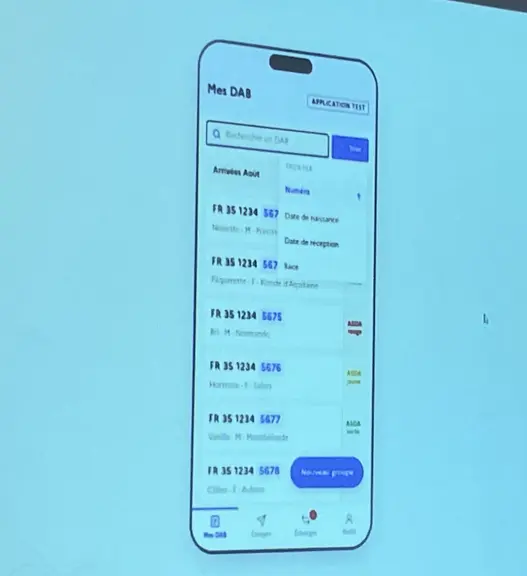
At this conference, version 1 of the prototype application was presented. It will enable livestock farmers to manage digital cattle passports. “We’ll revisit this as user feedback comes in”, Philippe Paquet explains. Available on a computer or as a smartphone application, the tool can work in offline mode. It provides access to DABs, lets users enter ICA (food chain information), and attach a document (vaccination certificates, a certificate of no calving, etc.).
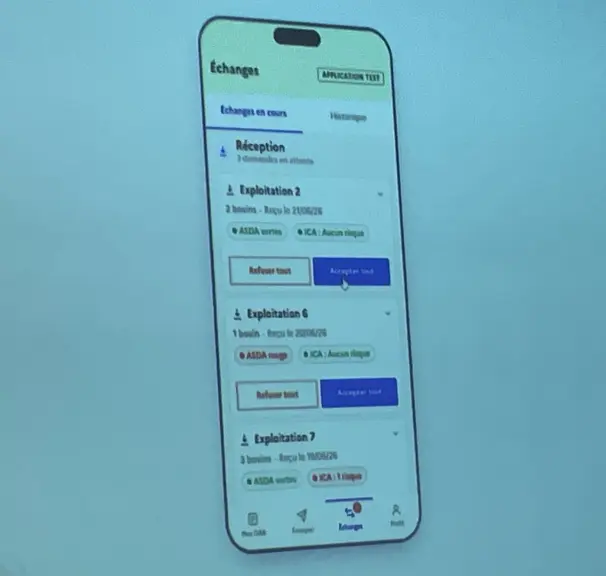
To prepare movements, users can create batches by selecting the DAB of the animals concerned. A list of the main business partners can be added to “favorites.” The organization that is to receive the batch of animals then has access to this information and can accept or decline it. Once the transaction has been agreed, the farmer no longer has access to the DABs.
Stay up to date in real time!
Follow topics, legislative projects, companies and public figures to be notified as soon as we publish an article.
A history will make it possible to trace all actions. A local trusted third party will be retained—in this case, the ITAé services—to manage any potential difficulties. cybersecurity, data availability and control are among the principles guiding the project.
Interoperability—the ability to communicate and exchange data, particularly with herd management software—is beginning to be worked on towards the end of the year 2026. “This tool is designed to be modular” explained Philippe Paquet. The possibility of integrating data from external sources, such as vaccination data from the CalypsoVet platform, for example, could be included in the development roadmap if a need for this is identified.
Let us recall that there will be no obligation to switch to electronic tags. This will remain voluntary.
See also : VIDEO: Tests of electronic tags on suckler cattle