
- Business
- Markets and trends
- Meat markets and prices
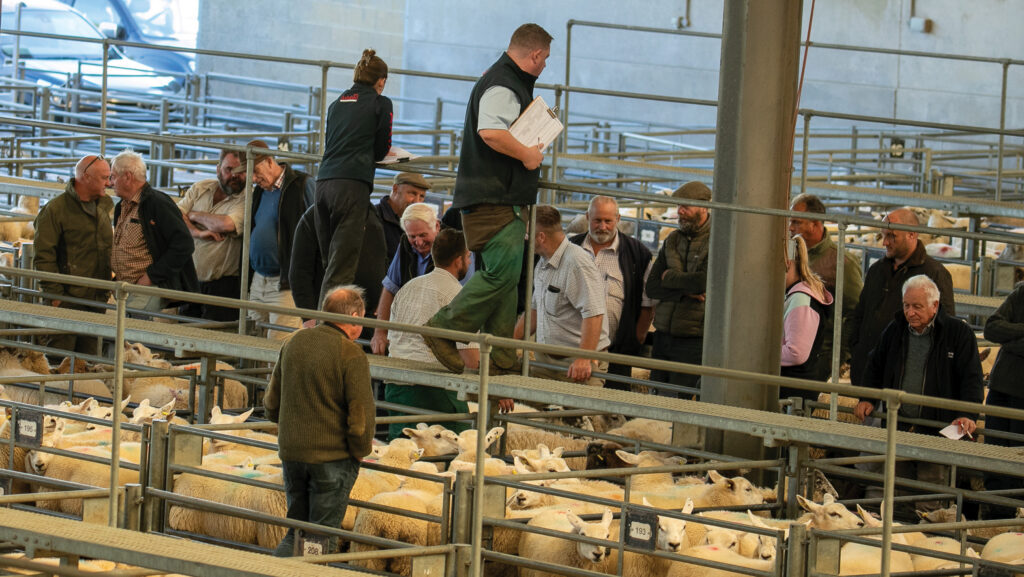 John Rossiter selling sheep at Ashford © Combat Moose Photography
A tightening supply of finished lambs has helped lift prices for better-quality sheep, although a shortage of lighter animals is creating an uneven trade.
Some abattoirs increased prices by 10-15p/kg this week, with top quotes reaching £7.40/kg deadweight for tighter-trimmed lambs, according to trader Meadow Quality.
See also: ABP lamb takeover raises competition and job fears
The firm said quality and finish remained important, with grass quality reported to be variable across the country. It suggested concern about flock losses from last summer’s hot weather and the impact of bluetongue disease could also be contributing to stronger buying interest.
The latest AHDB figures show that estimated GB sheep slaughter fell by 3% in the week ending 31 October, to 209,700 head, suggesting tightening supplies are an ongoing issue.
It was therefore little surprise to see that R3L sheep carcasses continued to show a healthy premium over year-ago values, being reported at 730.4p/kg dw in the week ending 7 November – up 7.9% or 53.5p/kg dw.
Low finished throughput
In the liveweight trade, John Rossiter, managing director of Hobbs Parker Auctioneers at Ashford Market in Kent said numbers of well-finished lambs remained particularly low, but those coming forward were generally heavier, at 45kg and above.
He attributed this to more producers having to finish lambs on concentrates during August and September, rather than grass, leaving a greater proportion of heavier sheep now coming to market.
“There are a lot more heavy sheep than the market needs, but not enough lightweight lambs for the ethnic trade,” he said.
He added that the shortage of suitable finished lambs had helped support prices, with better-quality animals making 10-12p/kg more over the past week.
Mr Rossiter expected the trade to remain relatively firm towards Christmas, with most finished lambs trading at about 320-350p/kg liveweight and the best animals achieving more.
Buoyant store demand
Store lamb demand also remained buoyant, with average prices in England and Wales reaching £115.40/head in the week ending 1 November, according to AHDB figures.
Throughput was 73,800 head during the week, taking year-to-date marketings to 794,000, up 11% on the same period last year.
The AHDB suggested the hot, dry summer and reduced forage availability may have encouraged some producers to sell store lambs earlier than usual, while buyers were keen to secure supplies amid confidence in the trade.
The strong store values were also encouraging some producers to sell lambs as stores rather than finishing them, adding to the pressure on available finished supplies.
However, Mr Rossiter warned against comparing finished lamb prices directly with the strong store trade.
Store lamb values reflect buyers’ expectations of what they might make when the animals are finished in four or five months, rather than the price available for slaughter-ready sheep today.
“Buyers are gambling on the trade in the future, not on the finished price today,” he said.
“The finished price is dictated by what buyers can sell the lambs to butchers for and whether they can make a margin after slaughter,” he said.
Scottish lamb prices defy autumn supply rise
Finished lamb prices have continued to reward producers in Scotland, with Quality Meat Scotland pointing to firm demand and tight underlying GB supplies.
Prices have traded in the 320–330p/kg liveweight range during October, nearly 10% above last year and 25–30% higher than the five-year average.
Iain Macdonald, QMS market intelligence manager, said: “Auction numbers have grown in Scotland this autumn, but smaller lamb crops in Scotland and England mean GB supplies remain fundamentally tight.
“Looking ahead, marketings are likely to reach a pre-Christmas peak in December, before numbers potentially struggle to match year-earlier levels in early 2027.
“Tight supplies and firm demand should continue to provide support, although the impact of higher retail prices on sales volumes remains a risk to watch, along with the impact of a stronger pound on export returns.”

Where women in agriculture connect, grow, and lead.
Become a member- Business
- Markets and trends
- Meat markets and prices