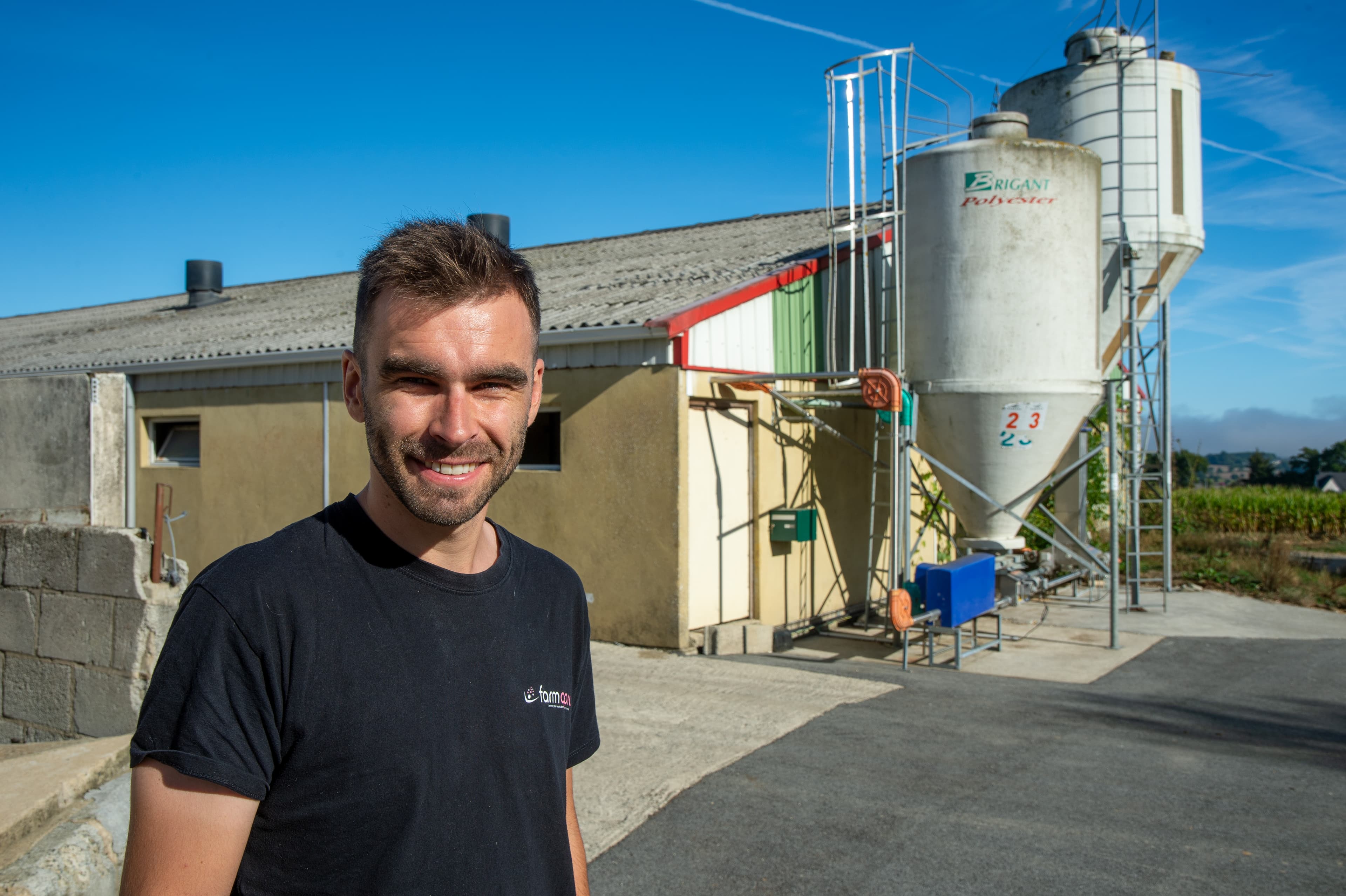
Farm Visit: Heavy piglets in new free-farrowing pens
In 2023, Mathieu Le Nouvel’s La Butte Rouge pig farm in Brittany, France, expanded to 320 sows in a closed system. During the expansion process, he also purchased free-farrowing pens. Ever since, the piglets have been heavier at weaning.

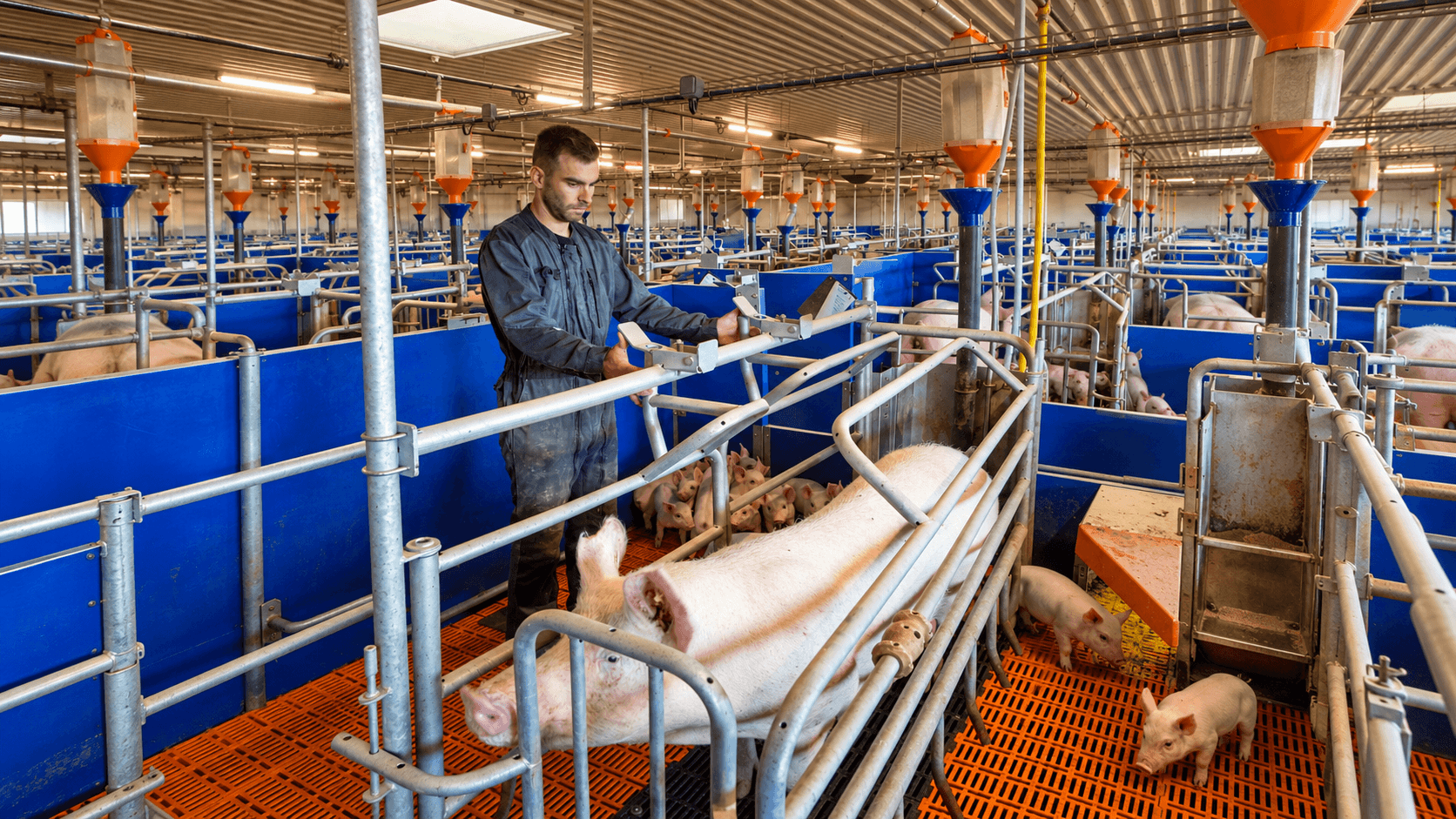
After 3 years of experience with free-farrowing pens, Mathieu Le Nouvel is confident to say that free-farrowing management no longer holds many secrets. One of the key lessons he learned is that sows perform better when they are not confined before and during farrowing. Therefore, the pens are not closed until the piglets have been born. Le Nouvel says, “The sows eat better, experience less stress, and I hardly have to provide birth assistance.” As soon as the piglets are born, Le Nouvel confines the sows for a week.
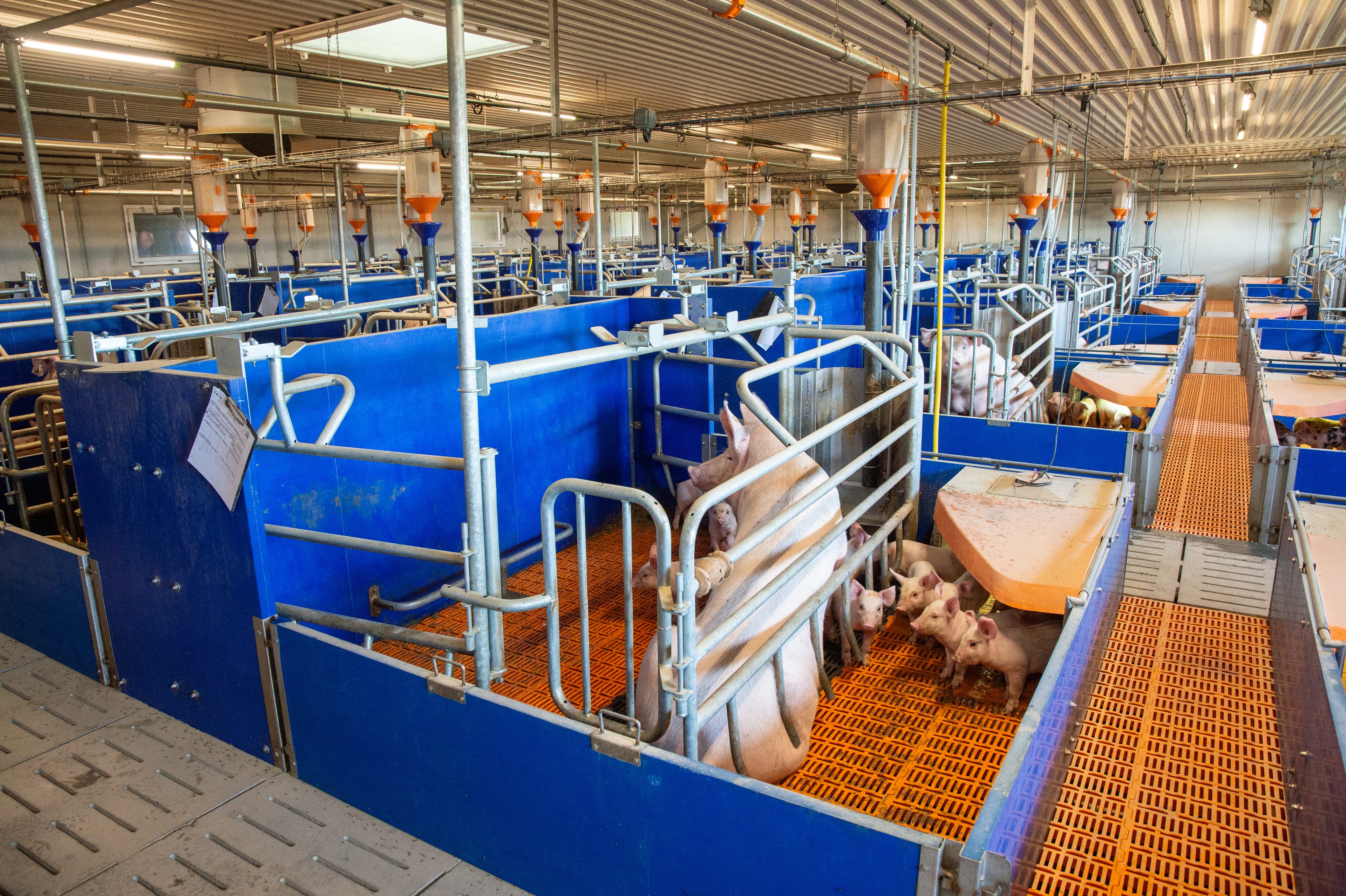
The 2024 farrowing unit. Pens are easily accessible as space has been created for a walkway between them.
After that, the farrowing pens remain open again until weaning, when the piglets reach 4 weeks of age.
In 2023, Le Nouvel started with a rather fundamental reconstruction of his 120-sow farrow-to-finish farm, called La Butte Rouge. The aim: to become a 320-sow farm using free-farrowing equipment. The following steps were taken:
- Weaned pigs and finishers were permanently relocated to a different property;
- The former finishing pig house was converted into a gestating house;.
- The 3 conventional farrowing houses received an upgrade to accommodate 30 free-farrowing units;
- In 2024, a new section was added featuring 40 free-farrowing pens.
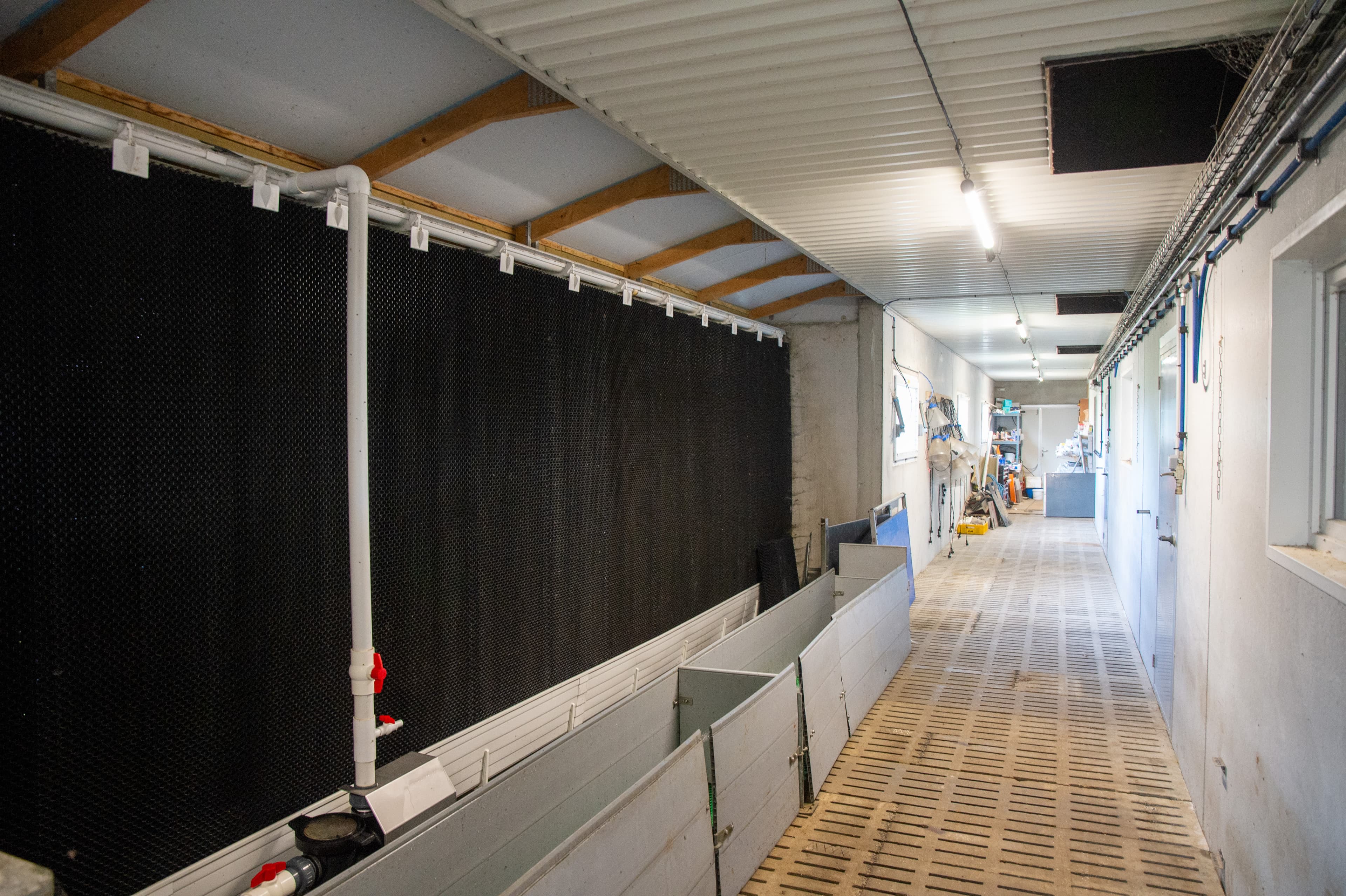
The pad cooling system is built into the side wall of the barn, with a maximum air speed of 1 m/s.
Solid pens
For the type of farrowing house, Le Nouvel chose ActiWel free-range farrowing pens from livestock equipment supplier Big Dutchman. Le Nouvel feels that those pens are solid and offer ease of work and safety for staff. The pens are 2.70 m long x 2.40 m wide. Even though neither France nor the European Union have adopted legislation for free-farrowing pens yet, Le Nouvel opted for this type of farrowing systems. He says, “With an investment, you look ahead. This is what the consumer wants, in the long term.”
As it happens, the new farrowing sections are a pleasure to work in. The space is bright and has been spaciously designed. In addition to an inspection aisle for the pens, there is also a narrow corridor that runs between two rows of pens. As a result, each farrowing pen is accessible from three sides. A manure pit runs under the entire section, and fresh air reaches the sows through the ceiling. This all seems to work perfectly, as the sows are lying down relaxed and the piglets are growing well.

Le Nouvel can monitor temperature fluctuations inside and outside the unit on his smartphone.
Higher weaning weight
The spacious free-farrowing pens offer a technical advantage. After 28 days of lactation, the total litter weight is 105 kg during the summer months. That is 10 kg more than with the traditional farrowing pens Le Nouvel used until three years ago. The aim is to reach a litter weight of 110 kg at weaning, year-round, a weight that is already achieved during the winter, when sows tend to have a higher feed intake, leading to higher milk production levels. In winter, the piglets tend to be extremely heavy, with 15 liveborn piglets per litter and below 10% mortality. Le Nouvel breeds his own TN70 sows; he suspects that breeding himself might go at the expense of production efficiency.
Still, he is satisfied with the results from using the new farrowing pens. The farm operates on a five-week system. He weans over 900 piglets per production group of 70 sows. From one week of age, the piglets receive supplementary feed in pellet form, provided from a bowl. Twice per day, the sows receive ground, complete compound feed. Le Nouvel says that the sows are calm. He adds, “They defend their piglets if necessary, but otherwise they are relaxed. Piglets are hardly ever being crushed to death.” Reality inside the barn does reflect that statement. Everything appears to be running smoothly. The pens are clean and the animals are at ease. Even though the piglets are already three weeks old, they still like to lie under their piglet nest cover. Heat comes from a lamp when needed. There is no floor heating in the piglet nest.
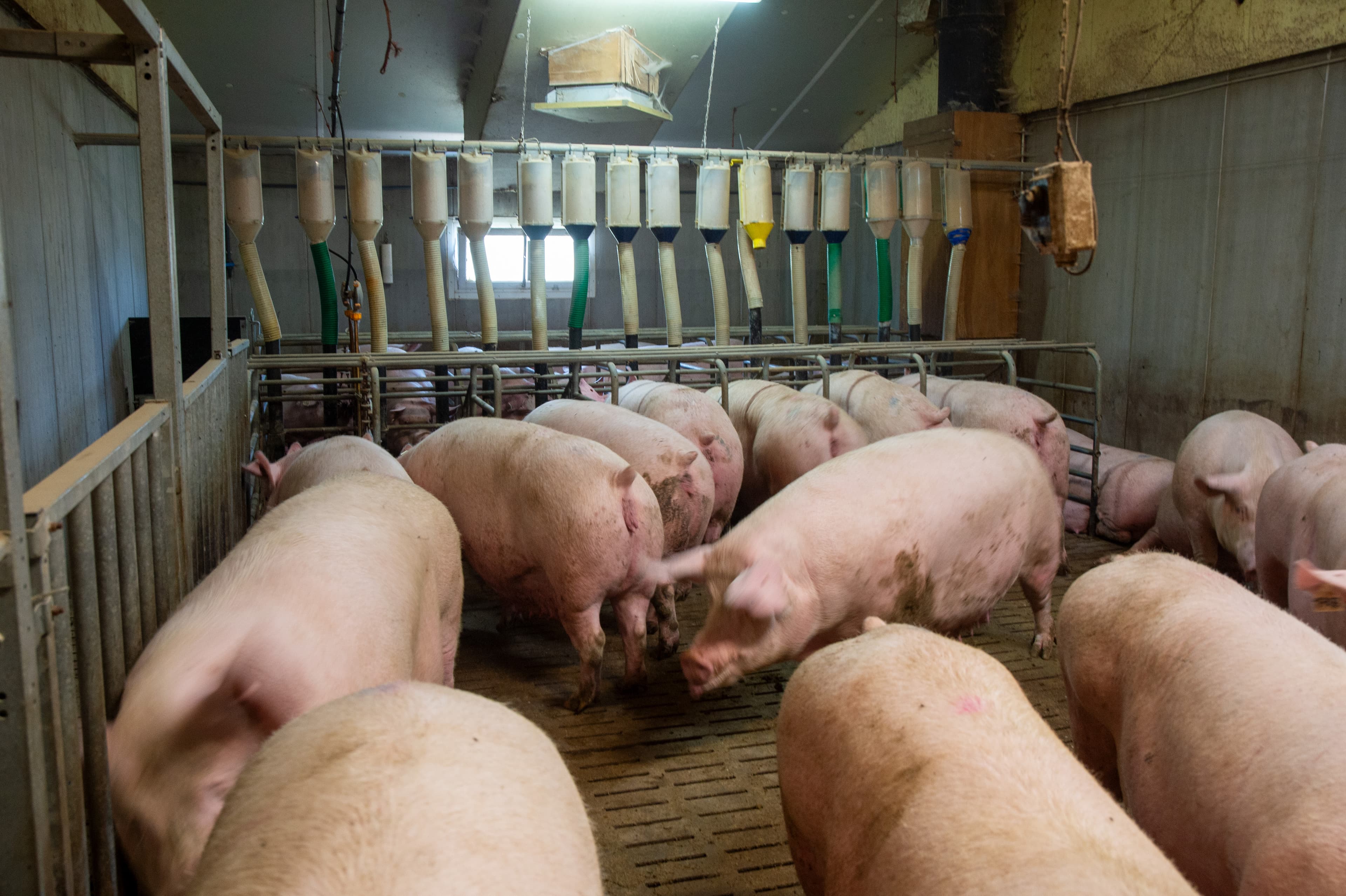
Gestating sows are housed in units where the finishing pigs used to be.
Pad cooling
Pad cooling is most likely the best investment Le Nouvel made in the reconstruction. He says, “Cooling is crucial with free-range farrowing pens. It allows you to create two climate zones, even when outside temperatures are high. One zone for the sow and one for the piglets. At the end of June this year, it was 40 °C outside and 27 °C inside.” To substantiate that, he shows the temperature trends of the summer of 2026 on his smartphone. The cooling system was installed in the breeding house, the farrowing units and the quarantine area. The cooling element is dimensioned in such a way that the maximum air passage speed is 1 m/s. That is the upper limit for a good cooling result, according to Le Nouvel.
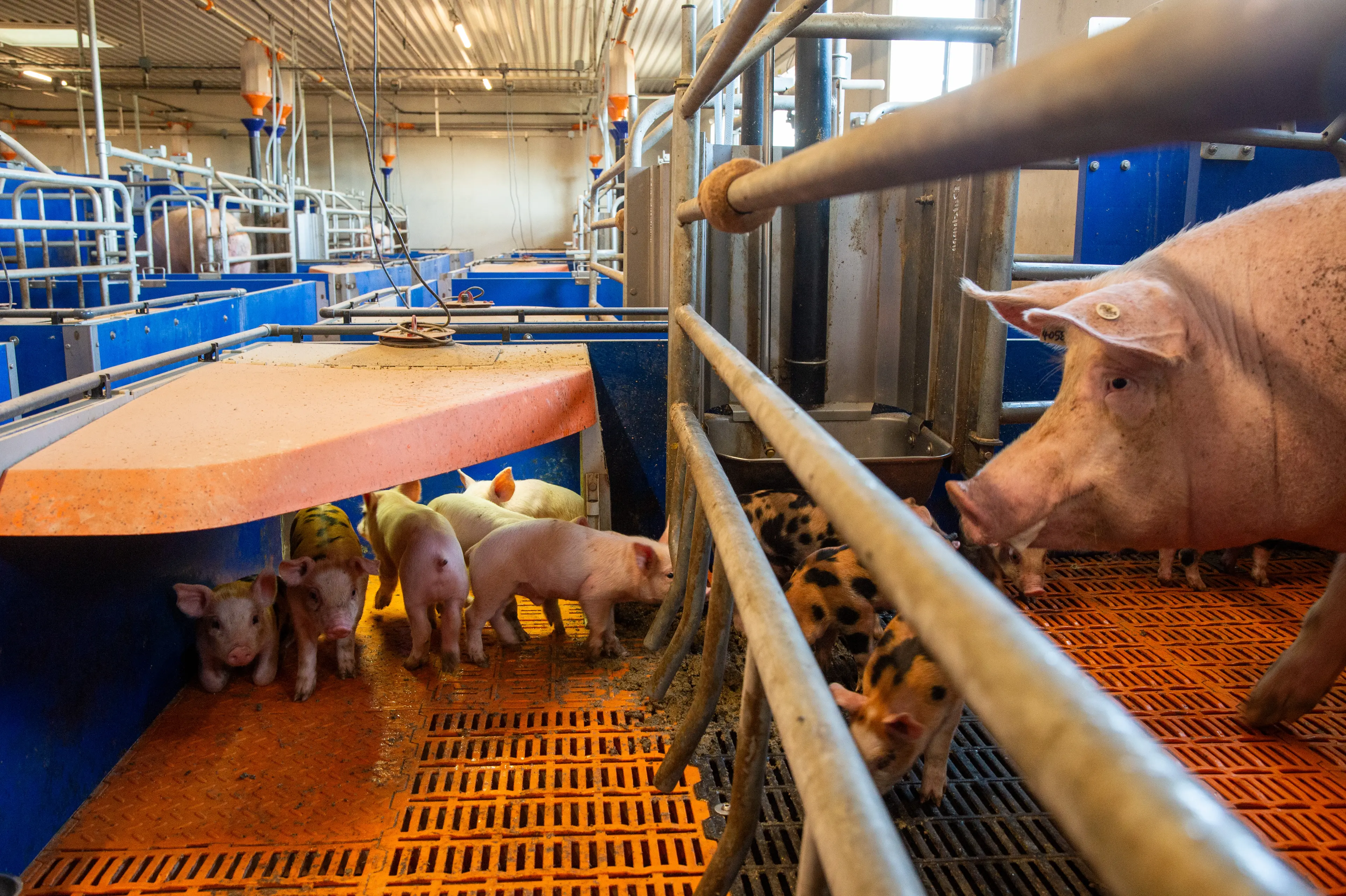
The terminal boar is a DanBred-Duroc. As the piglets grow larger, they remain in their nest.
The construction costs of the new farrowing house amounted to €10,000 per pen. That includes the cooling, the feeding technology and a year of manure storage. It is a considerable sum of money, but Le Nouvel isn’t pessimistic. At the time of the visit (September 2026), the pig price in France was high, at €1.90/kg. In addition, he receives an additional €0.15/kg in premiums. Le Nouvel is a member of the Eureden cooperative. Pig prices are based on the Marché du Porc Français, and the measures taken in France to protect the French market are having their effect in 2026. As a result, Le Nouvel is still managing just fine – as his cost price is €1.70/kg.
Meanwhile, in the “new” gestation house, everything works according to plan, as well. The old finishing house has been revamped with stalls and a feed dispenser per sow. This solution is satisfactory: the sows are spotlessly clean on the slatted floor anyway. The animals are sorted according to their condition as well as by parity, using only the eye of the master – and backfat thickness is measured occasionally to check if Le Nouvel is still seeing things correctly.
PROFILE
Name: Mathieu Le Nouvel, age 30.
Job title: Owner, together with his brother.
Farm: La Butte Rouge is a multi-site farrow-to-finish farm for 320 sows (TN70), located in Plœuc-L’Hermitage, Brittany, France. In recent years, the farm has had a major reconstruction to manage sows in free-farrowing pens.