
The benefits of integrating climate, feed and water management in poultry houses
In many poultry houses, climate, feed, and water are managed by separate systems or partly by hand. While this may seem manageable on paper, the practical reality is often a struggle with fragmented data and a lack of overview. When environmental conditions change, it directly influences intake patterns, but without an integrated view, these crucial links remain hidden. The challenge for the modern poultry farmer is to move away from managing "loose ends" and start managing the barn as a single, connected unit.
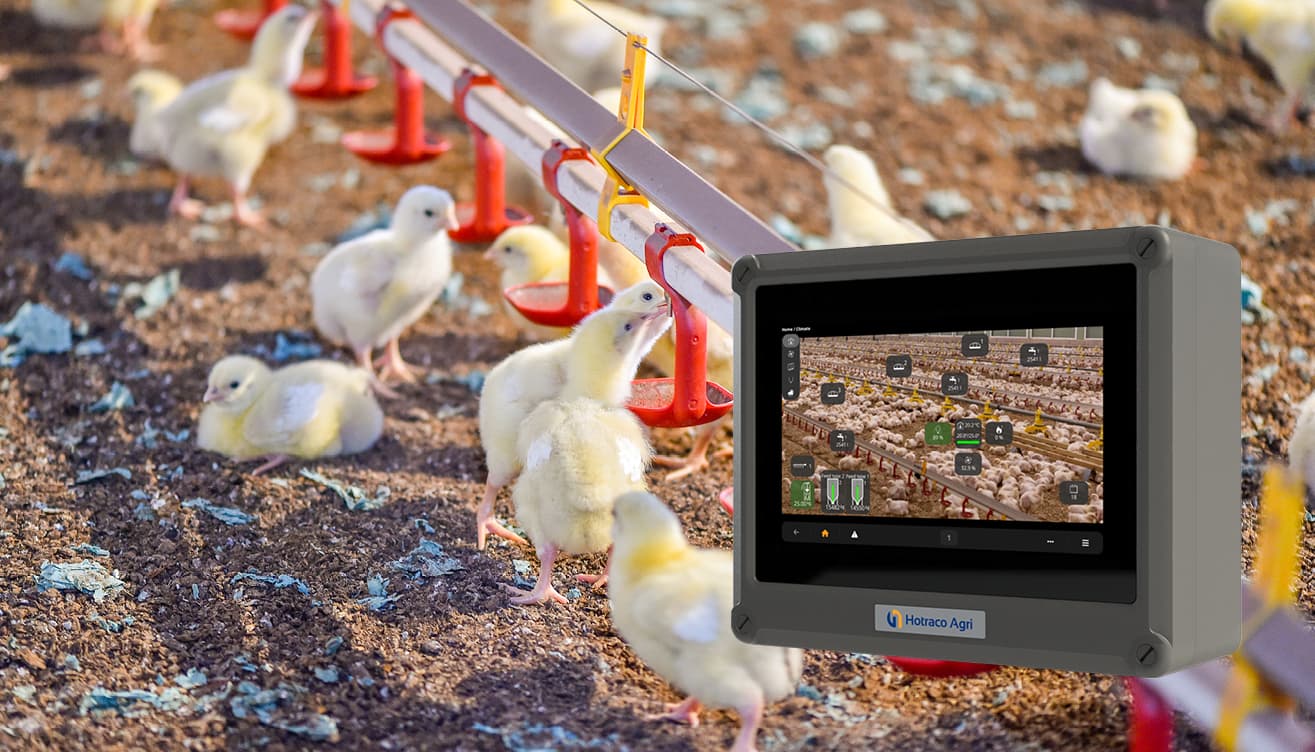
In this article you will learn:
- How integration reduces management complexity and human error
- Why connected processes lead to earlier detection of deviations
- The strategic benefits of centralised data for scaling your operation
Replacing fragmented systems with integrated control
To overcome the limitations of separate controllers, an integrated system brings all barn processes together within one centralised control environment. Instead of clicking through different interfaces, you gain a single point of entry for your entire operation.
A platform like Fortica MAX is designed to act as this central hub, managing climate, feed, water, and even animal weighing in one coordinated environment. This centralised structure ensures that adjustments in one area are aligned with the others, creating a consistent management strategy for the entire barn.
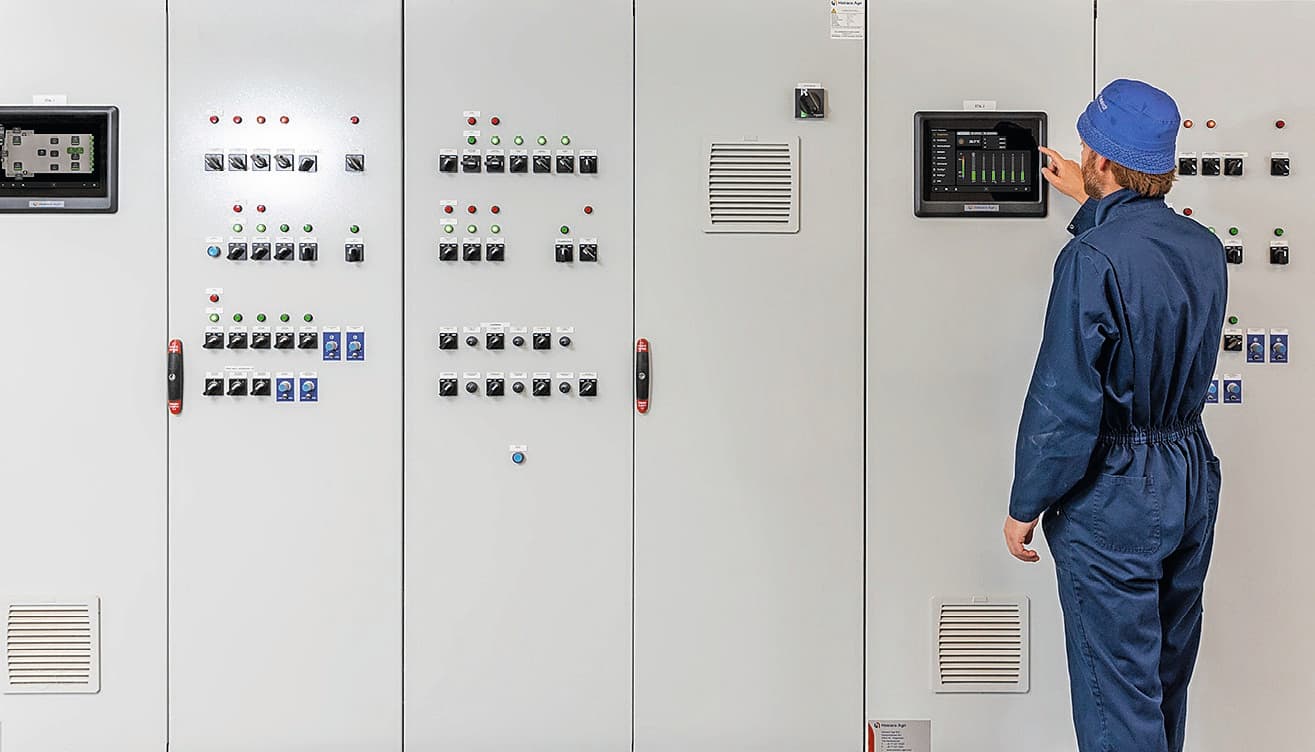
An integrated system brings all barn processes together within one centralised control environment.
Optimising poultry performance through connected insights
Climate, feed, and water are deeply connected processes that directly influence flock performance. For example, a rise in barn temperature typically increases water intake, while changes in water consumption can signal health issues or stress. Integration allows you to manage these flows in context:
- Early detection: Identify health or technical issues sooner by seeing how climate settings directly impact intake patterns.
- Coordinated settings: Adjust settings across all systems simultaneously to avoid conflicting control actions.
- Stable environment: Prevent performance dips by ensuring that ventilation and feeding programs are always in sync.
Unified alarm management and remote oversight
Separate systems often generate overlapping notifications, creating uncertainty about urgency and priority. An integrated automation system centralises alarm management so that all alerts follow one consistent logic. This improves clarity for farm staff and strengthens operational stability. When these systems are connected to a centralised platform, oversight can extend beyond the barn itself.
Managers can monitor performance remotely and respond quickly to deviations, whether adjustments are required on-site or can be handled digitally. Integration therefore supports both structured alarm handling and more flexible supervision.
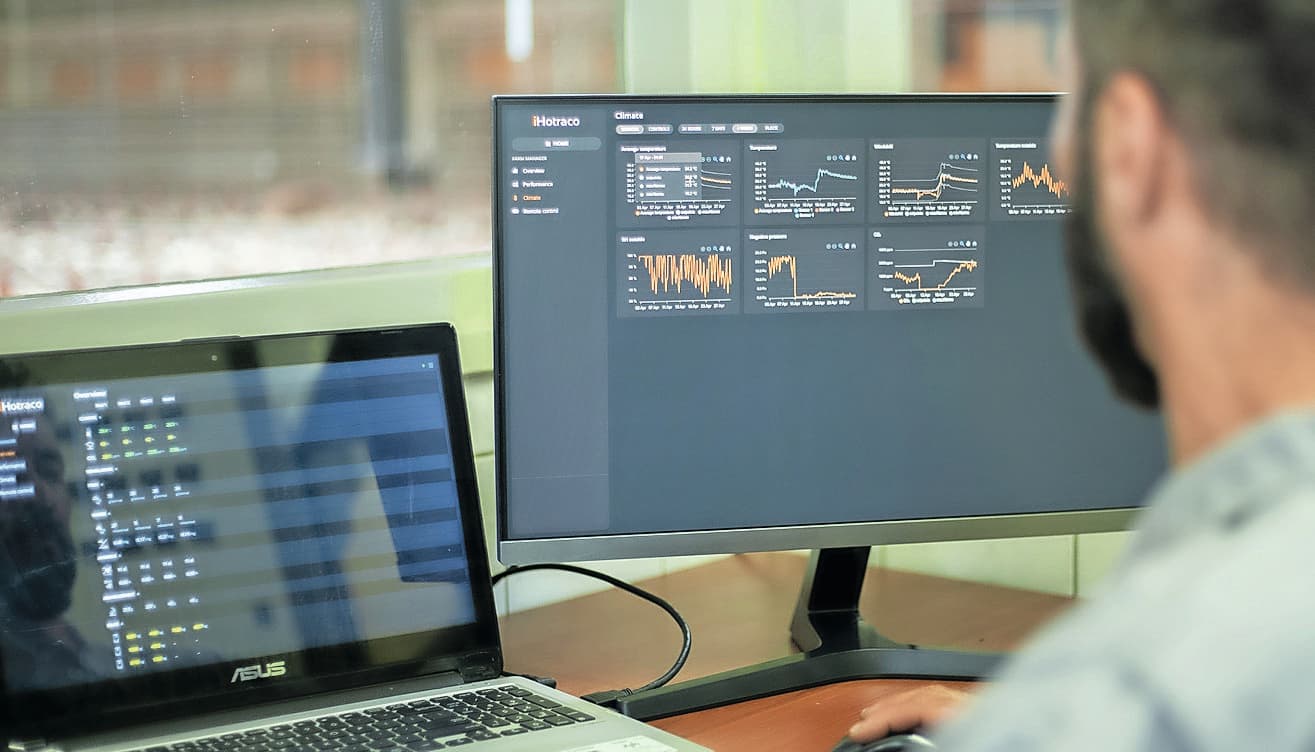
An integrated automation system centralises alarm management so that all alerts follow one consistent logic.
Reducing labour dependency in technical poultry barns
As barns become more advanced, finding experienced staff becomes more challenging. Managing multiple specialised systems requires extensive training. An integrated system reduces this complexity by making control manageable through a single user interface:
- Faster training – new employees become productive sooner by learning only one logic and one system.
- Better supervision – one person can effectively oversee multiple barns because the information is structured identically everywhere.
- Reduced dependency – management becomes less dependent on the technical expertise of a single individual.
Scaling your poultry farm with multi-site oversight
Integration also supports broader management when controllers are connected to a platform such as iHotraco Farm Manager. This allows data from multiple barns or locations to be monitored remotely, enabling performance comparisons and the identification of structural patterns across flocks.
For multi-site operations, this creates alignment; the entire operation follows one management framework. Even specialised processes, like Egg Flow Control, can be integrated to ensure egg collection aligns perfectly with the rest of your barn management.
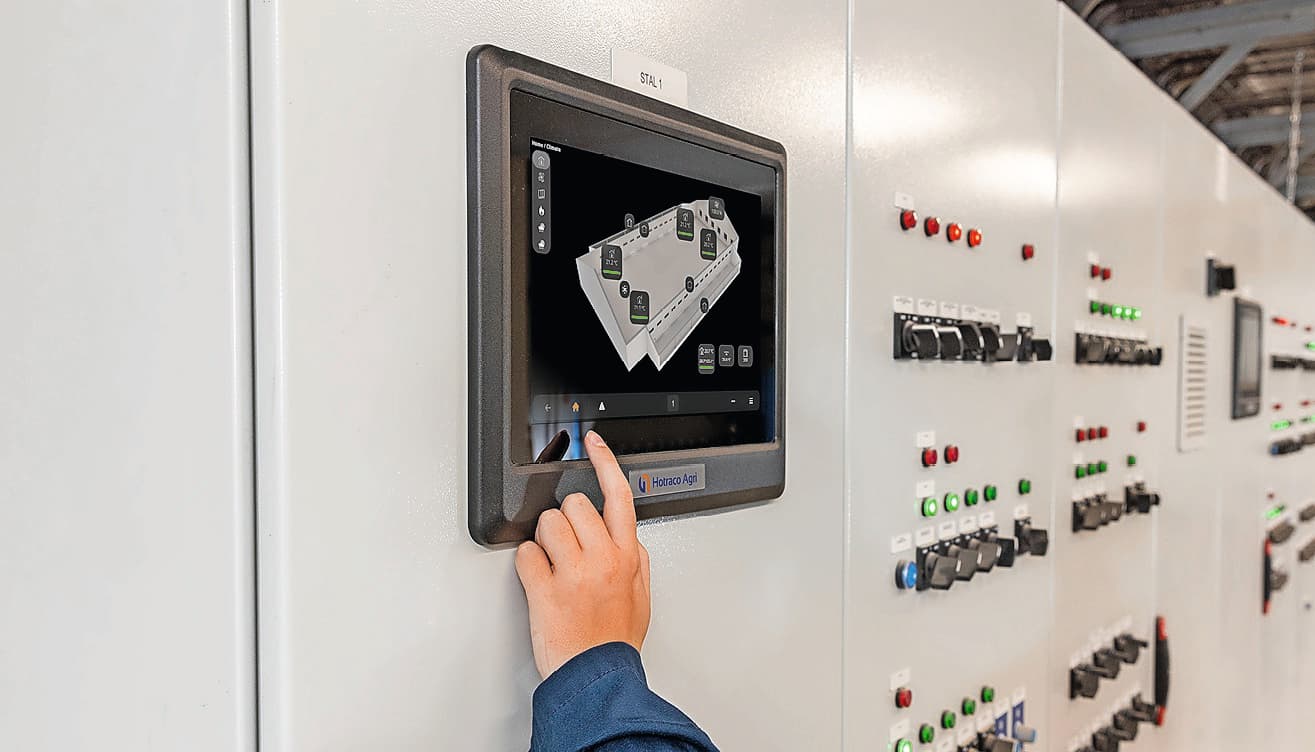
As poultry farms grow in size and technical complexity, effective management becomes less about adding new systems and more about connecting existing processes.
Conclusion
Controlling climate, feed, and water from one integrated system improves clarity and simplifies daily management without compromising precision. As poultry farms grow in size and technical complexity, effective management becomes less about adding new systems and more about connecting existing processes.
Integration ensures that all core barn processes work together within one cohesive structure, supporting stable animal performance and efficient labor deployment. In this way, automation becomes not just a technical tool, but a structural foundation for controlled growth and sustainable performance.
Curious how integrated control could support your operation? Contact our poultry specialists.
Q&A: An integrated automation system
Can an integrated automation system control processes beyond just climate, feed, and water?
Yes, an integrated automation system can control more than just climate, feed, and water. A platform like Fortica MAX, for example, also manages animal weighing within the same environment. In addition, specialized processes such as egg optimization can be integrated, so egg collection aligns fully with the rest of the barn management. This means an increasing share of operations shifts toward one central control point instead of separate, standalone systems.
Why is it important to link water intake to climate data?
Water intake provides an early signal of animal health and welfare, and is closely linked to barn temperature. A rise in temperature typically leads to higher water intake; when this pattern deviates, it can indicate stress or health issues. By reviewing climate data and intake patterns together, these kinds of deviations are recognized faster than when both are monitored separately.
Does remote monitoring mean staff never need to physically visit the barn anymore?
No, remote monitoring doesn't mean physical presence is never needed. With an integrated system, deviations can be monitored remotely and assessed quickly, after which it's determined case by case whether a digital adjustment is enough or physical presence in the barn is required. Remote monitoring therefore supplements day-to-day management, but doesn't fully replace physical checks.
Is an integrated system worthwhile for businesses with only one barn?
Yes, businesses with just one barn also benefit from an integrated system. Advantages such as one central control point, faster onboarding for staff, and less dependence on individual knowledge apply even without multiple locations. For businesses with multiple locations, a platform like iHotraco Farm Manager adds the ability to compare performance between barns and standardize processes, but that's an additional benefit, not a requirement.
How does integration reduce the risk of human error in barn management?
Integration reduces human error because adjustments are no longer made separately per system, but applied simultaneously across all processes. Without integration, staff have to switch between different interfaces, which increases the risk of missed adjustments or conflicting control settings. One central access point ensures that climate, feed, and water settings are always aligned with each other, preventing inconsistencies between systems.