
PUM expert: “Sharing knowledge creates lasting change in poultry farming”
PUM’s poultry expert pool currently has 15 volunteers and is looking to expand. In Africa, and increasingly in Asia, PUM experts work alongside local entrepreneurs, sharing practical knowledge to strengthen poultry businesses. Jan Gundelach has been involved in poultry projects in Africa for the past 10 years. He explains what makes this work so rewarding and why sharing knowledge can have such a lasting impact.

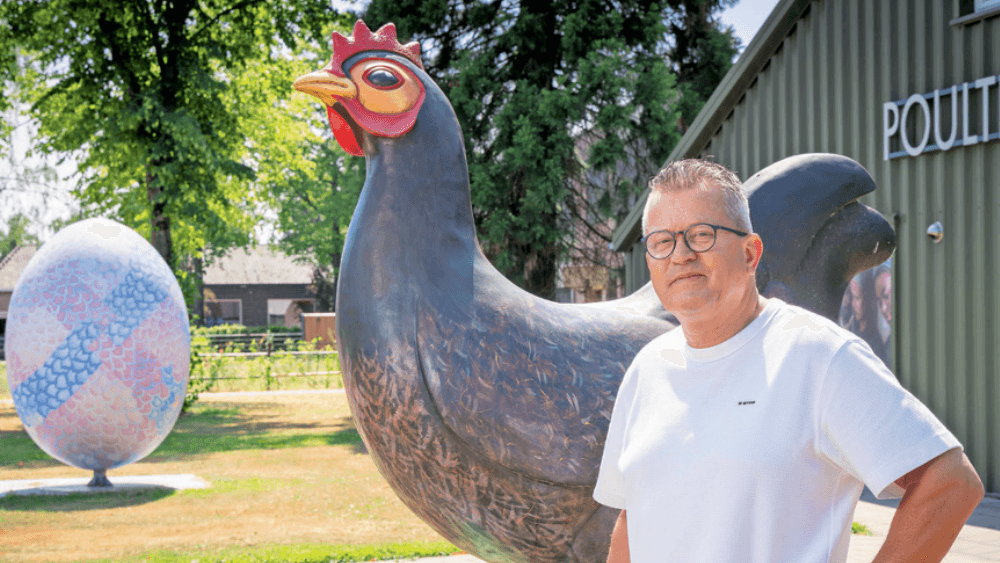
Jan Gundelach developed a deep affinity for Africa during his studies at the Higher Agricultural School and later in Animal Sciences at Wageningen University & Research (WUR). During his internships, he was struck by the optimism, warmth, resourcefulness and eagerness to learn of the people he met.
In 1991, he moved to Ethiopia with his Canadian wife and their first child, later relocating to Kenya. The family returned to the Netherlands in 2001. For the past 10 years, Gundelach has worked on projects through PUM’s poultry expert pool and has recently joined its dairy farming pool as well.
Why did you start volunteering for PUM in 2016?
I had already spent 10 years working in Africa, and as a lecturer at Aeres agricultural education centre, I regularly teach in Kenya and Ethiopia, mainly on poultry production. Through PUM, I primarily work on layer projects, although I also occasionally work with broilers.
Poultry is a growing sector because demand for eggs and chicken meat is increasing rapidly across Africa. Even a modest rise in household income can lead to a significant increase in demand.
Based on my extensive experience in East Africa, I came to the conclusion that sharing knowledge is one of the most effective ways to achieve sustainable change. With the right knowledge, the chances of success are much greater, and you put part of the responsibility in the hands of the people themselves. I also have a deep love for Africa. Through PUM, I can use my summer holidays to volunteer my time and experience to help improve poultry farming and other sectors.
What are the biggest challenges facing poultry farmers in Africa?
Feed is probably the biggest challenge. Feed mill De Heus, for example, is active in Africa and produces good-quality, consistent feed. But for many smallholder farmers, that feed is simply too expensive. They therefore buy feed from local producers and unfortunately some of those producers cut corners when it comes to the formulation.
What other challenges do poultry farmers face?
Housing is another important issue. How do you build a poultry house for 1,000 or 10,000 birds that keeps out pests, using materials that are readily available locally? And how do you keep wild birds out so they don’t eat the feed? The solution needs to be simple, efficient and, ideally, easy to replicate. Location is also important. A poultry farm should not be too far from a major town, because that is where the market is.
Do you need to know Africa well before you can work on projects there?
Not necessarily. The most important thing is that you have at least 5 years of experience in the poultry sector. That experience could come from running a business, either in primary production or elsewhere in the sector, or from working as a lecturer or researcher. You also need to be able to translate your knowledge and experience into practical solutions for local needs. And you have to be fairly adventurous and resourceful, because the reality on the ground is always different from what you might imagine from the Netherlands.
Profile
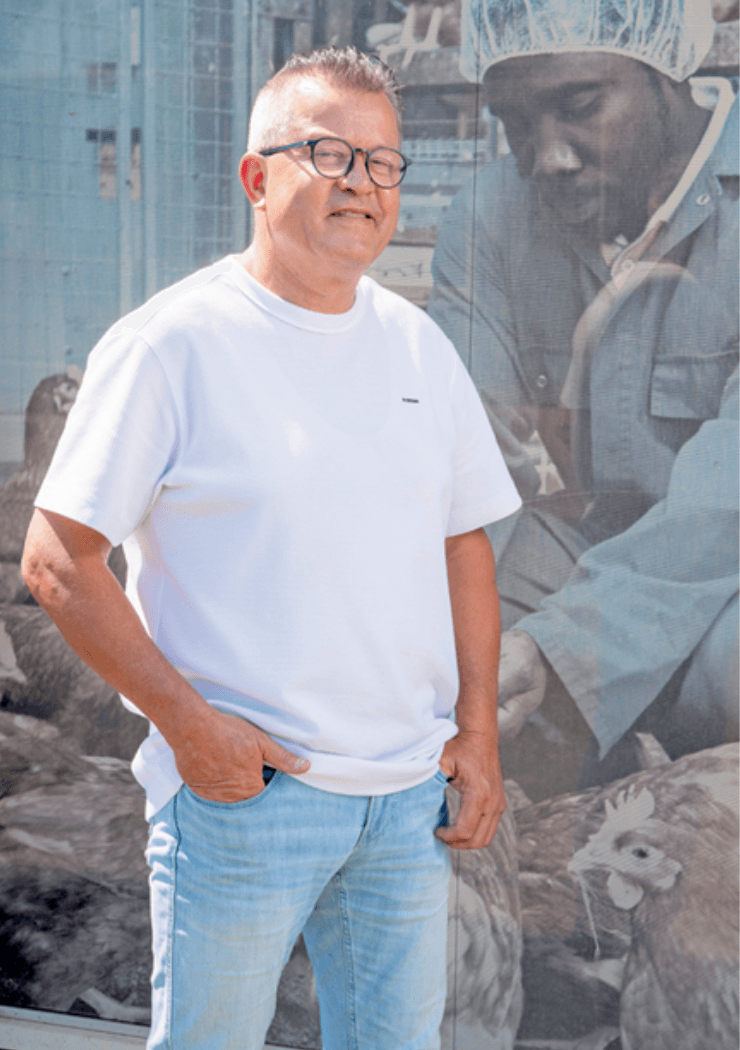
Jan Gundelach (62) has been active within the PUM organisation since 2016. PUM deploys 1,200 volunteer experts on a project basis to support local entrepreneurs, particularly in Africa and Asia. To date, Gundelach has now completed ten projects for the organisation. He is a lecturer/researcher at Aeres in Barneveld, the Netherlands, specialising in animal welfare and animal health. His also researches catching methods in poultry, whether organic poultry farming scores better than conventional farms, and compares organic farms with each other. In addition, Gundelach dedicates two days a week to internationalisation projects through Erasmus+. He is involved in poultry education initiatives in countries including Kenya and Ethiopia, helping to deliver Aeres training programmes abroad.
If you want to volunteer for PUM, how does it work in practice?
You need to be available for around 2 weeks at least once a year. Retired experts often take on 2 projects a year, sometimes even more. English is essential; French is an advantage. Experts can respond to projects within their field of expertise. You then explain why you believe you are the right person for the assignment.
If you are selected, you prepare for the project in the Netherlands and then travel to the project location in consultation with the local partner. PUM covers your flight and the first night’s accommodation, while the local partner covers the remaining nights. You are usually there for a week, or 2 weeks at most, working alongside a local entrepreneur.
Many organisations support local projects in Africa and Asia. Why did you choose PUM?
PUM is highly professional. They select projects carefully and the projects are always firmly embedded in local organisations such as cooperatives or businesses. We also look beyond the individual company and consider the wider business ecosystem, with the aim of strengthening the entire value chain around the organisation.
Another important aspect is that PUM is neutral. It doesn’t matter whether a request comes from a Christian, Muslim or other organisation. Because the requests come directly from the field, the assignments are often highly relevant and effective. There are many private organisations working in Africa as well, but they are not always as well established locally or as closely connected to the local context.
You have now completed 10 projects for PUM. Which one stands out as the most interesting or memorable?
My most interesting project was at Dheiton Farms in Kenya, a social poultry value-chain organisation working with women. Some 265 female farmers attended my training and they kept coming back for 4 full days! We covered layer farming, how to build a simple poultry house, poultry health, formulating layer feed and ensuring a clean and reliable supply of drinking water for the hens. The enthusiasm and eagerness to learn these women showed really moved me. Many of them lead very difficult lives, yet they are determined to learn, improve and build a better future. That was incredibly rewarding.
Dheiton Farms has since taken the next step by adding value to its eggs. They are now planning to produce Tok Tok-Cream from them. I introduced them to a female farmer in the Netherlands who is helping them, and we are also exploring opportunities for financial support through a fund. The Tok-Tok-Cream is sold in Nairobi, the capital. I'm sure there's a market for it there.
What project is next on your agenda?
I have a visit to Passion Agro and Furniture in Ethiopia coming up. Around 10 years ago, Aeres selected this project as a way of bringing business and education together. Students were involved for several years through study trips. At the time, a furniture factory was established with support from the business community, along with a poultry house for 600 laying hens, a guesthouse and a classroom.
This year, Passion Agro applied to PUM for support in expanding its layer operation. In the last week of August, I hope to travel to Debre Zeit to train Passion Agro employees as well as farmers from the surrounding area. We also aim to build a new poultry house for 1,000 laying hens. It will serve 2 purposes: it will provide local farmers with a practical example of modern poultry housing, while also generating income for Passion Agro. There is currently good money to be made from egg production in Ethiopia, so entrepreneurship is an important part of the equation as well.
What happens when a project requires investment?
You can achieve a great deal in Africa with a relatively modest investment. PUM projects can apply for support from the Hans Blankert Fund, which provides grants for investments by SMEs and business ecosystems. The fund can be used, for example, to purchase machinery, equipment and tools, or to finance training and shared facilities.
The local contribution is crucial. Sharing the financial responsibility for a project gives the local partner a real stake in its success and significantly increases the chances of achieving lasting results. The funding can be used for things such as machinery and tools, or to build a small poultry house. It can also support local training programmes or help strengthen partnerships and cooperation.
Do things ever go wrong?
Assessing whether a potential partner has the capacity to run a business is extremely important. I once worked on a project in Uganda that did not go according to plan. A much larger poultry house was built than originally intended and the budget ran out before the building was finished. Obviously that's exactly what you want to avoid. Fortunately, that was an exception.
PUM makes projects grow
PUM is an impact-driven organisation with knowledgeable, committed and entrepreneurial people. It empowers ambitious entrepreneurs in building a structurally better future for their community: socially, ecologically and economically.