France
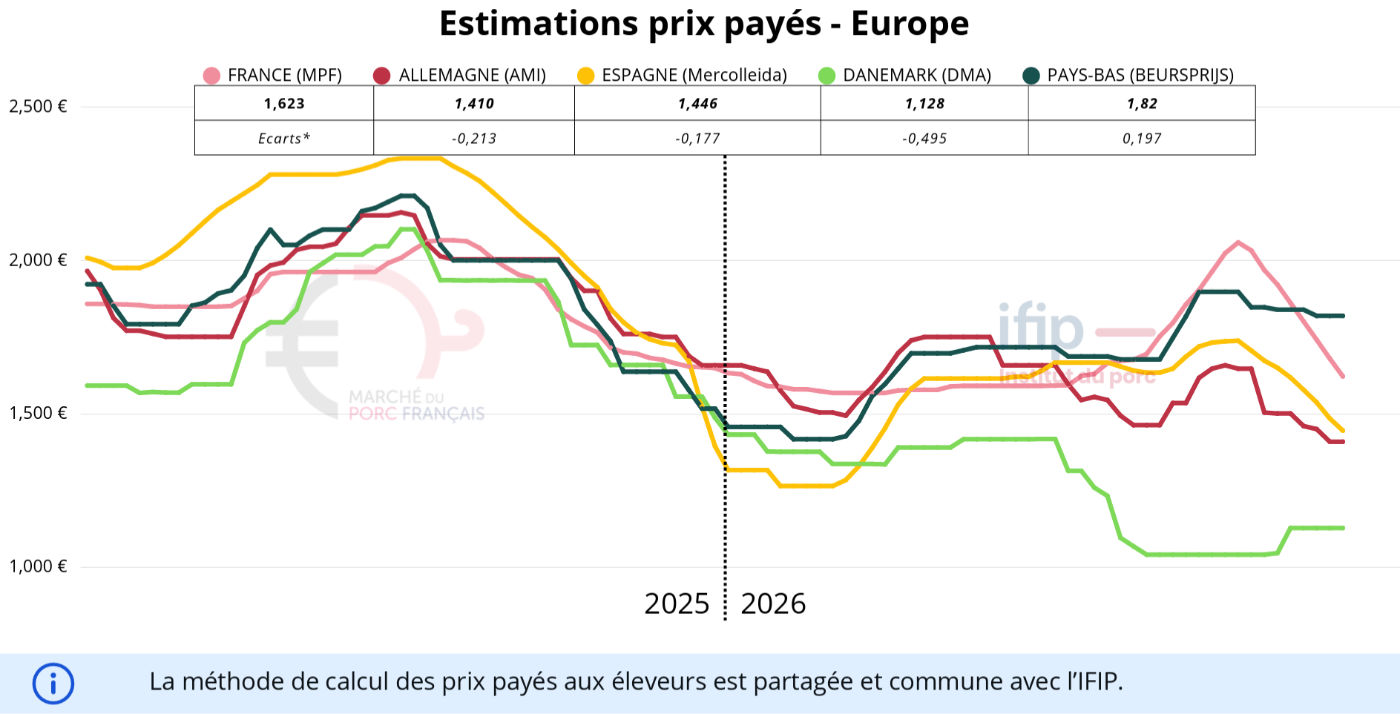
French pork market: The average price observed on the French Pork Market continues its sharp decline, following the trend of previous weeks. During the sessions, bids remain at the maximum permitted reductions, namely 1 centime on Monday and 5 centimes on Thursday, respectively. This position is shared by all buyers. Over the week, the average price therefore falls by 6 centimes to reach 1,442 €.
Uniporc: As last year, slaughter numbers increase during the weeks leading up to the public holiday on 11 November. However, they remain more than 10 000 pigs below the level of 2025, while weights continue to rise quite significantly. This trend indicates that there are enough pigs available to meet slaughterhouse operators’ needs and keeps the French market under pressure.
European Union
In Germany, the drop of 8 cents did not rebalance the market. Slaughter numbers fell by 15 000 to 20 000 pigs, to around 720 000 head, as slaughterhouses limited activity amid commercial difficulties. Weights remain stable, and a few signs of improvement are appearing as the holidays approach. The commercial advantage linked to the price drop quickly faded in the face of declines in other European quotations. The benchmark price remained stable last Wednesday, with no guarantee that the decline has ended.
In Spain, supply is increasing as pigs affected by summer growth delays arrive for slaughter. Surpluses are now emerging in Catalonia and Aragon, while weights continue to rise. Despite high activity, slaughterhouses are limiting their needs amid difficulties in finding outlets for the meat, an unusual situation in November. Stabilization in Germany could slow the declines, but threats of strikes in Catalonia risk further disrupting collections.
In Belgium, weights are increasing, but remain below those of 2025. If the supply and demand of pigs remain balanced, difficulties in marketing the meat are significantly eroding processors’ margins. Concerns are growing about the viability of some facilities and farms, even as slaughterhouses seek to preserve their suppliers.
In Italy, the market continues to deteriorate, particularly for conventional pigs. Supply and weights are increasing, with some producers bringing sales forward in anticipation of price declines. Meat demand is slowing, weighed down by consumption and competition from imports. Processing needs are still providing some support for prices, but are expected to decline after mid-November. In response to these difficulties, several processors have decided to reduce operations to four days a week for two weeks.
United States and China
Slaughterings American reach 2,615 million pigs, up 1% year over year. The value of pork cuts falls by 3,2%, leading to a further 4,1% decline in hog prices, now 25% below the level of 2025. Slaughterhouse margins remain low, and the seasonal increase in availability could intensify pressure on prices.
In China, pork prices continue to fall despite a slight improvement in demand. Supplies remain ample, fueled by high volumes from large-scale farms and accelerated sales by independent producers. Consumption remains insufficient to absorb this supply, limiting the prospects for a price recovery in the short term.