
No matter how well or poorly the incubation process is managed, some chicks will always be produced that look very healthy, especially when the hatching eggs come from flocks with good reproductive performance.
However, because the inside of a chick cannot be seen, it is impossible to determine whether each chick’s heart, liver, and digestive organs have fully developed, or whether it has an appropriate residual yolk sac weight. In fact, the development of these organs can be well controlled during incubation. Therefore, hatchery managers have a greater influence on broiler growth performance than might be expected. Hatchery managers can affect broiler slaughter weight, which can directly affect a company’s profits in an integrated operation.
All hatchery managers understand that basic conditions such as temperature, humidity, egg turning, and ventilation must be provided during incubation.
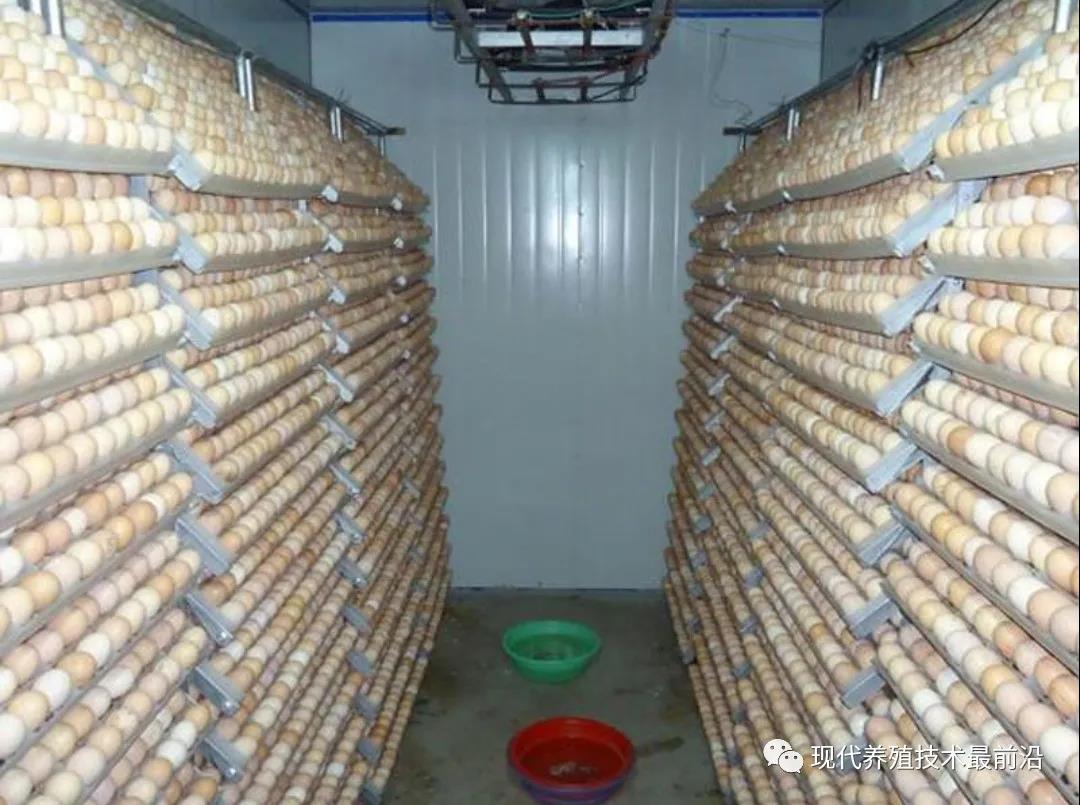
1, Consequences of High Temperature
All the basic conditions mentioned above are very important, but this article will focus on incubation temperature, particularly the effects of high temperatures during incubation on broiler growth performance.
During incubation, temperature can control the rate of embryo growth and development, but the embryo cannot regulate its own temperature as it develops.
During the first 9 days of incubation, the embryo is very small and has little activity, so the heat it generates is insufficient to reach the ideal temperature conditions. It must absorb heat from the external environment, for example, from the air in the incubator. In addition, during incubation, eggs continuously lose water through evaporation, causing the surface temperature of the egg to be lower than that of the surrounding environment or the incubator’s set temperature (approximately 0.1℃ lower).

2, Temperature rise
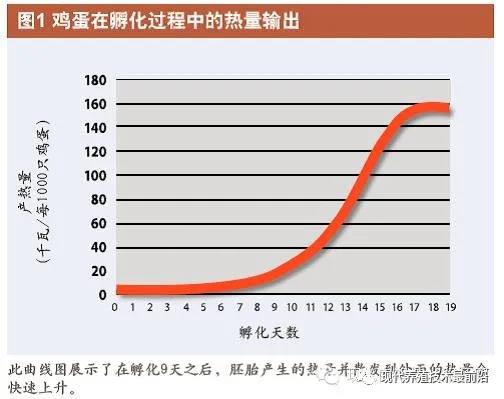
After 9 days of incubation, the embryo becomes increasingly active and generates more heat each day. If the embryo’s temperature remains within the optimum range (see Figure 1), this heat will be dissipated into the environment. It is normal for the egg surface temperature to be 0.2℃ higher than the environmental temperature. Therefore, during the second stage of incubation, it becomes important to gradually lower the incubator temperature to prevent the embryo’s temperature from becoming too high.
When setting the incubator temperature, it is best not to base the temperature program on an assumed temperature, but instead to set it according to the daily measured eggshell temperature. When hatching eggs are transferred into the incubator, the ideal eggshell surface temperature should be 37.8℃. The set temperature should be gradually lowered in areas farther from the incubator.
A trial conducted by the product development center of Aviagen, Inc. in the United States demonstrated the effects of excessively high egg temperatures. The trial consisted of three consecutive experiments and used two Aviagen strains, including a high breast meat yield strain and a control strain. The trial primarily investigated the effects of increasing incubation temperature on chick quality and broiler growth performance, and presented the results for Aviagen’s conventional broiler strain in the second experiment.
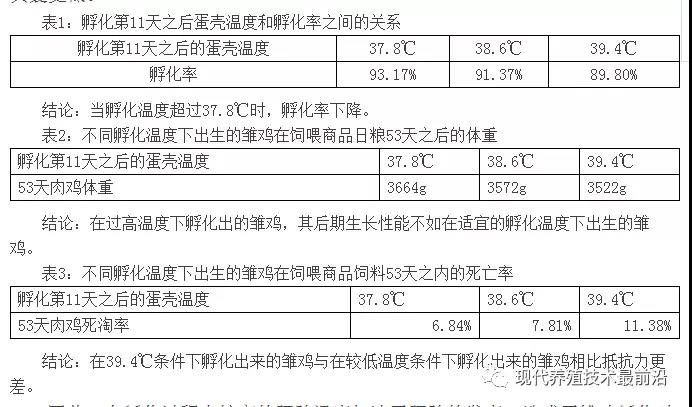
In this trial, eggshell temperature was measured and recorded, then transmitted to a wireless broadcasting system using Gemini data loggers, enabling real-time data recording. Incubator conditions could be adjusted as needed to ensure the required eggshell temperature was achieved. During the first 10 days of incubation, all hatching eggs were incubated at an eggshell surface temperature of 37.8℃. From day 11 to day 18 of incubation, the hatching eggs were incubated at three different eggshell surface temperatures: 37.8℃, 38.1℃, and 39.4℃. After hatching, the researchers assessed the chicks and followed their growth performance on the farm.
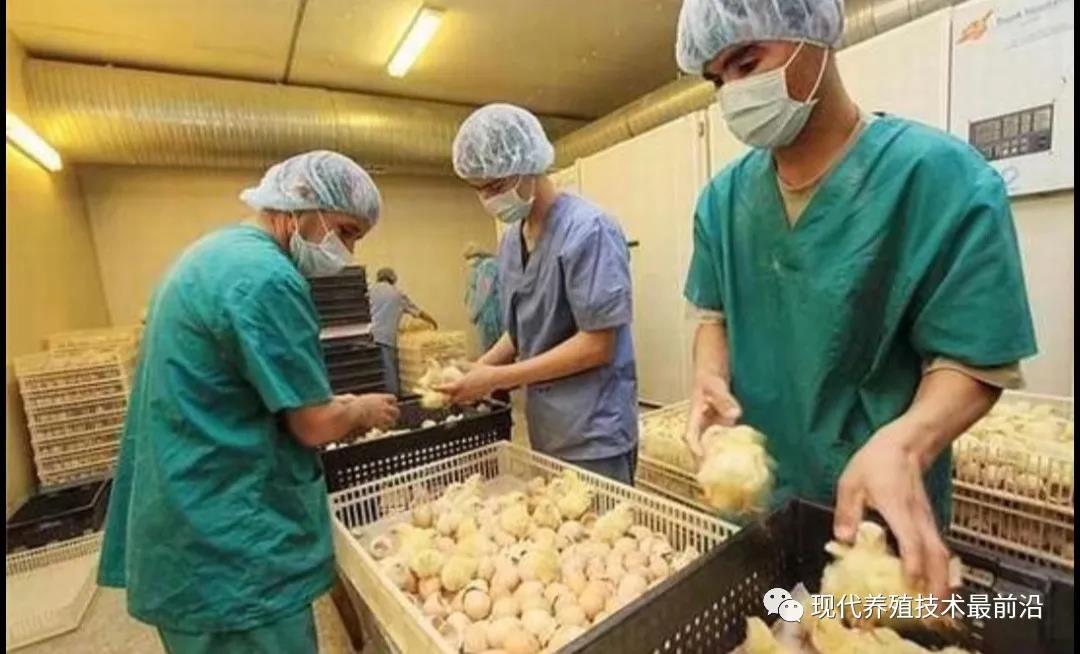
3, Higher-quality chicks
The results showed that throughout the incubation period, the group maintained at an eggshell temperature of 37.8℃ had a higher hatch rate and a higher proportion of healthy chicks (with fewer joint swellings and navel problems) than the groups incubated at higher temperatures. This group also had higher body weights and survival rates at later stages (see Tables 1, 2, and 3). In another trial, the chicks were slaughtered and examined immediately after hatching. Compared with the other two high-temperature treatment groups, the control group (the group with an eggshell temperature of 37.8℃) had higher proportions of heart, crop, and small intestine weight relative to body weight without yolk, and a lower amount of residual yolk sac.
Conclusion: Chicks hatched at 39.4℃ were less robust than chicks hatched at lower temperatures.
Therefore, higher embryonic temperatures during incubation accelerated embryonic development, resulting in more residual yolk in chicks at hatch. However, higher incubation temperatures affected the growth and development of many internal organs, particularly the heart. The higher the incubation temperature, the lower the chick’s relative heart weight. This means that during the subsequent growing and finishing period, the heart must work harder to support rapid growth.
Finally, excessively high incubation temperatures affected the development of the digestive organs, impairing the genetic potential for subsequent growth. In this trial, all breeds were affected to a similar extent by higher incubation temperatures, with consistent results both at the hatchery and during the final feeding stage. It has been suggested that incubation temperatures should be lower for high-performing breeds. However, these trials provided no clear data showing whether high-output breeds are as sensitive to incubation temperature as other breeds.
Therefore, to produce more high-quality broiler chickens, it is very important to set the eggshell temperature during incubation at 37.8°C. This not only helps achieve better hatchability and chick quality, but also leads to better broiler performance during later production.
Author: NiradaLeksrisompong
Translator: Qiao Yong
Copyright belongs to the original author. The content is for reference and exchange only!