
What role does negative pressure play in poultry farming? Do chickens need negative pressure? How much negative pressure is needed? Let’s explore these questions today. Simply put, “negative pressure” is a gas pressure state below normal atmospheric pressure (that is, what is commonly called one atmosphere).
1. Static negative pressure: In a sealed poultry house, when an exhaust fan is turned on, a pressure difference develops between the inside and outside of the house. This pressure difference is negative pressure. When there is no airflow, it is static negative pressure. The pressure is the same at every point inside the house, meaning the negative pressure is the same at the front, middle, and rear.
A well-sealed poultry house can generate negative pressure above 30Pa when one exhaust fan is switched on. Some equipment manufacturers claim that their fans can generate negative pressure above 40Pa. Static negative pressure is an important indicator for assessing how well a poultry house is sealed.
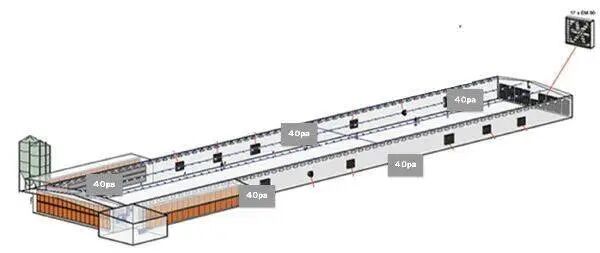
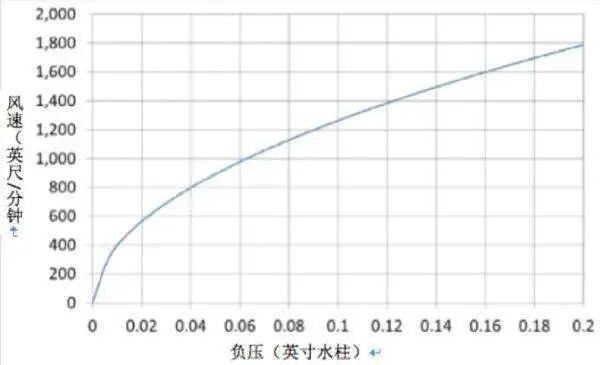
2, dynamic negative pressure: In poultry houses using sidewall inlets, negative pressure is an indirect way of measuring air speed at the inlets. The greater the pressure difference between the inside and outside, the greater the air speed entering the poultry house; conversely, the smaller the pressure difference, the lower the air speed.
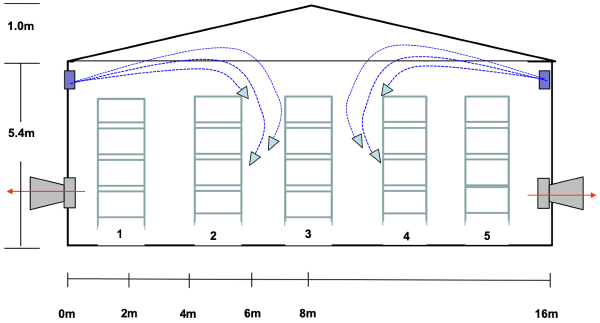
The goal of winter ventilation is for cold air to enter through the sidewall inlets, travel along the ceiling to the middle of the poultry house, and then slowly descend to the floor. We want to maximize the time the cold air spends at the ceiling so that it can be heated and its humidity reduced.
At the same time, a certain air speed also creates an air circulation pattern: cold air enters through the sidewall inlets, reaches the middle of the poultry house ceiling, and then descends to the floor, where it is finally exhausted by the fans along with moisture.
3, principles
Negative pressure is merely a physical condition; in itself, it is not worth a 1 cent to chickens. It is studied to control airflow and optimize the poultry house environment.
The goal of winter minimum ventilation is to keep the air moving along the roof as far as possible before it reaches the middle of the poultry house roof. The negative pressure required by inlets that can direct air parallel to the roof is lower than that required by inlets that direct air parallel to the side wall.
Compared with narrow poultry houses, wide poultry houses require a higher negative pressure and larger inlet openings. Colder weather requires a higher negative pressure than warmer weather. In all inlet ventilation systems, if the inlet opening is smaller than 2 centimeters, it is almost impossible to achieve ideal air mixing.
Make sure negative pressure does not become a burden in poultry farming
1. Negative-pressure ventilation is a mechanical method (fans) that actively extracts air from the poultry house, with air entering passively.
2. How is negative pressure created? It results from the amount of incoming air being less than the amount of exhaust air; in other words, the exhaust airflow is greater than the incoming airflow.
3, the result of excessive negative pressure is that the air in the chicken house is not exchanged thoroughly or in a timely manner, which affects air quality and farming performance.
4, chickens do not need negative pressure, and people do not need negative pressure either. So who needs negative pressure? It is a combined requirement of the building design, season, heating mode, and ventilation mode.
5, if you can achieve balanced ventilation with no dead zones and no stress, then the lower the negative pressure, the better.
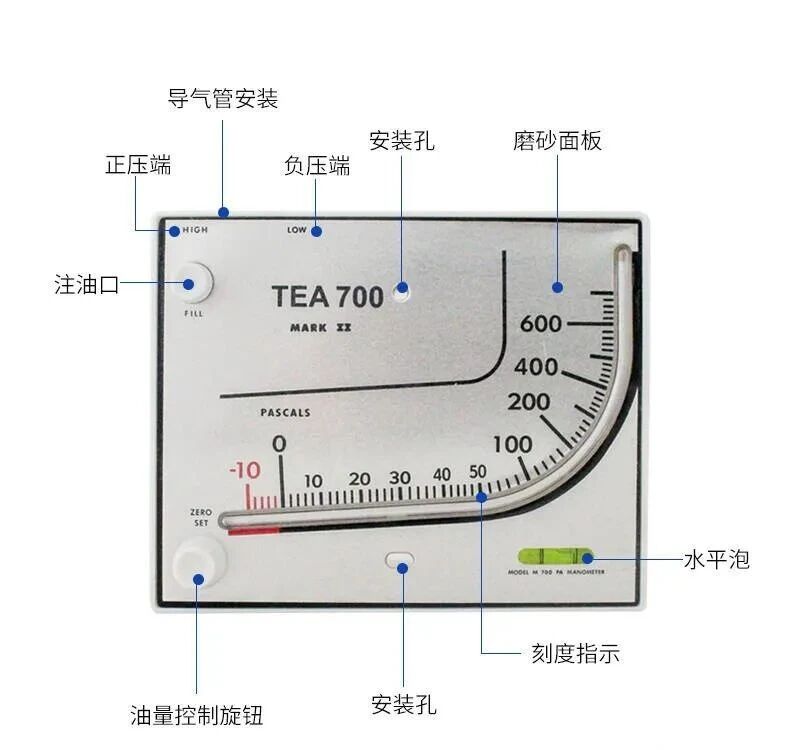
6, because of the position of the side windows, heating pressure, and the structure and shape of the house, a certain level of negative pressure must be maintained to meet ventilation requirements for a specific chicken house, climate, and set of needs.
7, without conducting an on-site inspection, no one can give you a relatively accurate negative pressure value.
8, for a chicken house with a span of 16 meters and a length of 08 meters, a relatively safe and reasonable negative pressure range is between 14–28 (this applies only under tunnel ventilation and high ventilation rates). This needs to be adjusted flexibly according to the chickens’ size and air quality (air quality measuring instrument—measures oxygen, sulfur dioxide, and ammonia). The ventilation mode and ventilation rate also need to be adjusted flexibly. If the chickens are very small and the chicken house uses side ventilation, the negative pressure value is very low; 2–01 is also fine, because at this time there are almost no ventilation dead spots, air quality is generally not a problem, and the ventilation rate is often very low.
9, the hardest thing to master and standardize in chicken farming is ventilation. It is a subject that can never be done perfectly; only by continually improving and making sustained efforts can we do right by our chickens!
10, I hope negative pressure does not become a burden for chicken farming!