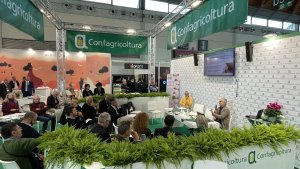
The P_I_G Operational Group aims to research and demonstrate actions that enable proper, innovative and sustainable phosphorus management on pig farms, starting with pig nutrition, moving through the manure treatment stage, and continuing to the field application of livestock effluents. The aim is to prevent phosphorus levels in regional soils from rising to the point where areas are excluded from spreading, in a situation where land availability is already limited.
Programme
- 09:45 Participant registration
-
10:00 Opening of proceedings
- The P_I_G Operational Group: context and motivations Guido Zama - GranSuino Italiano
- Innovative phosphorus management on the pig farm, from feeding to the field. Gabriele Vaccari - GranSuino Italiano. Giuseppe Moscatelli - CRPA
- Trial of diets with low mineral phosphorus content and assessment of their effects on productivity and animal welfare. Davide Bochicchio - CREA-ZA
- 10:45 Comparison among participants
- 11:00 Closing remarks
Objectives
The P_I_G Operational Group aims to research and demonstrate actions that enable the proper, innovative and sustainable management of phosphorus on pig farms, starting with pig feeding, continuing through the slurry treatment phase, and ending with the field application of livestock effluents. The aim is to prevent phosphorus levels in regional soils from rising to the point where areas are excluded from spreading, in a situation where land availability is already limited.
Specifically, it has the following objectives:
- formulate diets that are balanced in nutrient supply but designed to reduce the phosphorus content fed to pigs and limit its excretion in slurry. This can be achieved by improving the digestibility of the phosphorus naturally present in feed (using enzymes such as phytases), as well as by using mineral phosphate sources that are more readily absorbed by the animal;
- reduce the phosphorus content in diets and, consequently, procurement costs;
- generate knowledge to conduct a livestock phosphorus (P) balance in order to assess its use efficiency, as is now common practice for nitrogen;
- adopt proper management and treatment of slurry to concentrate phosphorus on the one hand, relocating it, and on the other hand obtain phosphorus-depleted fractions for use on land with high phosphorus levels;
- apply pig effluents to fields, taking into account both the phosphorus content of the materials to be spread and the phosphorus levels in the soil, as well as the crop cycle to be established, with the dual objective of agricultural production and environmental sustainability, while also avoiding exceeding regulatory limits.
Expected results
The actions undertaken by the P_I_G Operational Group will lead to a reduction in phosphorus inputs on the pig farm (feed and fertilization), resulting in a reduction in pollutant discharges and an improvement in water and soil quality.
Specifically, the following concrete results are expected:
- guidance, based on in vivo experimental trials in the animal facility, on how much mineral phosphate supplementation in feed can be reduced without causing calcium and phosphorus deficiencies in bones at slaughter or reducing pig welfare and health;
- environmental sustainability and cost-benefit assessments of introducing into the diet more digestible and soluble mineral phosphate sources than those currently used, as well as of using enzymes to increase the digestibility of plant-derived phytic phosphorus;
- quantify the reduction in phosphorus excreted in slurry that can be achieved without compromising livestock performance;
- Balance and phosphorus distribution achievable by applying different treatment technologies to pig slurry;
- Identification of treatment technologies useful for balancing the ratio between nitrogen and phosphoric anhydride (N/P2O5) in pig slurry;
- Definition of crop plans based on the P content in the slurry and other matrices present on the farm, the P already available in the different farm soils, and the requirements of the crops planted;
- A significant reduction in synthetic phosphate fertilizer inputs on pig farms;
- preventing farm land that has received pig slurry for years from being at risk of exclusion from spreading in accordance with the limits set by Regional Regulation No. 2 of 19 March 2024;
- a phosphorus balance calculation tool, in addition to the nitrogen balance tool, which, starting from feed inputs (livestock phase), can provide information on the distribution of phosphorus and nitrogen across the different livestock effluent matrices present on the farm (treatment phase) and support decision-making in defining crop and spreading plans in relation to the P content of the soils;
- demonstration and awareness-raising among stakeholders in the sector that the innovations developed by the GOI can increase the environmental and social sustainability of pig production.