1). Replacing soybean meal with 5% water-soluble corn protein can improve dressing percentage, meat yellowness, serum protein and lipid-related indicators, and antioxidant capacity in broilers, with no observed effect on growth performance. Jiangsu Institute of Poultry Science https://doi.org/10.1016/j.psj.2026.107107
2). High-leucine diets for turkeys reduce early growth and plasma 5-hydroxytryptamine, while supplementation with valine, isoleucine, and tryptophan can restore production performance and normalize tibia ash. West Virginia University, USA https://doi.org/10.1016/j.japr.2026.100739
3). Adding 2% blue mussel meal (Mytilus edulis) to broiler diets from day 8 to day 33 of age had no observed effect on body weight or feed intake, but increased the water-to-feed intake ratio and showed a trend toward improved gait scores. Norwegian Meat and Poultry Research Centre https://doi.org/10.1016/j.psj.2026.107153
4). Under adequate calcium conditions, the ratio of fine to coarse limestone in Lohmann Brown laying hen diets had no observed effect on production performance or egg quality. However, a higher proportion of coarse limestone reduced tibia traits in pullets and tibia calcium content in older hens. Federal University of Viçosa, Brazil https://doi.org/10.1016/j.psj.2026.107047
5). Corn source significantly affects mineral availability in broilers. Models based on chemical composition, including crude protein, phytic acid, crude fat, fiber, and crude ash, can predict the availability of several minerals. Yangzhou University
https://doi.org/10.1016/j.aninu.2025.10.012
6). In laying quail, midnight feeding, limestone particle size, and moderate calcium reduction had limited direct effects on production performance and egg quality, while bone traits were the indicators most sensitive to calcium level. Ferdowsi University of Mashhad, Iran https://doi.org/10.1016/j.japr.2026.100736
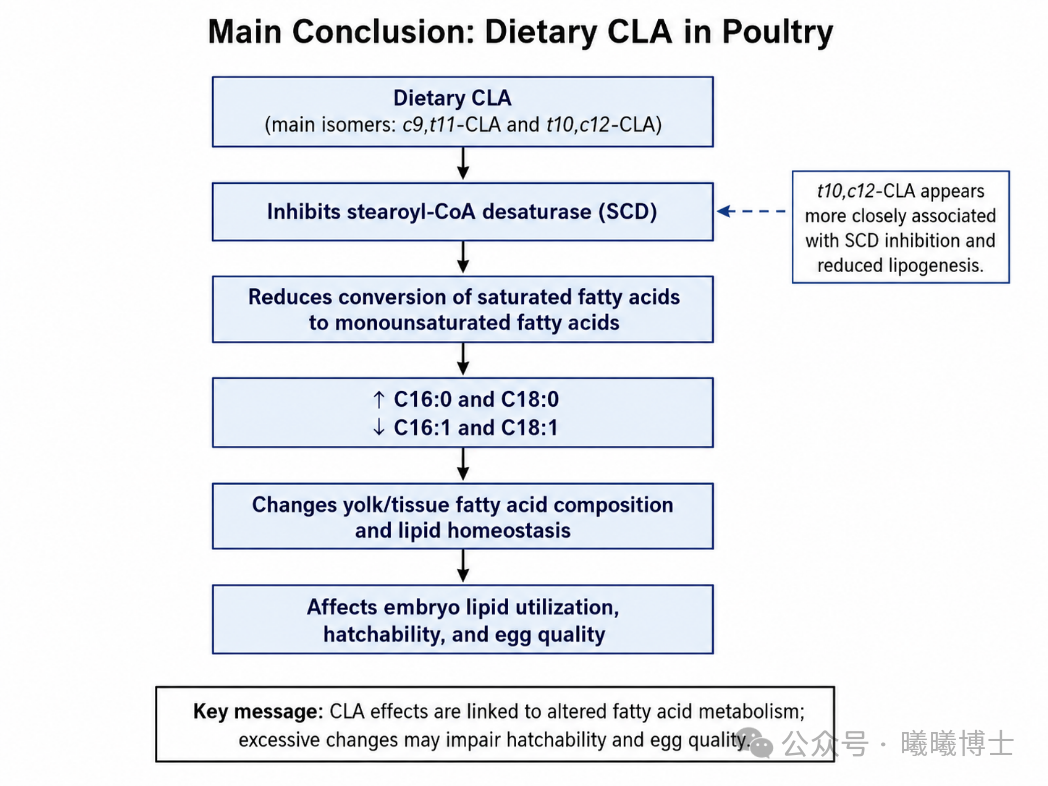
7). Review: Conjugated linoleic acid supplementation in poultry diets and its effects on hatchability, egg quality, and immune function
Dietary conjugated linoleic acid in poultry diets and its implications for hatchability, egg quality and immune function: a review A recent review describes the use of conjugated linoleic acid (CLA) in poultry diets and its effects on hatchability, egg quality, immune function, and lipid metabolism. Moderate CLA supplementation can increase the content of functional fatty acids in poultry eggs and meat, enhance immune responses, reduce body fat deposition, and improve product oxidative stability. However, excessive CLA supplementation may adversely affect hatching rates of hatching eggs, egg quality, and poultry growth performance by altering yolk fatty acid composition. When using CLA in poultry production, care should be taken to improve the nutritional value and health effects of products while avoiding adverse effects.