
One. Seal all air leaks in the poultry house
It is difficult to provide proper minimum ventilation in a poorly sealed poultry house.
We want all air to enter the poultry house through the air inlets, not through cracks and holes. Cold air sinks. Cold outside air entering through cracks, curtains, holes, and other openings will fall to the floor, causing condensation, damp and caked litter, and poor flock performance. We can test how well the poultry house is sealed by measuring static pressure: close all doors, windows, and air inlets, and turn on a 48-foot, 20,000 cfm fan. We should then be able to achieve a static negative pressure of 0.15 inches of water column. If it is less than 0.15, it means too much air is entering the poultry house through cracks and holes. The higher the value, the better sealed the poultry house is.
Two. Insulate before ventilating
If we cannot retain heat in the poultry house, we cannot maintain a good house environment in cold weather. The ceiling insulation should have an R-value of about 19. Check the poultry house for holes, areas where the insulation has changed, and areas with no insulation at all. Insulate the rear end of the poultry house, the rear door, and any areas that are currently not insulated.
Three. Set fan timers according to the birds' age to ensure the correct minimum ventilation rate
Ensure that all fans are controlled by 1 timers. The ventilation rate is usually 0.10 cfm per bird during the first week and reaches approximately 0.90 cfm per bird by the eighth week.
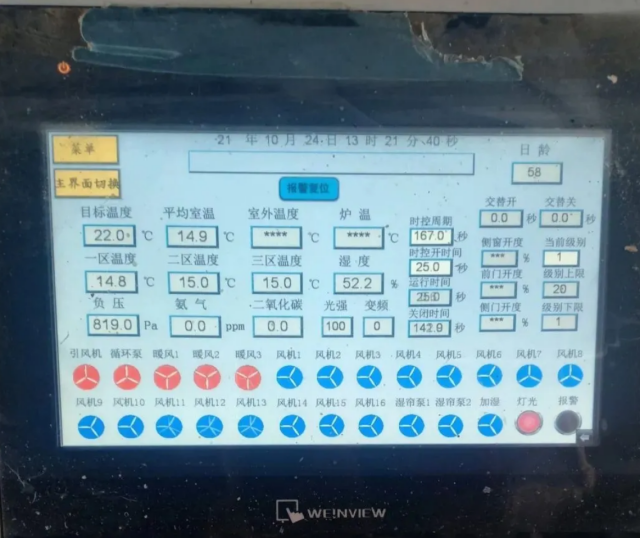
Four. From 1 days of age until market, the fan timer settings (ventilation rate) need to be increased every week throughout the entire rearing period.
Increase the fan operating time every week to cope with the increased moisture released into the house as the birds grow. It should be noted that the ventilation time settings at the end of the rearing period are just as important as those at the beginning. For most of the time at the end of the rearing period, the constant-temperature setting is usually more important than the timer setting. However, if high temperatures do not activate the temperature control, the minimum ventilation timer must still be set appropriately to ensure air quality.
Five. Maintain minimum ventilation regardless of conditions inside or outside the house.
If the minimum ventilation rate cannot be maintained, air quality in the house will deteriorate, the litter will become damp, and the ammonia concentration will rise. The loss of house temperature caused by minimum ventilation is relatively small and is worthwhile compared with the problems caused by increased humidity. We also need to remember that even when cool rain is falling outside the house, we can and must ventilate. After cold air is heated, its capacity to hold moisture increases. When air warms by 2 0 degrees Fahrenheit, its relative humidity decreases by about half, so its moisture-holding capacity doubles. In winter, cold air entering the poultry house becomes warm and dry, allowing it to carry away more moisture through the fans. Ventilation is the only way to remove moisture from the litter in the poultry house.
Six. Cold outside air entering the poultry house must be above the height of the birds and have sufficient velocity to mix with the warm air inside the house before reaching them.
To meet this requirement, the poultry house needs to be well sealed, and the static pressure should be approximately 0.10. This requires a properly designed poultry house with adjustable air inlets. We need approximately 0.10 inches of static pressure to project the incoming air 20 feet into the poultry house so that it reaches the center. Static-pressure-controlled air inlets can meet this requirement effectively. Projecting incoming air along the ceiling as an airstream can prevent cold stress in the flock. Air mixing can also improve heating fuel efficiency by preventing heat produced by the birds, heaters, and brooders from rising to and becoming trapped at the ceiling. Mixing fans inside the poultry house also help promote uniform temperatures and can reduce fuel use.
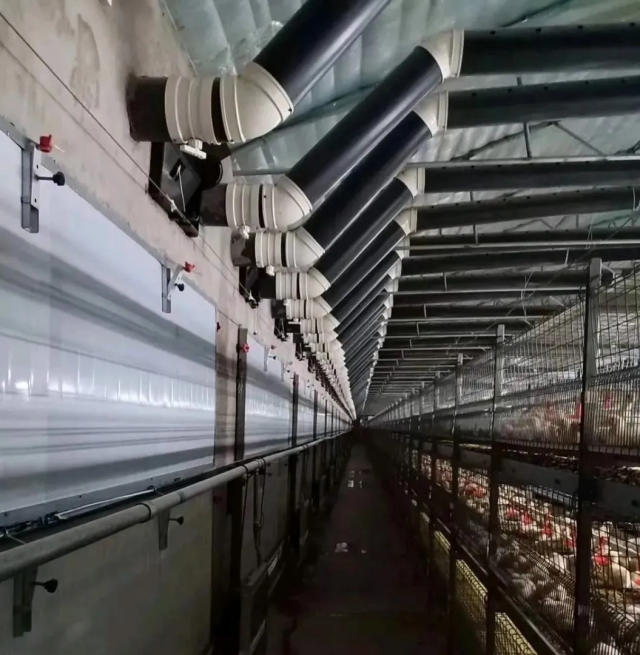
Step seven: If there are problems with wet litter and/or ammonia, we need to increase the minimum ventilation rate.
This means we need to increase the amount of time the fans run. For every pound of feed a bird consumes, it releases 2 pounds of moisture into the poultry house. Therefore, a lot of moisture is produced in the house during the rearing period. Feces and excess moisture produce ammonia, and this becomes worse when the litter has a high moisture content. Proper ventilation is the only way to remove moisture from the litter and the poultry house. One rule of thumb for judging litter moisture is to take a handful of litter and squeeze it firmly. If it sticks tightly together to form a ball, it is too wet; if it sticks together loosely, the moisture level is appropriate. If it does not stick together, it is too dry.
Step eight: If increasing the ventilation rate does not solve the problem of wet litter, you can raise the temperature in the poultry house slightly.
Sometimes, when the litter becomes very hard and slick, extending fan run time does not solve the problem.
This usually means the house needs some additional heat (a furnace or brooder) to help reduce humidity, making it easier to remove moisture. During the warmest part of a less humid day, slightly increasing fan run time may help dry out the house. If this does not work, the house temperature must be increased. If there is a lot of dust in the house and the litter is too dry, we need to reduce the minimum ventilation rate. This situation usually means we are over-ventilating and need to reduce fan run time.
Nine, if the poultry house becomes too hot, check the thermostat settings, not the fan timer settings
The minimum ventilation timer is used to remove moisture and maintain air quality, not to control temperature. When the poultry house needs to be cooled, focus on the thermostat or controller temperature set point, not the ventilation timer, and increase ventilation. In this situation, a higher ventilation rate is needed to achieve temperature control, and fan operation is controlled by the thermostat or controller set point. Do not confuse this with minimum ventilation, which is controlled by a timer.
Ten. From 1 days of age until market age, adjust the backup thermostat settings, curtains, and alarm system
Events involving excessively high temperature and humidity caused by a power outage or fan stoppage can result in the death of chickens during winter. For older birds, even just a few minutes without ventilation in a fully enclosed poultry house can cause the temperature to rise by 20 degrees Fahrenheit, leading to suffocation and death. During the rearing period, maintaining the recommended backup device settings can provide a safeguard for you and your flock. One rule of thumb is to set the backup device and alarm within 10 degrees Fahrenheit above or below the target temperature.
Note: This article is based on a translation by AuburnUniversity. Some management content applies to broilers raised on rice hull litter and should be interpreted rationally, not blindly applied to caged broilers. This content is for reference and discussion only!