
Unlocking zinc’s potential in laying hen nutrition
As modern laying hens continue to produce eggs for longer periods, maintaining skeletal strength while sustaining high egg output has become a major challenge for producers. Ensuring an adequate supply of highly available trace minerals, particularly zinc, is increasingly important to support both productivity and bone health throughout the laying cycle.
Zinc is an essential trace mineral involved in hundreds of metabolic processes. In laying hens, it contributes to eggshell formation, bone mineralisation, tissue integrity, antioxidant protection, and immune function. Adequate zinc nutrition helps birds cope with the physiological demands of continuous egg production while maintaining a strong skeletal structure.
Towards more efficient zinc nutrition
However, not all zinc sources are equally effective. Traditional inorganic zinc sources, as ZnO or ZnSO4, are widely used in poultry diets but can exhibit limited bioavailability because zinc may interact with other dietary components in the digestive tract before reaching absorption sites.
Capmag Zn by Terresis is magnesium-protected zinc reducing unwanted interactions in the gastrointestinal tract and improving zinc bioavailability in the intestine of animals. Capmag Zn aims to maximise utilisation of the mineral and support key physiological functions.
From zinc availability to performance
A trial was conducted in Mexico, using Bovans White laying hens. An initial adaptation period without any treatment was carried out from 55-57 weeks old of age. Then, from 57-67 weeks of age, hens were distributed into 3 groups: a control group receiving 80 ppm of zinc from ZnO, a Capmag Zn group receiving 40 ppm of zinc and an organic zinc group receiving 40 ppm of zinc. Performances, bone mineralisation and zinc in tibias were analysed.
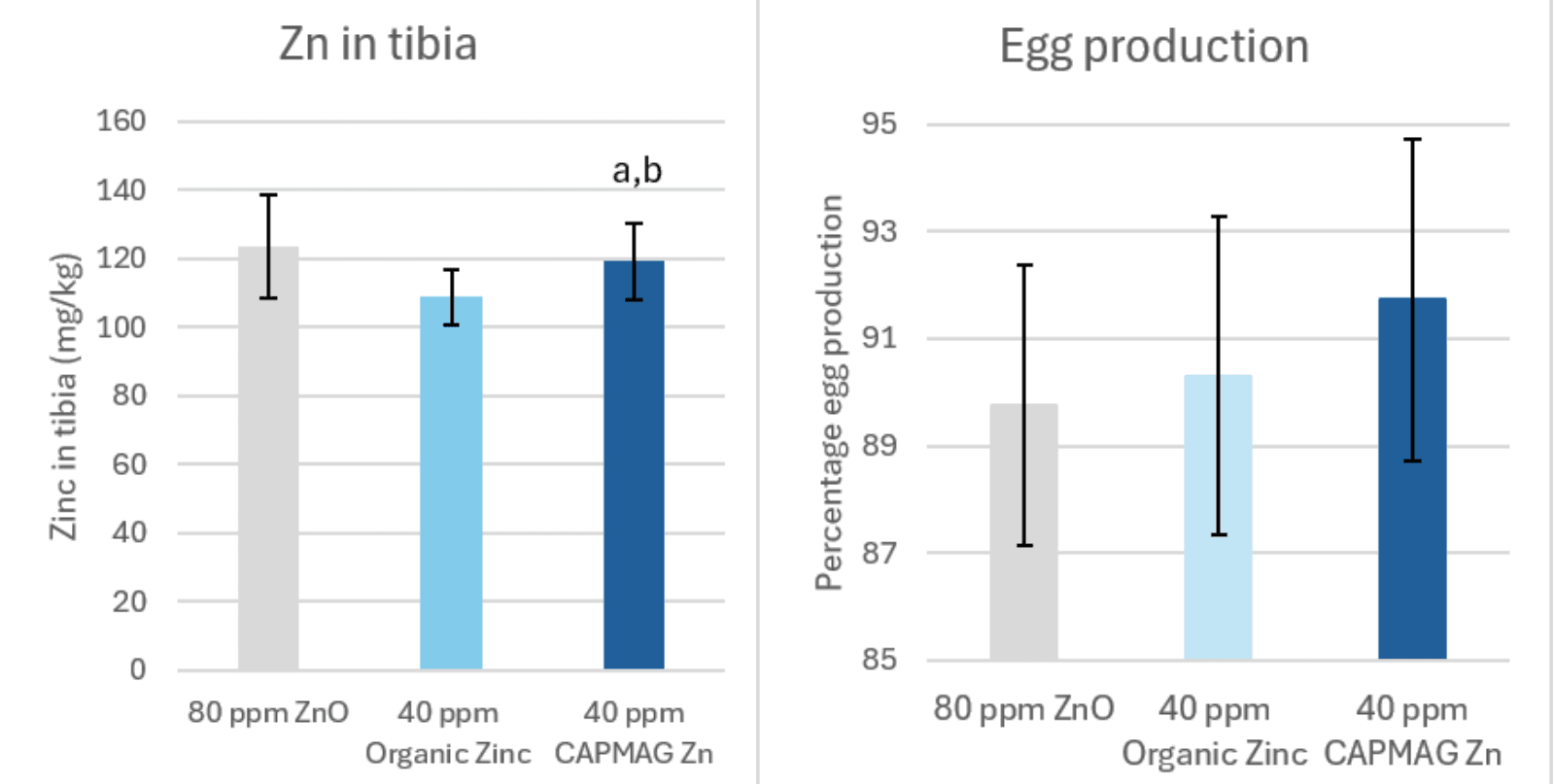
The first observation was that egg production remained high across all treatments, indicating that reducing zinc supplementation from 80 ppm ZnO to 40 ppm Capmag Zn did not compromise laying performance.
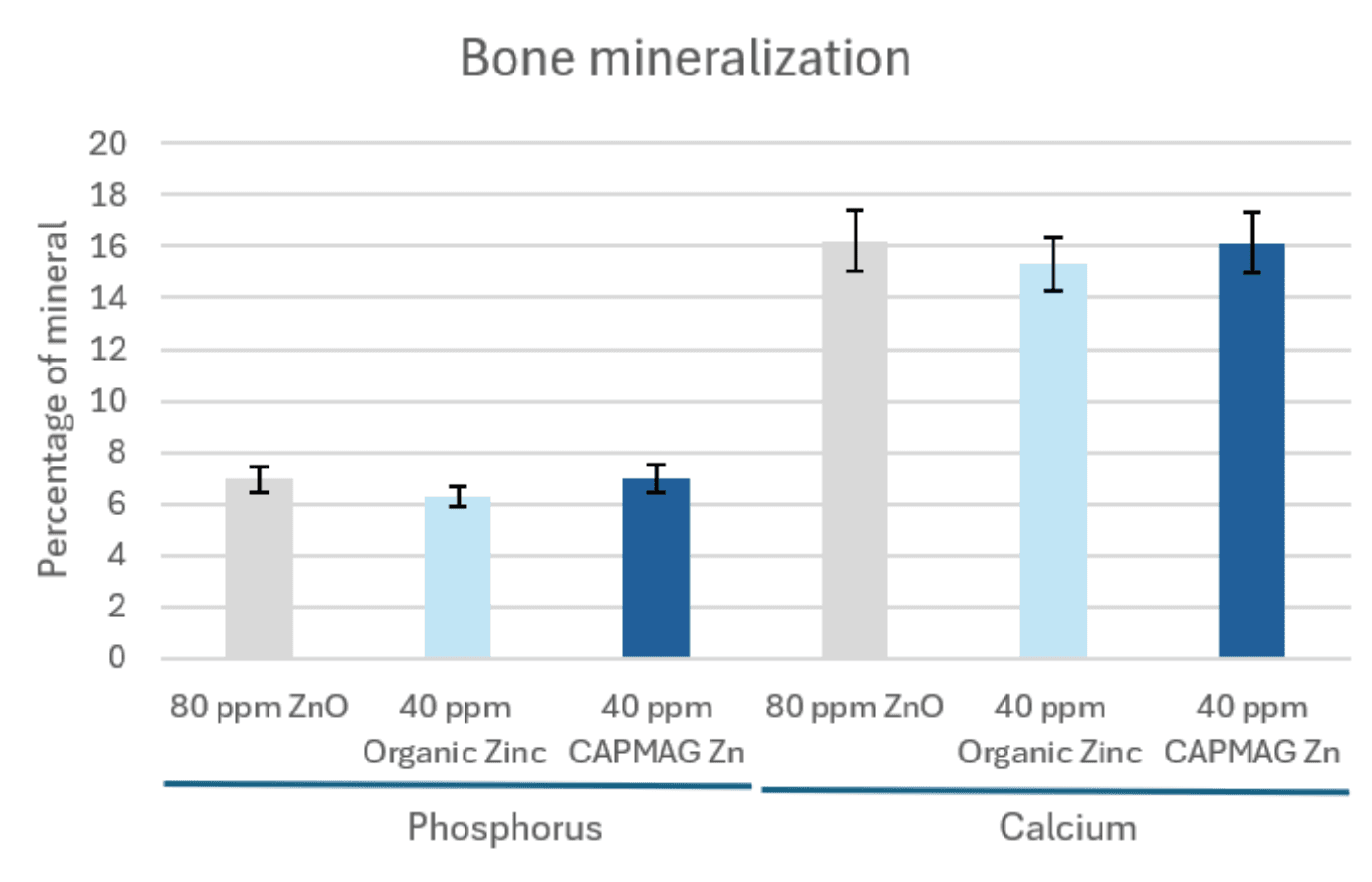
The most notable differences were observed in bone mineralisation. For phosphorus deposition in bone, laying hens receiving Capmag Zn achieved values comparable to those obtained with 80 ppm ZnO and superior to those observed with the organic zinc treatment.
A similar trend was detected for calcium mineralization. Hens supplemented with Capmag Zn showed significantly greater calcium deposition than those receiving organic zinc and reached levels equivalent to the birds supplemented with ZnO.
Analysis of tibia zinc concentration provided additional evidence of the effectiveness of Capmag Zn. Hens receiving 40 ppm Capmag Zn accumulated zinc in tibias at levels similar to those supplemented with 80 ppm ZnO. In contrast, the organic zinc treatment resulted in lower zinc concentrations.
Figure 1 – Effects of zinc supplementation on performance and bone health in laying hens
Future perspectives
Modern layer genetics are capable of producing eggs for longer periods than ever before. While this increases profitability, it also places greater demands on skeletal reserves.
The present results demonstrate that Capmag Zn can maintain egg production while supporting bone mineralization and zinc retention at only half the supplementation level of conventional ZnO. Such improved efficiency may help producers optimize mineral nutrition while supporting flock longevity and welfare.
Capmag Zn appears to enhance zinc bioavailability and utilisation, providing an effective alternative to conventional zinc sources. This innovative approach offers nutritionists a promising tool to support the next generation of long-living laying hens.
References available upon request.