
A scientifically sound feed formula, high-quality feed ingredients, and suitable processing methods must work together to produce high-quality compound feed. Once the ingredients and formula have been determined, processing technology is the main factor affecting feed quality. Suitable feed processing methods can improve palatability, change particle size, and increase feed utilization efficiency.
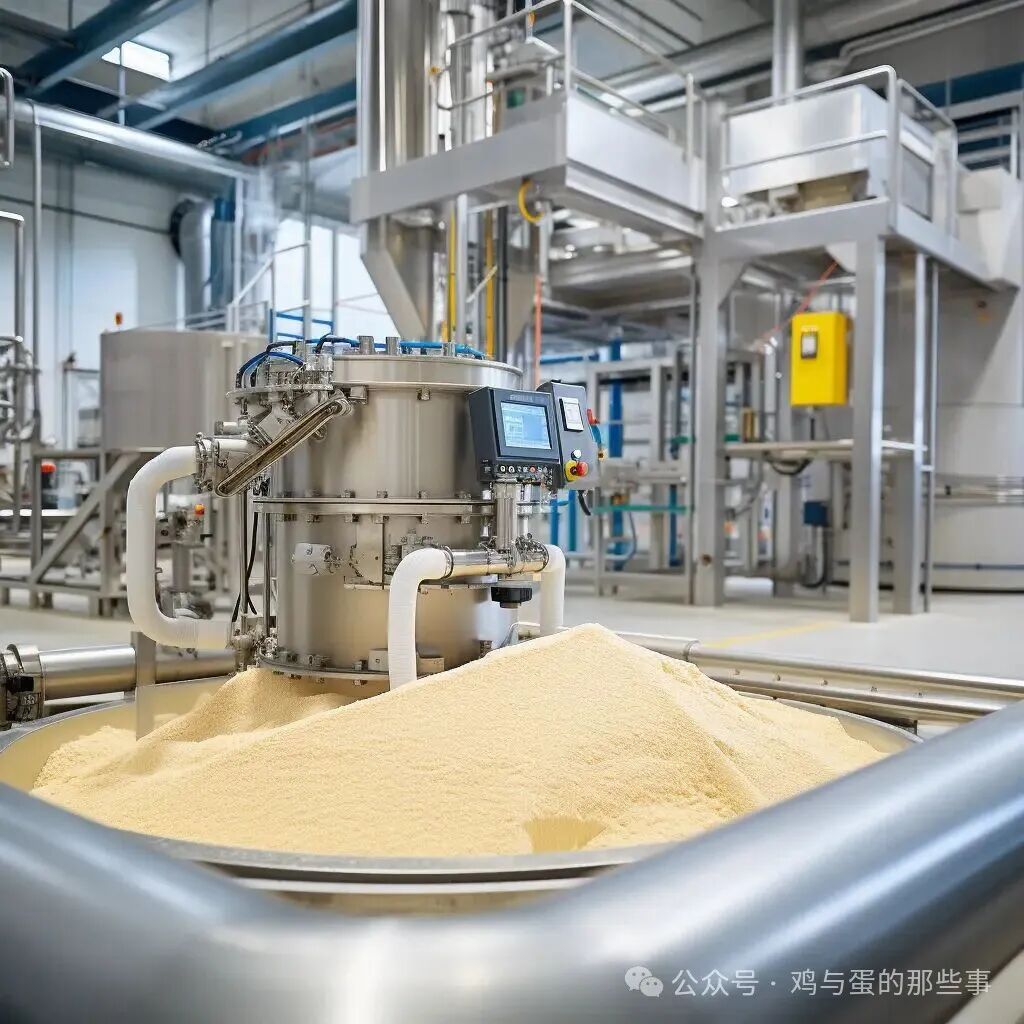
Effects of 4.1 Grinding on Feed Performance
The purpose of grinding feed is to increase its surface area, enabling feed particles to come into sufficient contact with digestive enzymes and thereby promoting animal digestion. Grinding can improve the apparent digestibility of feed. In this respect, the finer the grind, the more complete the digestion. However, finer grinding consumes more energy and results in greater feed losses. In addition, the digestive systems of different animals vary in structure. When the corn grind size is below 0.7 mm, digestibility and growth rate in piglets improve. However, if poultry are fed corn ground this finely, it can easily cause glandular gastritis and reduce feed efficiency.
4.2 Effect of the order of ingredient addition on feed performance When feed ingredients come into direct contact, many of them undergo physical and chemical reactions. Therefore, the order of ingredient addition has a considerable impact on feed quality and performance, particularly on the effectiveness of premixes. The general recommendation for adding a premix is to first add approximately 2/3 of the carrier, then add the additives, and finally add the remaining carrier. Additives should be added in order of quantity, with larger amounts added first and smaller amounts afterward. To reduce direct contact, vitamins, choline, and trace elements should preferably be added separately. Some additives in premixes can adsorb or damage micronutrients, such as mycotoxin binders; these should be added directly to the complete feed.
4.3 Effect of mixing on feed performance
Feed is a complex blended product. Feed ingredients vary considerably in particle size, bulk density, and inclusion rate, and can undergo various chemical reactions with one another, so feed cannot be mixed to achieve complete uniformity. During feed mixing, the mixing effect improves rapidly over time until the material reaches a sufficiently mixed state, meaning the best level of uniformity. If mixing continues beyond this point, the materials tend to separate, and mixing uniformity decreases instead. Excessive mixing time increases friction among the materials and generates more heat, accelerating chemical reactions, damaging feed components, and reducing feed performance.
The effect of 4.4 pelleting on feed
Compared with mash, pelleted feed offers advantages such as balanced nutrition, reduced dust, and good palatability. Making feed into pellets can effectively reduce selective feeding by animals, ensuring they receive more comprehensive nutrition. It can also effectively reduce dust in the feed and reduce pollution. Pellets are convenient for animals to eat, and feeding pelleted feed significantly increases the rate of weight gain in broiler chickens and piglets. High-temperature conditioning and pelleting can cause some damage to vitamins, so some vitamins need to be supplemented.
The effect of 4.5 extrusion on feed
Extruded feed undergoes mixing, heating, kneading, and forming. The high-temperature, high-pressure processing environment changes the feed’s physical and chemical properties. Extrusion can destroy antinutritional factors in feed, disrupt the tertiary and quaternary structures of proteins, increase the degree of starch gelatinization, release fat, and improve feed effectiveness. Higher extrusion temperatures can damage the stability of fat, accelerate its decomposition, reduce its stability, and increase the peroxide value. Most vitamins are temperature-sensitive. Extrusion causes substantial losses of vitamin K3, vitamin B1, B2, B6, and folic acid; vitamins A, D, and E also experience some losses. When formulating extruded feed, these vitamins need to be supplemented accordingly, or a post-extrusion vitamin coating process can be used.