
Ventilation Management
For optimal flock performance, the ventilation system must provide optimal conditions in both cold and hot weather. During cold weather and brooding, the system must control humidity and air quality while ensuring a uniform, stable temperature. In hot weather, the ventilation system must provide sufficient cooling capacity to keep the flock as comfortable as possible. However, the house environment is dynamic, and temperature, air quality, and humidity levels fluctuate constantly, requiring ongoing monitoring and adjustment.
Managing poultry house humidity and litter moisture are two of the biggest challenges producers may face. High house humidity during hot weather creates two challenges: it reduces the flock’s ability to regulate its temperature and makes managing moisture in the manure more challenging.
In cold weather, the challenge is to condition incoming cold air before it circulates at bird level. Mixing incoming cold air with the heat at the ceiling is the most important concept producers need to successfully manage litter moisture.
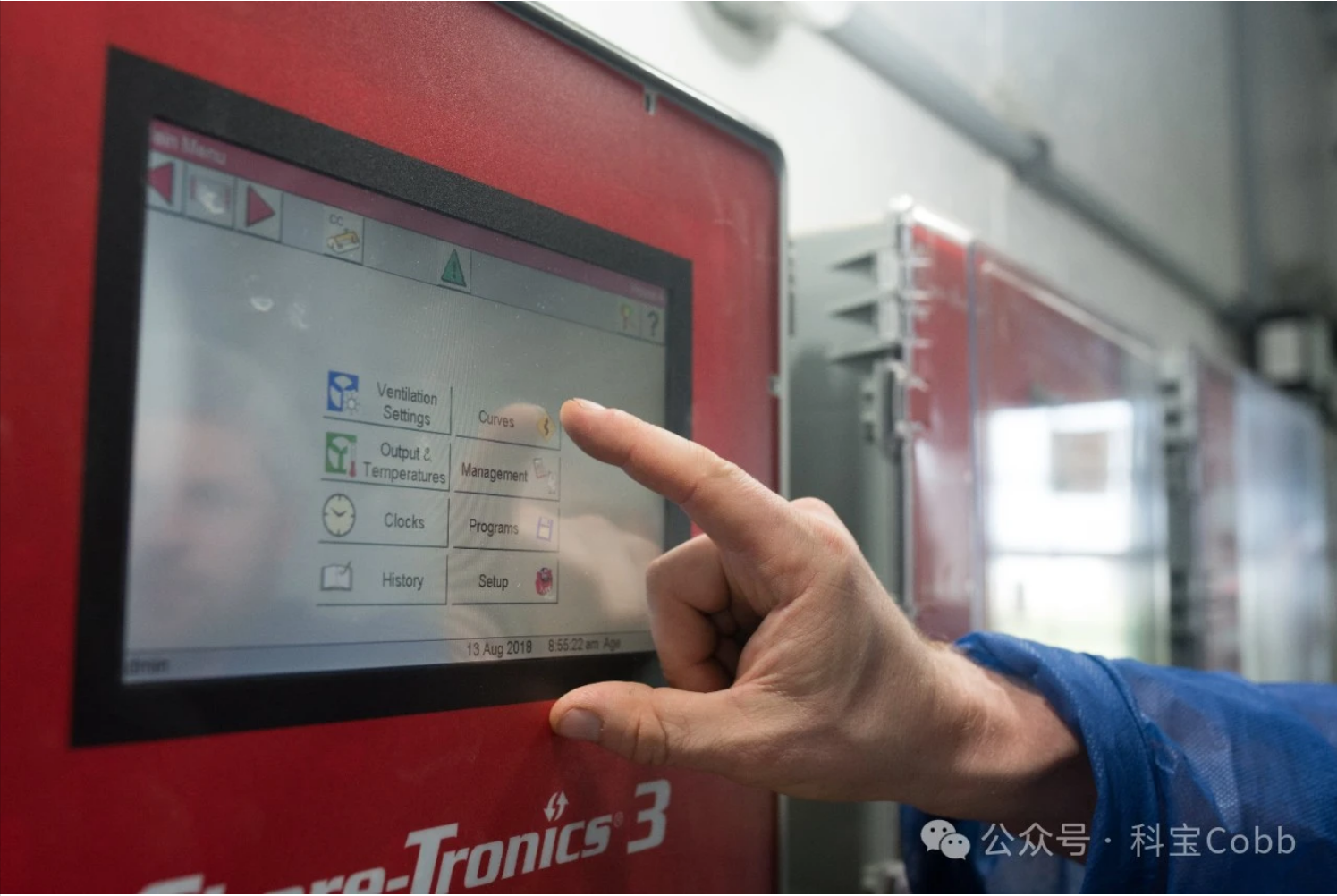
Air speed and ventilation are very important tools for helping the flock maintain an ideal environment and comfortable temperature. From a welfare perspective, always observe flock distribution and behavior when transitioning to different ventilation stages. Birds will “indicate” whether they are comfortable (or uncomfortable). Ideally, the flock should be evenly distributed throughout the house and remain active. If the flock moves to one area, or continues to show signs of heat stress, assess how the ventilation system is operating (inlet velocity, air speed in the center of the house, inlet pressure, fan condition, etc.), then fix any problems.
Minimum ventilation
The minimum ventilation system uses fans operating on a timer and is designed to manage humidity and air quality. Minimum ventilation operates independently of temperature control, and the minimum air exchange rate is associated with the total amount of moisture brought into the house by the flock, drinking water, heating, and the ventilation system. Under most conditions, maintaining good moisture control should ensure that the carbon dioxide concentration remains below 3000ppm.
High ammonia concentrations are usually associated with higher relative humidity in the house and higher litter moisture content. High ammonia concentrations can increase birds’ susceptibility to disease and raise potential animal welfare concerns. In addition, rearing chickens on wet litter can lead to poor foot health and footpad lesions.
Three key functions of ventilation:
Moisture and humidity control
Provide the oxygen needed for chick growth and metabolism
Maintain good litter conditions
The maximum carbon dioxide concentration at any time is 3000 ppm. If the carbon dioxide concentration in the environment exceeds 3000 ppm or the oxygen concentration falls below 19.6%, the ventilation rate must be increased.
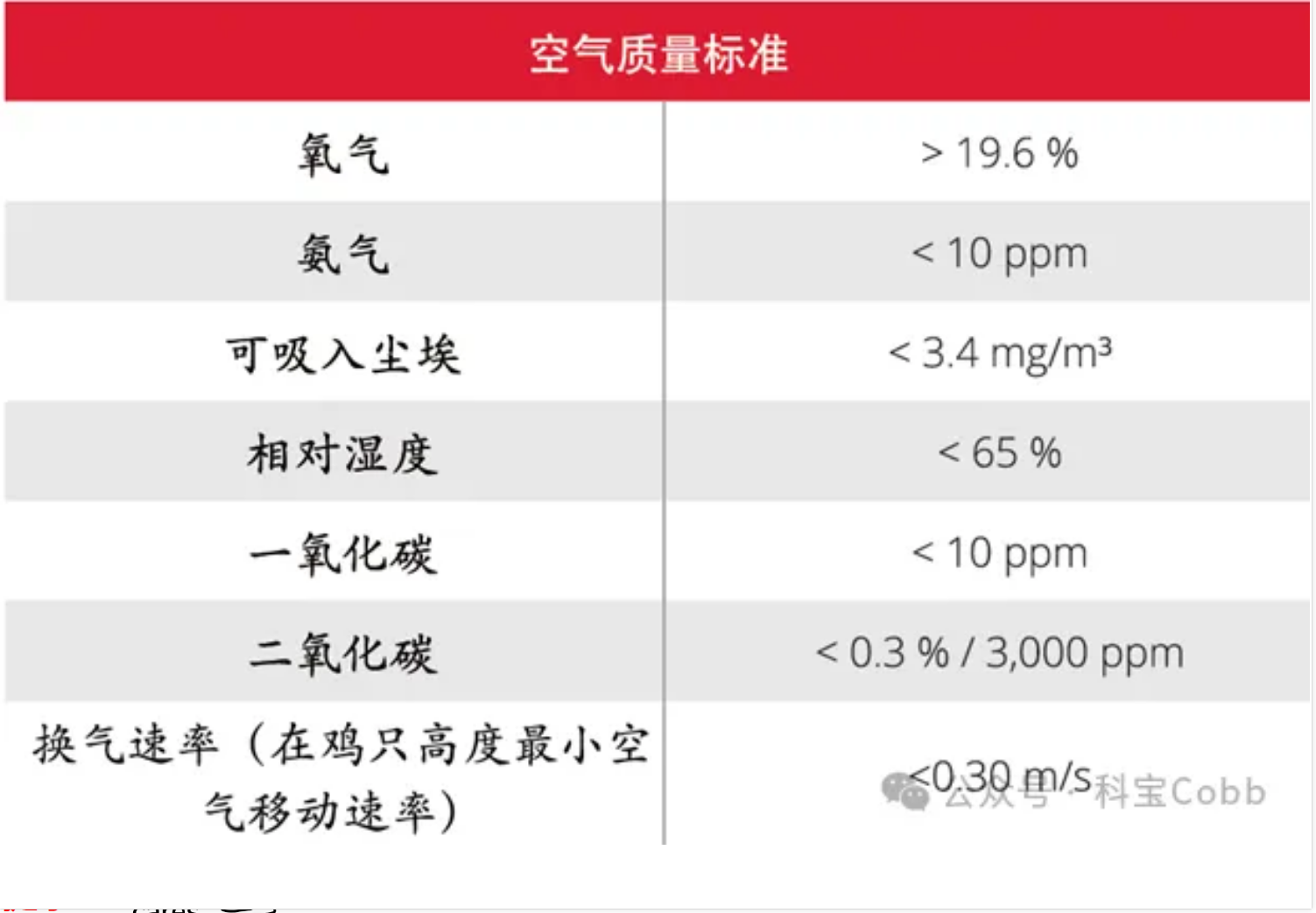
When carbon dioxide concentrations rise (above 3000 ppm), animal behavior and activity decrease. If this is not corrected, chick growth and feed intake will be affected. Always assess flock behavior and adjust ventilation to provide the flock with good-quality air.
Control minimum ventilation with a cycle time of 5 minutes
Time-controlled fans should provide a minimum ventilation capacity of 0.3 m³ per minute per m² during hot weather, when the outside temperature is rarely between 20-25℃. In cold weather, a fan needs to provide a ventilation capacity of 0.61-0.77m³ per minute per square meter of floor area.
Make the fan capacity as close as possible to the requirement.
In the rearing area, fans should run for 45 to 60 seconds to ensure that the incoming cold air mixes thoroughly with the warm air inside (see the table below).
A five-minute (300 seconds) on/off cycle is preferred for minimum ventilation. The cycle should not exceed ten minutes.
Whenever air quality begins to deteriorate, the on-time must be increased, but the total cycle time should always remain stable.
Humidity should be kept below 60-65% as much as possible.
Increase the on-time in small increments of 10-15 seconds and monitor for 24 hours.
The key to achieving good air distribution and humidity control is operating the side air inlets correctly.
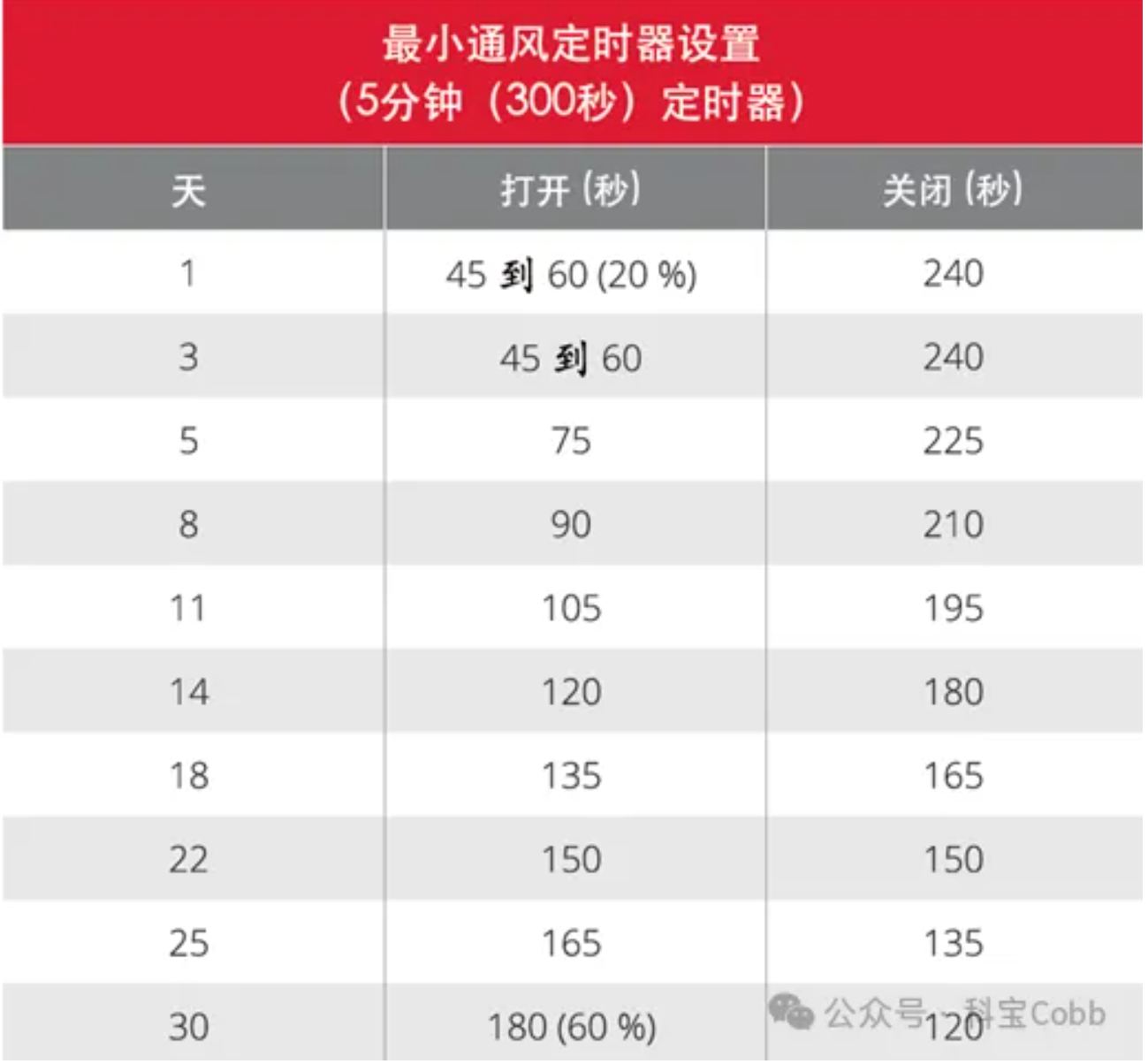
If the flock is inactive, appears uncomfortable, or is vocalizing due to heat stress, consider increasing fan run time to increase air exchange. Bringing in more fresh air and improving air quality in the flock area can help the flock become more active, distribute evenly, and appear comfortable.
Fans required for minimum ventilation
The minimum ventilation system must have enough capacity to operate throughout the entire flock cycle. Below is an example of calculating the number of fans needed. The minimum ventilation calculation is for reference only and should be adjusted daily based on air quality and humidity.
Calculating the number of fans needed for minimum ventilation in a standard tunnel-ventilated poultry house
Fan example
In the example, the exhaust fan efficiency is estimated at 25 pascals of pressure (0.1 inches of water column).
The exhaust fan or sidewall fan has a diameter of 900 millimeters (36 inches) and an operating capacity of 340 m³/minute (12,000 cubic feet/minute).
Air exchange range: 0.3-0.6 cubic meters per minute per square meter of poultry house floor area (1-2 cubic feet per minute per square foot of poultry house floor area).
Note: Fans can be fixed-volume or variable-speed.
0.61 cubic meters per minute per square meter (2 cubic feet per minute per square foot) of poultry house floor fan capacity is only used in cold climates.
Poultry house size example
Chicken coop dimensions: 150 meters long, 14 meters wide, average height 2.88 meters
Average height=2.5 meters+(0.5x 0.75 meters)=2.88 meters
Poultry house floor area: 150 meters x 14 meters=2100 square meters
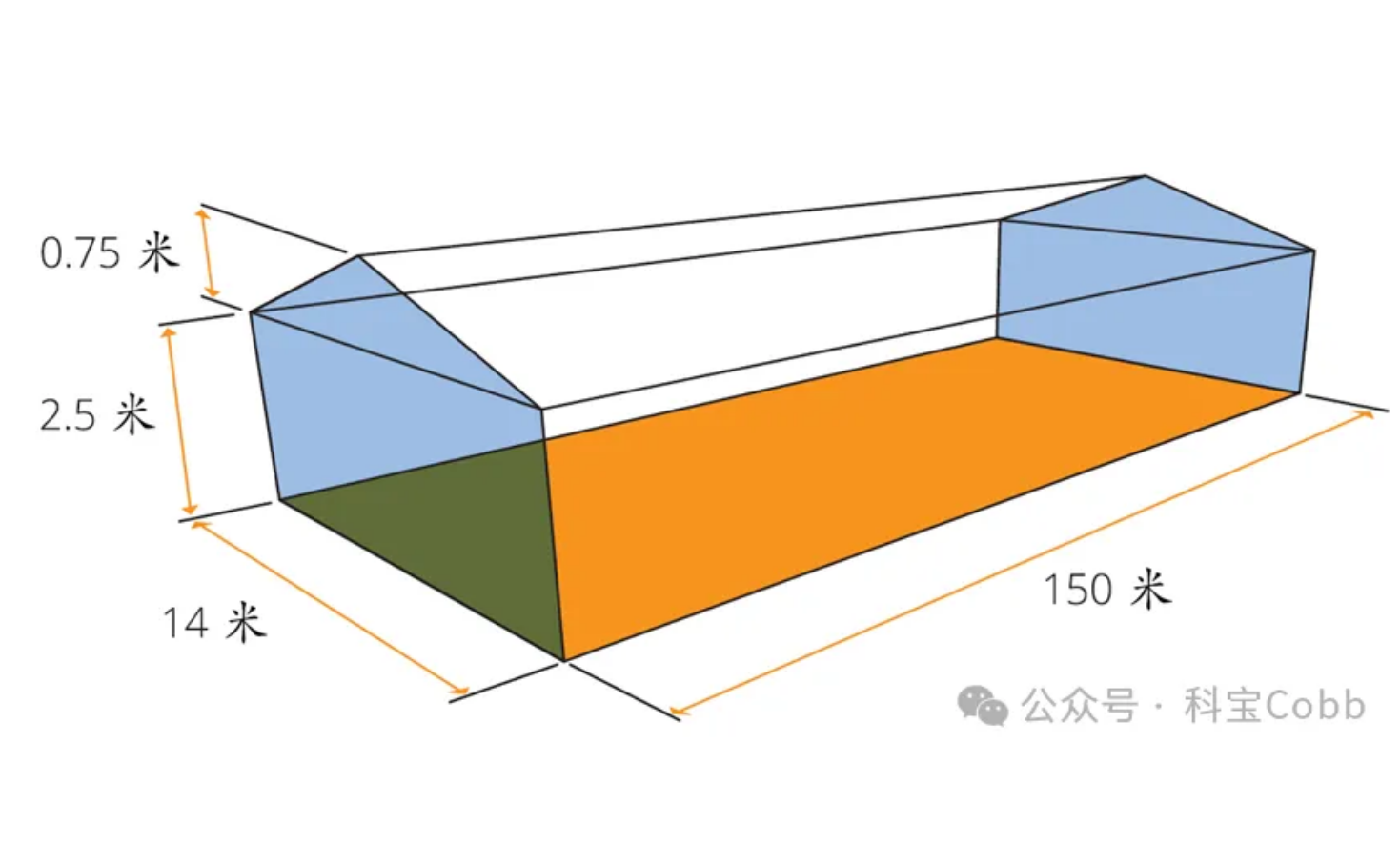
(Poultry house floor area x air exchange rate) ÷ operating efficiency = number of fans required
2100 square meters × 0.3 to 0.6 cubic meters per minute per square meter of floor area = 630 to 1260 cubic meters per minute
630 to 1260 cubic meters per minute ÷ 340 cubic meters per minute = 1.85 to 3.7 or 2 to 4 fans
Key requirements for negative-pressure minimum ventilation
The most effective way to achieve air distribution during minimum ventilation is to use a negative-pressure ventilation system. The pressure difference across the air inlets and the total opening area of the air inlets need to be adjusted to ensure that incoming air reaches the ceiling and mixes with the warm air there.
The following table can be used as a reference for setting the required inlet pressure difference. The choice of pressure difference depends on the width of the house, how far the incoming air jet needs to travel, and the outdoor temperature. When the outdoor temperature is below 5℃, increase the inlet pressure difference and the inlet opening.
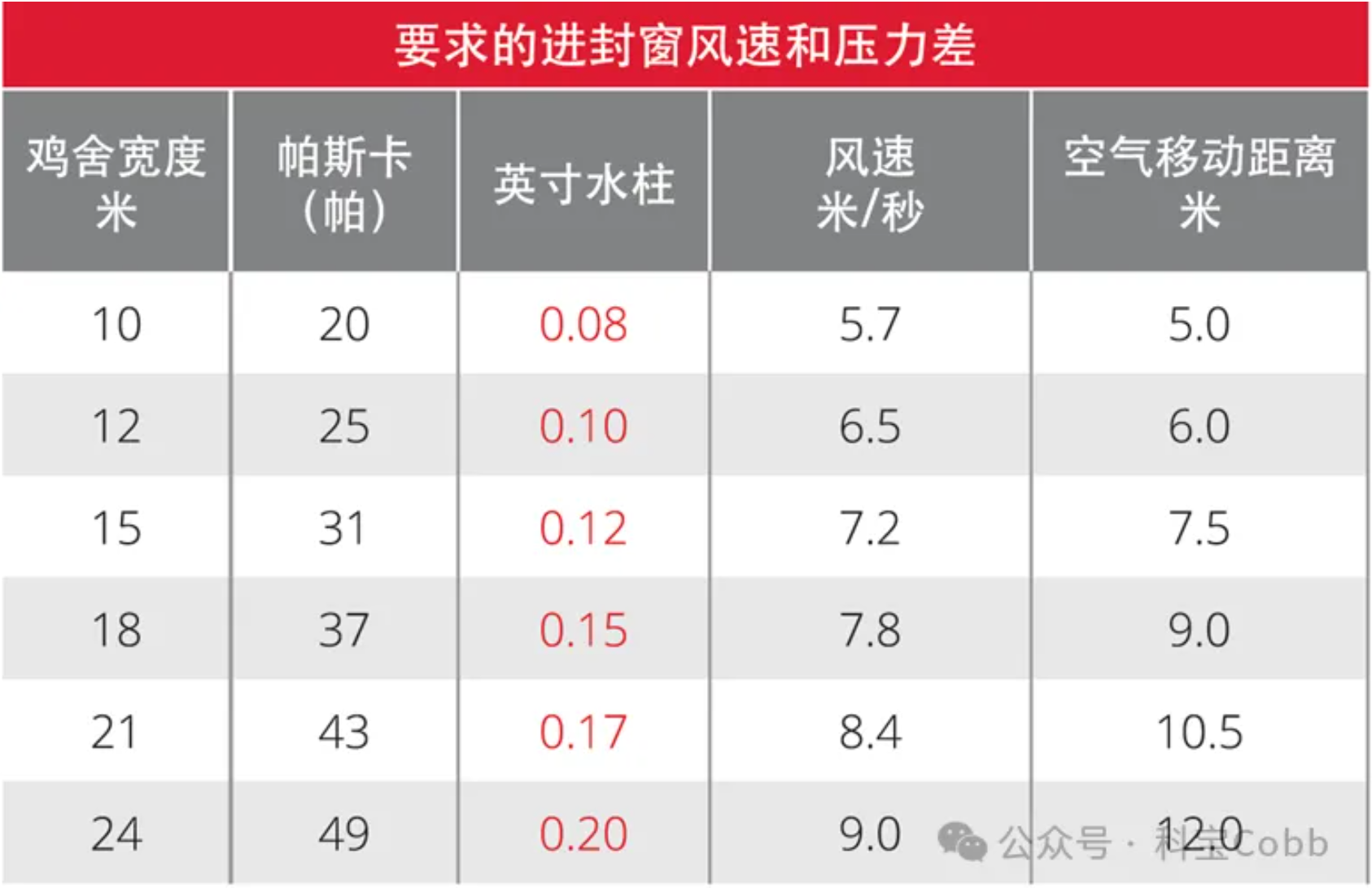
The ability of the air entering the house to reach the ceiling depends on the temperature difference between the inside and outside of the chicken house. Use smoke tests regularly to ensure that the incoming air reaches the middle of the chicken house. Smoke tests can only be performed when the outdoor temperature is significantly lower than the indoor temperature and there is no wind.
Houses with obstructions such as monitoring equipment or electrical conduits will interfere with incoming airflow. A smooth slope must be installed 3 meters in front of the perimeter air inlets of the house.
Note: If the sidewall (perimeter) air inlets of the house are located low on the wall, the pressure and air inlet openings need to be increased accordingly to ensure that incoming airflow reaches the center of the house. This is especially important when outdoor temperatures are low.
Guide: To move fresh air a distance of 61 centimeters, the required pressure difference is 2.5 Pa. If the outdoor temperature falls below 5⁰C, the required pressure difference needs to increase significantly.
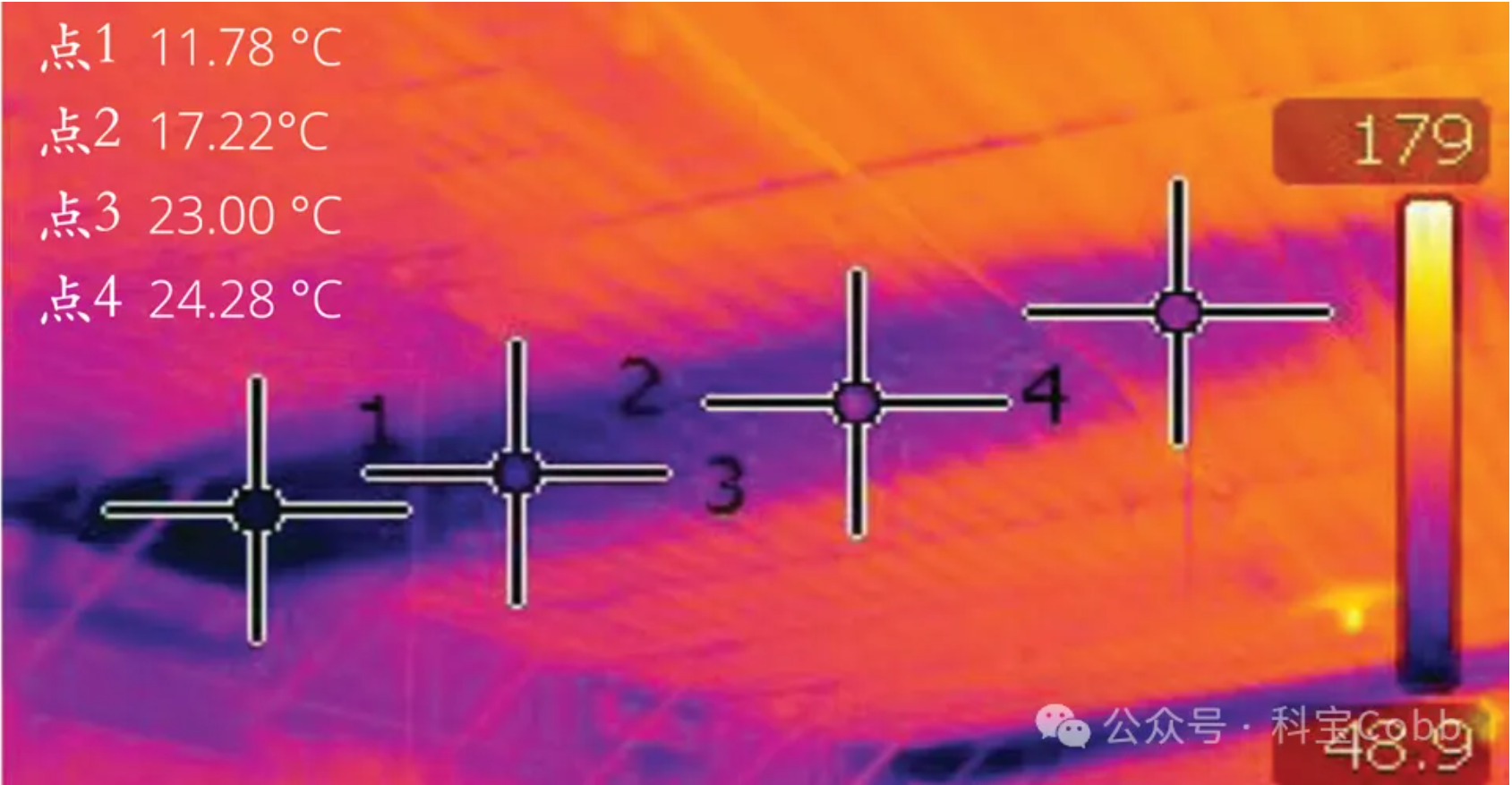
The infrared image shows the correct flow of cold air entering through the side-wall air inlets of the chicken house, from point 1 to point 4. As the air reaches the center of the chicken house, its temperature gradually increases.
In addition to monitoring temperature on a daily basis, chicken behavior, activity, and distribution within the house also need to be assessed. If the chickens are cold or hot, they will behave differently from comfortable chickens. For example, if incoming cold air is not mixed well at the ceiling but instead falls directly to the floor, the chickens will move away from these cold areas and huddle together in some of the central areas.