
Raising chickens is a skilled and meticulous job. Many poultry farmers have not received professional training and have problems such as nonstandard feeding and management practices, leading to all kinds of minor issues during the brooding period. These issues may not cause immediate death or injury to the chicks, but in the long run, early problems can become pitfalls later in the rearing process, ultimately reducing our farming returns. Today, let’s talk about common problems during the brooding period and the harm they can cause.
1, brooding really means raising chicks like babies; protecting their digestive and immune systems is key
The first 15 days of a chick’s life are a critical period for the development of its digestive, immune, and nervous systems.
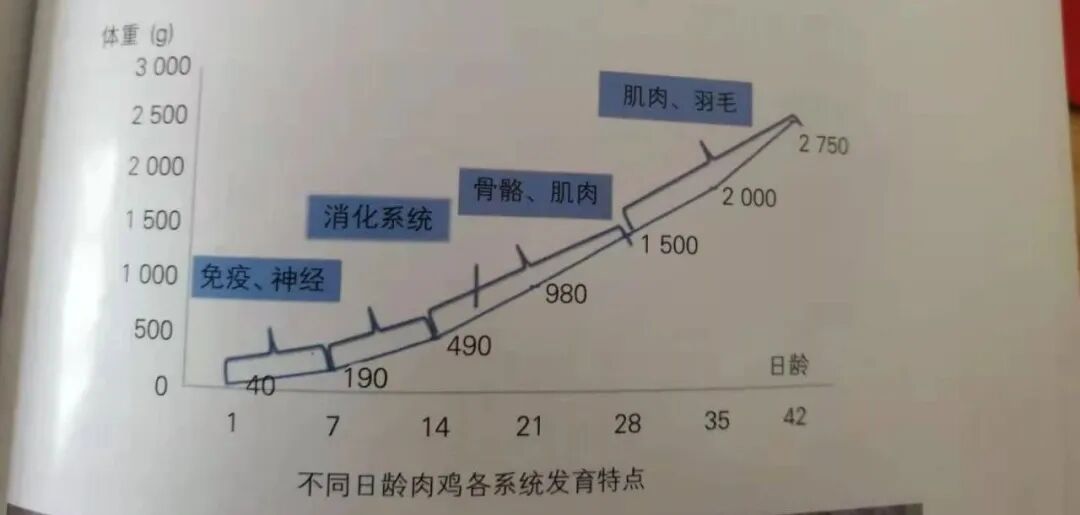
These physiological development characteristics mean that we need to raise chicks like babies. In addition to providing suitable temperature and humidity, we must also provide feed that is non-toxic and harmless, and clean drinking water. For feed to be non-toxic and harmless, its nutritional formulation must be appropriate, its mycotoxin levels must not exceed limits, and its antinutritional factors must be below harmful levels. Clean drinking water means that bacteria and heavy metals in the water must not exceed limits or be detectable, and that the water has suitable hardness, among other requirements. In other countries, the standard for chickens’ drinking water is that it must be safe for people to drink as well. If we cannot ensure that chicks’ feed and water are non-toxic and harmless, how can we ensure that the chicks grow up healthy?
At present, prices for raw materials such as corn and soybean meal remain high. Because feed ingredients are in short supply, low-quality raw materials are also being used in feed, resulting in mycotoxin levels in feed exceeding limits. In addition, the increased use of less commonly used ingredients such as cottonseed meal (with antinutritional factors including gossypol, tannins, and phytic acid), rapeseed meal (with antinutritional factors including glucosinolates and sinapine), and sorghum (with antinutritional factors including tannins, wax powder, and hydrocyanic acid) has significantly increased the antinutritional factor content of feed. These toxic substances can damage the digestive system of our chicks (including the crop, glandular stomach, muscular stomach, and intestines) and their immune system, resulting in a high incidence of disease in the flock.
Based on the physiological development characteristics of chicks described above and the current state of feed, the earlier we use medication for proventriculitis and gizzard inflammation (high-efficiency detoxification + enhanced immunity + protection or repair), the more beneficial it is to the flock’s healthy development. Given the current high prices for chicks and strong demand, and the high likelihood of encountering weak chicks, we recommend using a product to enhance immunity and relieve immunosuppression (such as Taiqi Qiang or high-quality astragalus polysaccharides) at 2–3 days of age.
The principle makes sense, but practical experience is the best way to assess whether a testing plan and product are good.
Our chicken farm's plan is to mix 美清美净 (an efficient mycotoxin binder, biological enzymes, probiotics, polysaccharides, polypeptides, and other ingredients) into the feed for birds aged 1-10 days, and use 泰芪强 in the drinking water for birds aged 2-3 days. If you ask me how effective it is, I would say that our chicken farm has had no cases of adenomyogastritis in the past 5-6 years. I recommended this plan to friends, and they also reported that it worked very well for prevention and control.
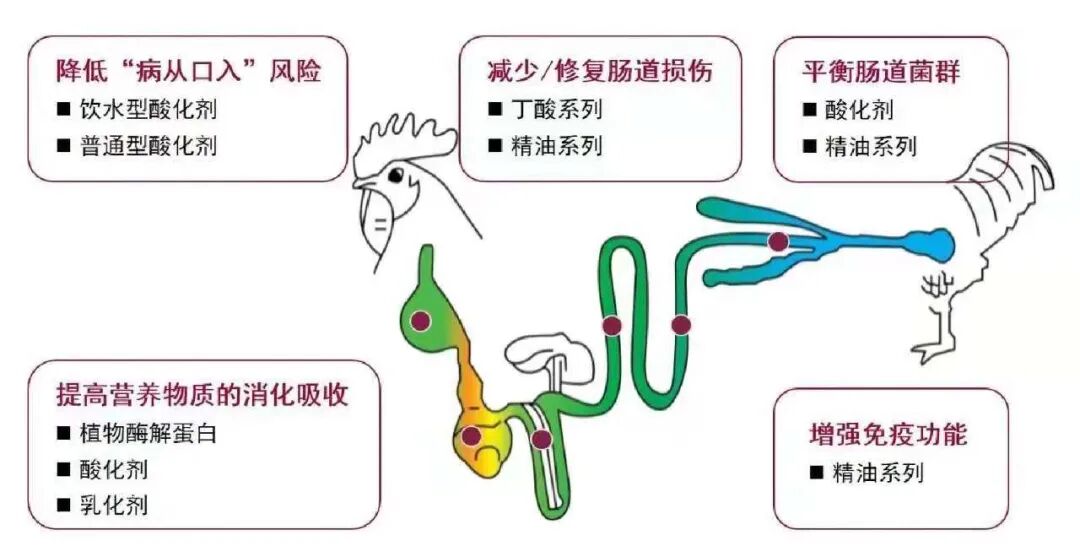
Source: 上海美农
2, high-temperature brooding is the most common; during the first 7 days, the temperature should be steadily and substantially lowered to 30°C
Chicks generally develop the ability to regulate their body temperature at around 21 days of age. Immediately after hatching and during the brooding period, their ability to regulate body temperature is poor. If the external temperature is too high or too low, prolonged exposure will stress the chicks and affect their healthy development. Therefore, before the chicks arrive at our poultry house, we need to adjust the temperature and humidity in the house (brooding temperature: 33–35°C and humidity: around 70%).
The most common brooding method at present is still high-temperature brooding, with the brooding temperature usually ranging from 33 to 35°C. Some people say that low-temperature brooding can also be successful and saves coal. I don't disagree, but the key question is whether you can manage low-temperature brooding properly. If you can't, it won't be of any use to you.
Generally, this is how we set the temperature and humidity for the first 7 days:
Set day 1 to 34°C, 50%
Day 2 set to 33.5°C, 60%
Day 3 set to 32.5°C, 70%
Day 4 set to 31.5°C 70%
Day 5 set to 30.5°C 70%
Set Day 6 to 29.5°C 70%
Set Day 7 to 30.0°C (because of immunization, the temperature was raised by 1°C over these 0.5 days)
Currently, many poultry farmers are also raising chicks like their own babies. However, they are overly cautious: the initial brooding temperature is 34°C, but they worry that if the temperature drops too quickly, the flock will get cold and catch a cold, so they lower the temperature in the poultry house very slowly. As a result, they find that the flock eats slowly and is more prone to a high disease rate in the middle and later stages. A few days ago, a farmer reported that his chicks were 11 days old and were not eating quickly. I asked him what the temperature was inside the poultry house and asked him to send pictures of the droppings and a video of the flock. He said the temperature in the shed was currently 30-31°C. From the video of the flock, I could see that 30% of the birds had their mouths open. How can the flock eat quickly when it is so hot? I then asked him to start lowering the temperature gradually and to observe the flock's condition. In the feedback he gave yesterday, he said the flock was eating much better and had returned to normal.
Rapidly lowering the temperature during the first week of brooding is mainly intended to help the flock gradually adapt to this temperature change. If we fail to lower the temperature early on, then after the brooding period, sudden increases in ventilation or large temperature drops can easily make the flock catch a cold. In addition, the high temperatures created by keeping the shed closed can also lead to high humidity inside it. In a hot, humid environment, bacteria and mold can easily grow, and feed and drinking water can easily become contaminated with pathogens. As a result, the flock may still consume contaminated feed and water, making problems more likely.
Note that brooding temperature is not fixed. Some chicks are weak and small, so a brooding temperature 0.5° higher may be necessary. Brooding temperature should also be adjusted to the corresponding relative humidity, which is more conducive to chick growth and development.
3, brooding humidity is also very important. It is generally best to maintain it at 50–70%
Brooding requires not only strict temperature control but also careful attention to humidity. The humidity we usually refer to is a general concept; the amount of water vapor in the air depends on the air temperature. Warm air generally carries more moisture than cold air (for example, the saturated moisture content of air at 33°C is higher than that of air at 30 degrees). Here is a term to know: relative humidity. Relative humidity is the percentage of water saturation in the air at a given temperature. Humidity levels affect a bird’s ability to cool itself through its beak and the amount of ammonia produced. Research has found that dust levels in poultry houses may be associated with relative humidity below 50%.
During the first few days of brooding, we can humidify the air by sprinkling warm water on the floor or by using an automatic irrigation micro-sprinkler pipe, ensuring that humidity in the poultry house reaches at least 50%. As chicks breathe, drink, and excrete more, and as water evaporates from the small bowls beneath the water lines, humidity in the poultry house will gradually increase. However, humidity should not be too high. It is best not to let it exceed 70% for extended periods. Prolonged high temperatures and high humidity can lead to more gastrointestinal illnesses in the flock.
4, the lighting schedule and light intensity are equally important. This mistake shows why.
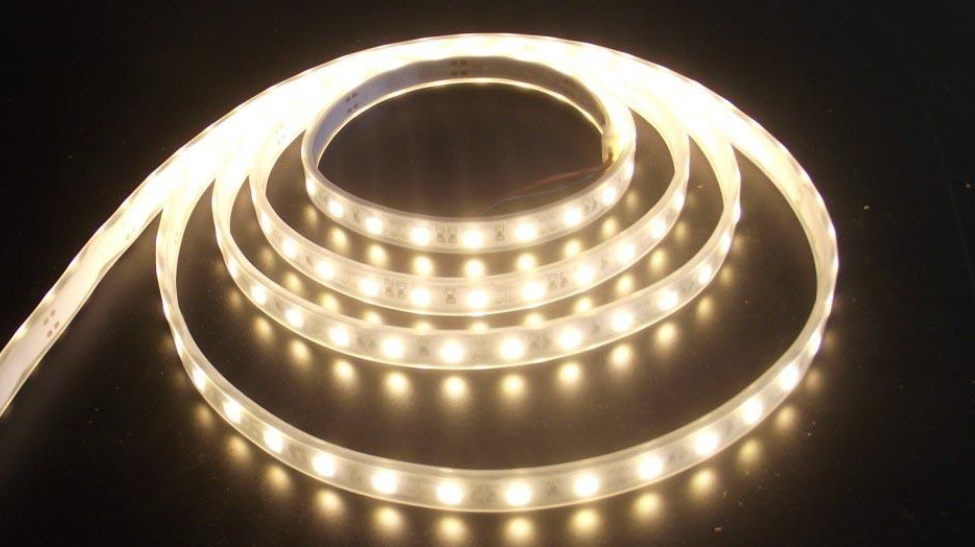
When I first started raising chickens, I didn't pay much attention to broiler lighting schedules or light intensity. Later, at a new chicken farm, the construction period was too short, so fewer bulbs were installed along one row of cages. The light was very dim in the middle and lower tiers of the cages. While walking through the chicken house, I noticed that more feed was left in the troughs along the dimly lit row. At first, I didn't know why. After Teacher Hou Yong explained that the light intensity was insufficient and the chicks couldn't see the feed, so they were eating less and supplemental lighting was needed, the farm owner promptly bought strip lights from a hardware store to provide supplemental lighting. This solved the problem of reduced feed intake caused by insufficient light intensity.
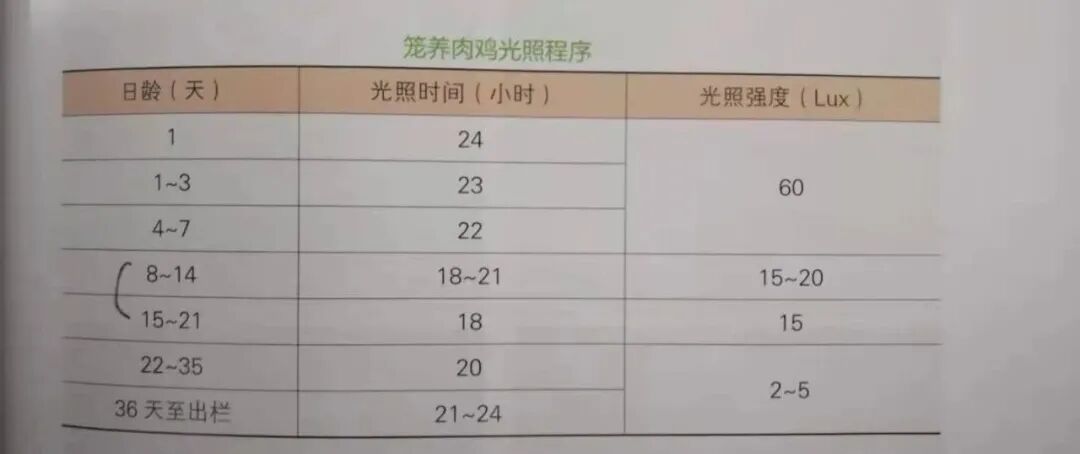
For specific lighting schedules and light intensity, you can refer to the following program.
On day 1, lighting can be provided throughout the day, or the lights can be turned off for 1 hours. After that, use either a progressively decreasing or a constant lighting schedule. The lights-off time must remain fixed; adjust the lights-on time to regulate the lighting duration. In general, do not control lighting for more than 6 hours; usually, controlling it for 4 hours is sufficient. In the middle and later stages, the light intensity only needs to be sufficient for the flock to see the feed. In winter and spring, after turning off the lights, the temperature in the house may be raised by 0.5-1°C as appropriate to prevent it from dropping.
Since the bulbs or LEDs we normally use are rated in watts and cannot be directly matched to a specific light intensity, we recommend buying a light meter on JD.com to take measurements. Alternatively, place a small booklet with text on the brooding tier and look down at it normally; being able to read the text is a simple reference.
These may not seem like major problems, but making these mistakes repeatedly will affect the flock’s healthy growth and ultimately reduce the returns from our farming. We hope our fellow industry professionals will be as professional as possible; otherwise, a lack of professionalism could really get them knocked out in this fiercely competitive market.