
A phytogenic look at the stress-immune axis in poultry
Heat stress, high stocking density and other production challenges can put pressure on poultry, affecting physiological balance and immune function. Research evaluating a phytogenic feed supplement offers insight into how supporting the stress response may also help maintain immune competence under challenging conditions.
Stress is a cascade, not a single event. Chronic or repeated stress activates the neuroendocrine system, increasing circulating stress hormones and altering immune responses. In the models we evaluated, heat stress increased serum corticosterone and the heterophil-to-lymphocyte (H/L) ratio, while reducing measures of cell-mediated immune function. High stocking density similarly increased cortisol. These are laboratory indicators of physiological stress and immune response, rather than direct measures of disease protection or flock productivity. Together, these measures help distinguish changes in stress physiology from broader claims about bird health.
A phytogenic approach to resilience
The studies evaluated Phytocee, a standardised polyherbal feed supplement containing Emblica officinalis, Ocimum sanctum and Withania somnifera, with phytochemicals including polyphenols, withanolides and triterpenoids. The research assessed markers across the stress–immune axis, from neuroendocrine stress responses to immune competence. This provides a broader view of how supplementation may influence the biological response to production-related challenges.
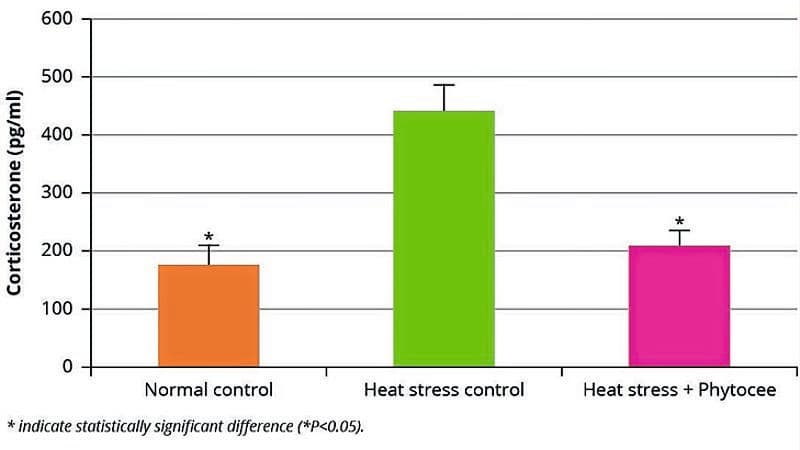
Figure 1 - Effect of heat stress and phytocee supplementation on serum corticosterone.
Following the evidence
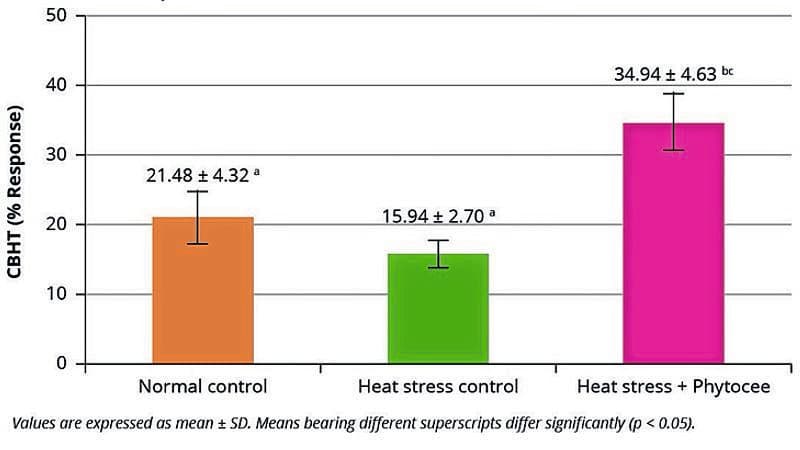
In the chronic heat-stress model, birds exposed to heat stress from 14 to 42 days of age showed increased serum corticosterone. Supplementation significantly reduced corticosterone compared with the heat-stressed control, indicating attenuation of the neuroendocrine stress response (Figure 1). The effect was also evident in functional immune testing. Heat stress significantly reduced the cutaneous basophil hypersensitivity test (CBHT) response, a laboratory indicator of cell mediated immune competence. Supplementation markedly enhanced the CBHT response, exceeding that of the non-stressed control (Figure 2).
Figure 2 - Effect of heat stress and phytocee supplementation on CBHT response.
Additional findings supported these observations. Supplementation reduced the stress-associated H/L ratio towards basal levels, while serum neopterin, an indicator of cellular immune activation, returned to values comparable with the non-stressed control under heat stress. In the high stocking density model, supplemented birds also had lower cortisol than the high-density controls.
A broader view of stress resilience
Taken together, the findings support both sides of the stress–immune relationship: attenuation of the neuroendocrine stress response and preservation of immune competence. Across the evaluated models, this represents a meaningful biological signal for a phytogenic nutritional strategy. However, one should interpret these findings within the scope of the studies. Biomarker changes and immune tests demonstrate biological modulation; they do not, on their own, establish improved disease resistance or commercial productivity. The results therefore support physiological adaptation and immune resilience in the evaluated stress models, but further evidence is required to demonstrate corresponding outcomes at the flock level.