The growing global demand for animal protein exerts additional pressure on competition between feed and food for animals and on the environment due to greenhouse gas emissions. In this study, a circular low-carbon-footprint diet (LCF-low-carbon-footprint) containing food products from the bakery and confectionery sector was evaluated.
Materials and Methods: The experiment adopted a randomized complete block design with two dietary treatments: a control group (CON) and an LCF diet. A total of 240 pigs (25,1 ± 1,56 kg) were fed the CON diet or the LCF diet for 90-92 days. After slaughter, growth performance, carcass weight, slaughter yield, backfat thickness, muscle depth, and lean meat percentage were evaluated. Meat shelf life and fatty acid composition were assessed up to 13 days after packaging the meat samples, together with an analysis of sensory attributes. A life cycle assessment (LCA) was conducted to evaluate the environmental footprint of the diets.
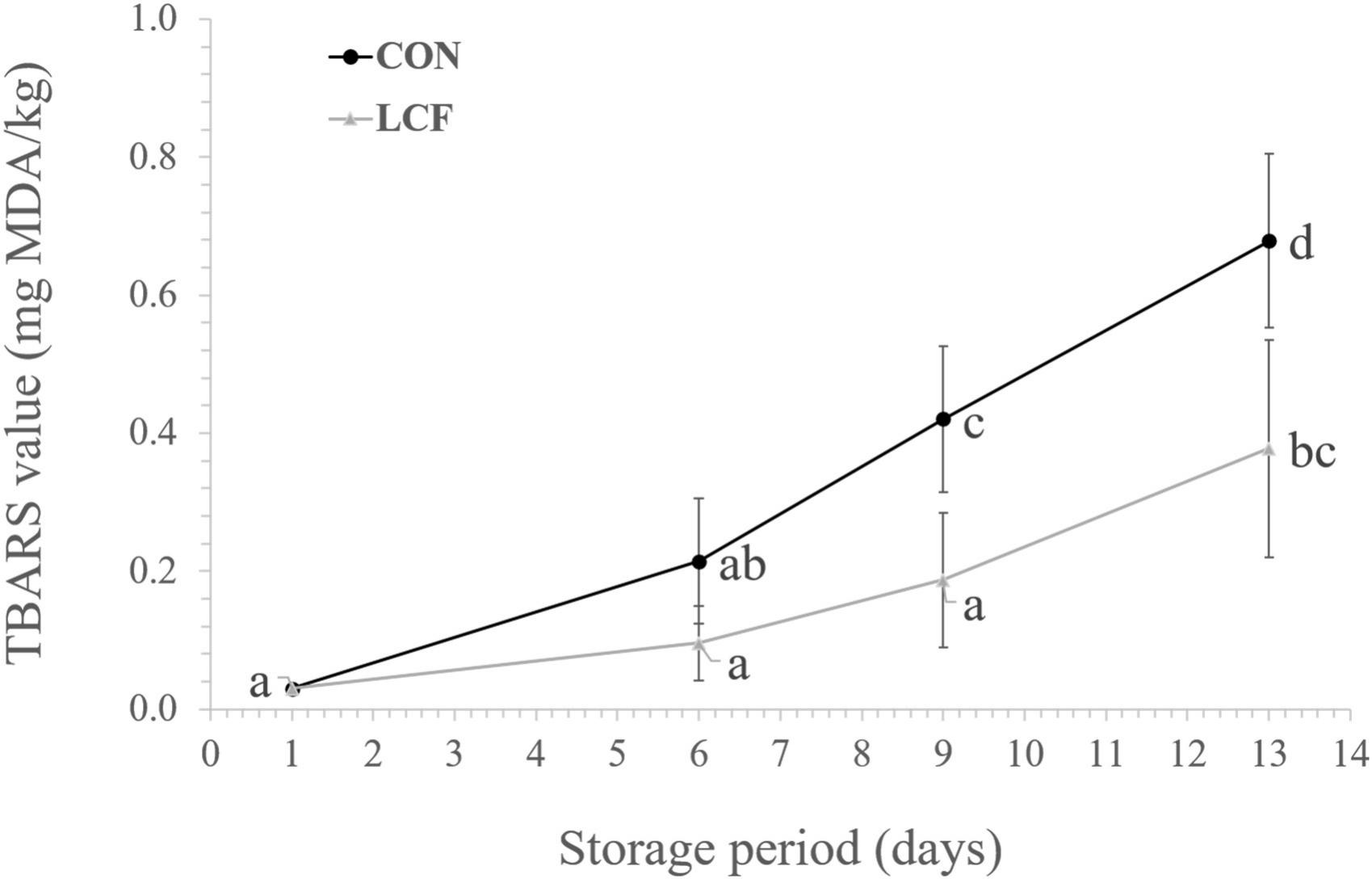
Results: Feeding pigs the LCF diet improved growth performance compared with the CON diet. It also improved carcass weight, slaughter yield, and backfat thickness, but reduced muscle depth. Although meat freshness decreased over time after packaging, sensory odor analysis indicated an improvement in the LCF group, associated with a more intense red color of the meat and better oxidative stability, while meat from the CON group had a lighter color. Regarding fatty acid composition, the LCF diet increased the content of C18:3, C20:1, C20:5, and n-3, while decreasing the levels of C17:0 in the meat.
Conclusioni: Considering the life cycle assessment (LCA) data, the LCF diet minimized climate change impacts.
Xiaonan Guan, Joel González, Maria Font-i-Furnols, Ragna Leeuw, Arno Heuvelmans, Daisy Dirks-Castelijns, Francesc Molist, Regiane R. Santos, Improved pork quality and pig performance through a circular feeding strategy: A sustainable approach, Meat Science, Volume 243, 2027, 110237, ISSN 0309-1740, https://doi.org/10.1016/j.meatsci.2026.110237.