This study evaluated the impact of precision feeding using electronic sow feeders (ESF-Electronic Sow Feeders) during lactation on the nutritional status of Iberian sows and the performance of their offspring under intensive farming conditions.
Materials and Methods: 53 second-parity Iberian sows were assigned to three feeding systems: ESF (PF), feeding ball (FB), and conventional feeders (CON). Production data were recorded per sow at birth, including the total number of liveborn and stillborn piglets and litter weight. Feeding behavior, feed intake, and changes in body weight and condition during lactation were studied in all sows (n = 53), but a more comprehensive study was conducted on approximately half of them (n = 29; nine sows in the PF group, 10 sows in the FB group, and 10 sows in the CON group). Milk production was estimated in a subgroup of 29 sows using the weigh–suckle–weigh (WSW-weigh–suckle–weigh) technique [23] at 14 and 28 days of lactation. Briefly, piglets were separated from the sow for a period of two hours to prevent nursing and were weighed individually just before being returned to the sow.'s nursing and were weighed individually just before being returned to the sow.
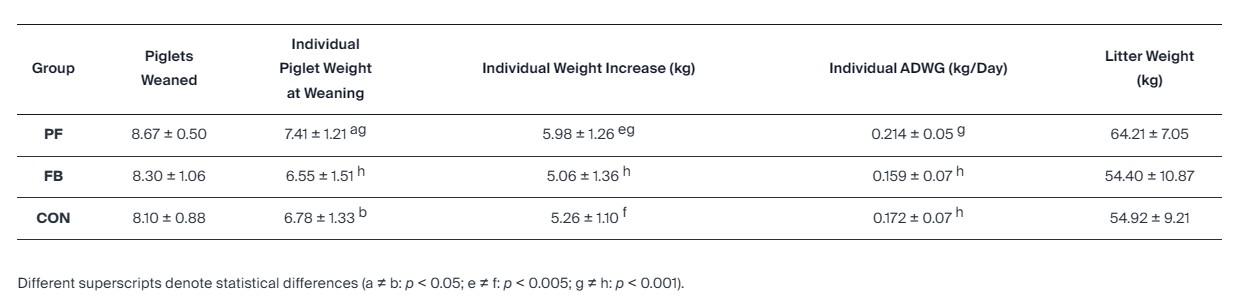
Results: The results showed that PF sows had significantly lower feed wastage, without affecting body weight or physical condition, compared with the FB and CON groups (p < 0,05). Although milk production did not differ significantly between groups, PF piglets had higher weaning weights and average daily weight gains (ADWG), particularly during the second half of lactation (p < 0,05 and p < 0,001, respectively). The metabolic profile revealed improved glucose and lipid homeostasis in PF sows, with lower non-esterified fatty acid (NEFA) levels and more favorable cholesterol profiles (p < 0,05 for all). No significant differences in welfare biomarkers (salivary cortisol and alpha-amylase) were observed between treatments.
Conclusions: These results suggest that precision feeding improves feed efficiency, stabilizes maternal metabolism, and enhances piglet growth in traditional pig breeds (“fat pigs”) such as the Iberian pig, offering a sustainable strategy for intensifying production without compromising animal welfare.
Aparicio-Arnay, M.; Gonzalez-Bulnes, A.; Yeste-Vizcaino, N.; Piñeiro, C.; Isabel, B. The Use of Precision Feeding During the Lactation of a Traditional Breed, Iberian Pig, Improves Maternal Nutritional Status and Offspring Performance. Biology 2026, 15, 33. https://doi.org/10.3390/biology15010033