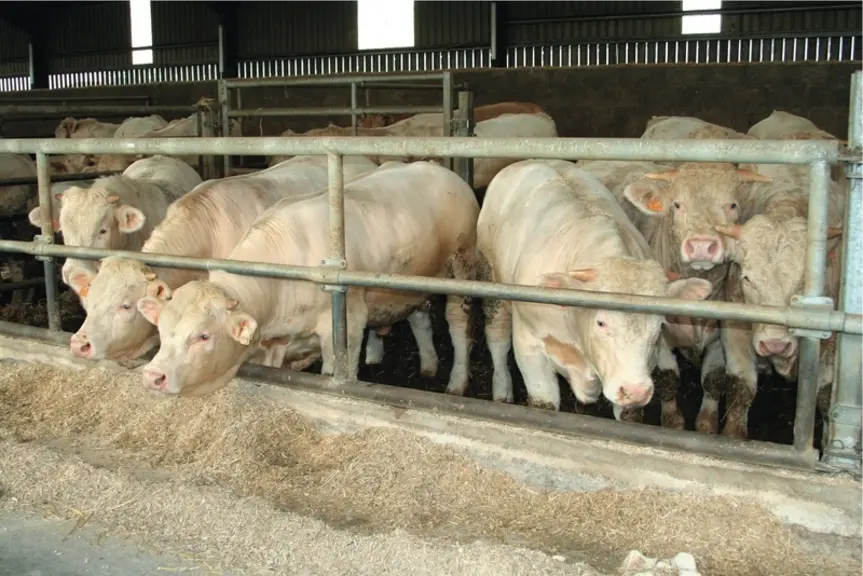
“Two to three parameters measured from a blood sample make it possible to correctly classify most of the most and least efficient animals in the herd before they are placed in the finishing stage,” explain Gonzalo Cantalapiedra, nutritionist at Inrae, and Florian Besnard, geneticist at Eliance. These two organizations are working on precision nutrition for cattle in the finishing stage, building on the Beefalim project, which focused on the genetic selection of cattle for feed efficiency.
“We are looking for criteria that are easy and inexpensive to measure in practice. We have identified heritable plasma biomarkers that could eventually be used as phenotypes to select the most efficient animals in the herd, as well as to provide them with a richer diet better suited to their potential,” Researchers report. Trials conducted on nearly 630 young Charolais cattle on four experimental farms had made it possible to test around ten blood biomarkers. Thefeed efficiency is measured by residual feed intake, which corresponds to the difference between actual feed intake and predicted feed intake based on live weight and the animal’s observed growth performance. This was done with two contrasting diets, one of the “starch” type based on maize silage, the other of the “cellulose” type based on grass.
Stay up to date in real time!
Follow topics, legislative projects, companies and public figures to be notified as soon as we publish an article.
A richer ration for the most efficient animals in the group
Between 2023 and 2025, the practical application was tested at the the Etablières experimental farm (Vendée) on young Charolais cattle fattened on a ration consisting of grass silage and concentrates. One hundred and twenty animals were classified before fattening, based on their blood biomarkers, into two groups: the most efficient and the least efficient. “We fed the most efficient group a richer ration and the least efficient group a less rich ration, while maintaining the same average proportion of concentrate in the overall ration,” explains Gonzalo Cantalapiedra. An average saving of around 7% on the quantity of ration distributed was achieved compared with giving all the animals the same ration. The results of the economic assessment and greenhouse gas emissions will be published shortly.