
Training the eye: How to spot milking problems before they begin
In Brazil there is an old saying that farmers repeat with a half-smile: ‘o olho do dono engorda o gado’ – the owner's eye fattens the cattle. It was never really about nutrition. It was about attention, about the stubborn truth that no instruction and no clever system can fully replace the daily act of actually seeing your animals.

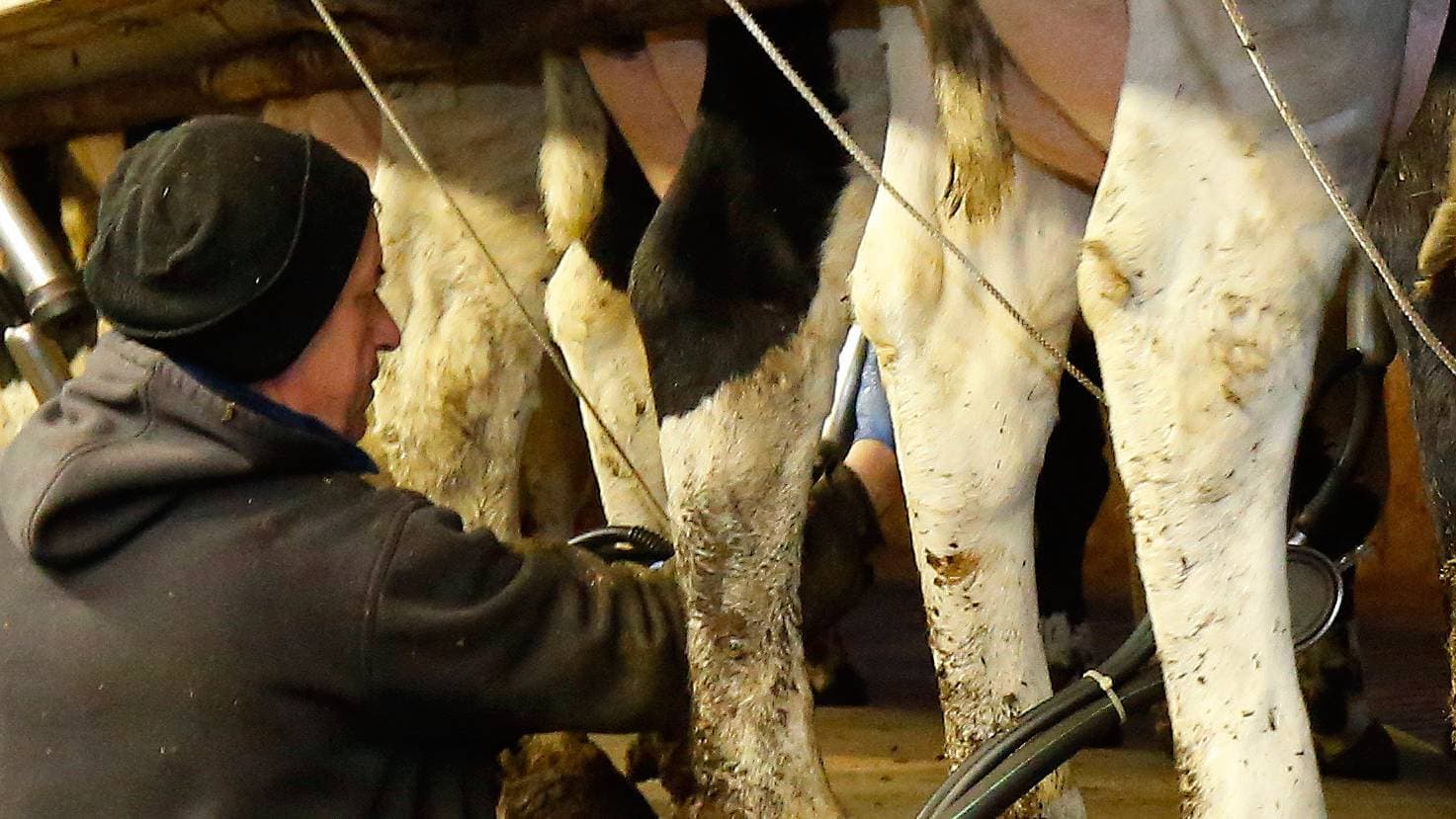
Last month, in Techtopia or udderslave, I argued that we must reclaim the stockman's eye. But a reclaimed eye is not necessarily a trained eye. Walking into the barn is only the first step; knowing what to look at, when, and what you are actually seeing is something else. The good news is that this is not a mystical gift. It is a skill that can be described, practiced and shared with everyone who works in your parlour.
The problem with rear-view mirrors
Most farms judge milking quality with numbers that look backwards: bulk tank somatic cell count, clinical cases, culls for udder problems. They are essential, but they describe damage already done. By the time the cell count climbs, the gate of the fortress – to borrow my image from August – has already been breached.
The parlour, however, is full of leading indicators, early signals that appear while there is still time to act. The cow reports on every milking through her behaviour, her milk flow and her teats. The catch is that these signals are fleeting. In a small but revealing study, Hillerton and colleagues (2002) found that teat discolouration, firmness and thick rings at the teat base became far more frequent with just a few minutes of overmilking – yet the changes faded within 2-4 hours. By the time anyone thinks to look, the evidence has left the parlour.
ALSO READ: Cows, climate and consciousness: Ethical dairy in a changing world
The 5 windows into the parlour
A trained eye doesn't wander. It looks in specific places at specific moments, and every milking offers 5 windows.
1. The entry. Do cows walk in calmly, or hesitate, turn back and need pushing? Do some dung or urinate repeatedly in the stall? When Rushen and colleagues (2001) milked cows alone in an unfamiliar room, the stressed cows defecated and urinated more, released less oxytocin and left more milk behind. A reluctant cow is often telling you about handling, the environment or the memory of her last milking.
2. Attachment. The trained eye also has ears. Listen for the squawk of liner slips, watch for kicking, and check whether units hang straight under the udder. These point to poor fit, poor alignment or discomfort – and every slip is a potential teat-end impact.
3. The first 2 minutes. Watch the claw. Healthy flow rises quickly and holds steady. If it starts, nearly stops and then returns, you are seeing bimodal flow: the cisternal milk is gone before the alveolar milk arrives, and the teat sits under vacuum with almost nothing flowing. In one study, bimodal curves appeared in 21% of milkings when units went on immediately, but in only 7% with forestripping and a 90-second lag time. More recently, a 90-second preparation lag time sharply reduced the odds of short-term teat tissue changes.
4. Unit-off. Look for units hanging on an almost empty claw, and for clusters pulled off before the vacuum is shut off. Both expose the teat end to vacuum it no longer needs.
5. The 30-second teat check. Right after the units come off, look at and gently feel a few teats. Healthy teats are pink and soft. Redness or a bluish tinge, firmness, a hard ring at the base or a teat end that stays open are short-term changes that describe today's milking. Hyperkeratosis tells you about the last few weeks. Clinical mastitis tells you about the past.
From one good eye to many
Most farms have one person with ‘the eye’. The risk is that it lives in a single head and goes on holiday with them. Turn it into a team skill: agree on shared words for what you see, score teats on the same group of cows every month, ask 2 people to score them independently and compare, and let 1 person step back from the routine once a week simply to observe. When your milk metres flag a delayed let-down, treat it as an invitation to go and look. The sensor tells you where; the trained eye tells you why.
ALSO READ: Sustainability is a herd effort: Involving teams in the daily routine
The final moo-sing: Seeing is a form of care
The old proverb was born on farms where the owner could see every animal every day. Today the owner's eye has to belong to the whole team. Its success is invisible, measured in mastitis cases that never happen, which is exactly why it so rarely gets credit. Yet every problem caught as a whisper rather than a shout means fewer antibiotics, fewer discarded litres and a longer life for the cow in front of you.
Most milking problems do not arrive unannounced. They arrive unnoticed. The difference is a trained eye – and that, unlike almost everything else in a modern parlour, costs nothing to install.
References are available upon request.