
Biovalor, startup incubated at the State University of Ceará (UECE), is working to reduce by up to 20% the cost of feeding the dairy herd and increase by up to 10% milk production with a pelleted feed made from malt bagasse, a by-product of the local brewing industry. The company's experimental facility has the capacity to produce 20 tons of feed per month, equivalent to up to 240 tons per year.
The business case is based on a cost problem. “The challenge was the combination of the cost of feeding the herd, producers' vulnerability to drought and the opportunity to make better use of a by-product of the brewing industry,” says Enio Girão, head of Biovalor, to Movimento Econômico.
Drought and expensive inputs put pressure on producers
In semi-arid dairy farming, the supply of feed for the herd is the most sensitive point in the operation. “Irregular rainfall limits the availability of forage and increases dependence on inputs subject to price fluctuations,” says Girão.
Brewers’ spent grain, in turn, is a moist and perishable material, which makes preservation and logistics challenging. The company’s proposal is to convert this residue into a more durable product. “Our proposal is to turn this material into a regional feed alternative, with a longer shelf life, seeking to reduce costs and improve the herd’s food security throughout the year,” says the entrepreneur.
Continues after the advertisement
Biovalor was formalized in January 2024. The original idea was to use the brewer’s spent grain in the production of organic compost, an approach that was abandoned for cost reasons. Until then, the residue went to landfills, and today it is used, after reprocessing, for feeding dairy cows. The project took shape through research into dairy farming carried out by partners Enio and Max Miller Fernandes. “We are at UECE, we had opportunities to connect with a factory that was inactive, and today we are seeking to provide a nutritionally appropriate product at a fair price,” says Max.
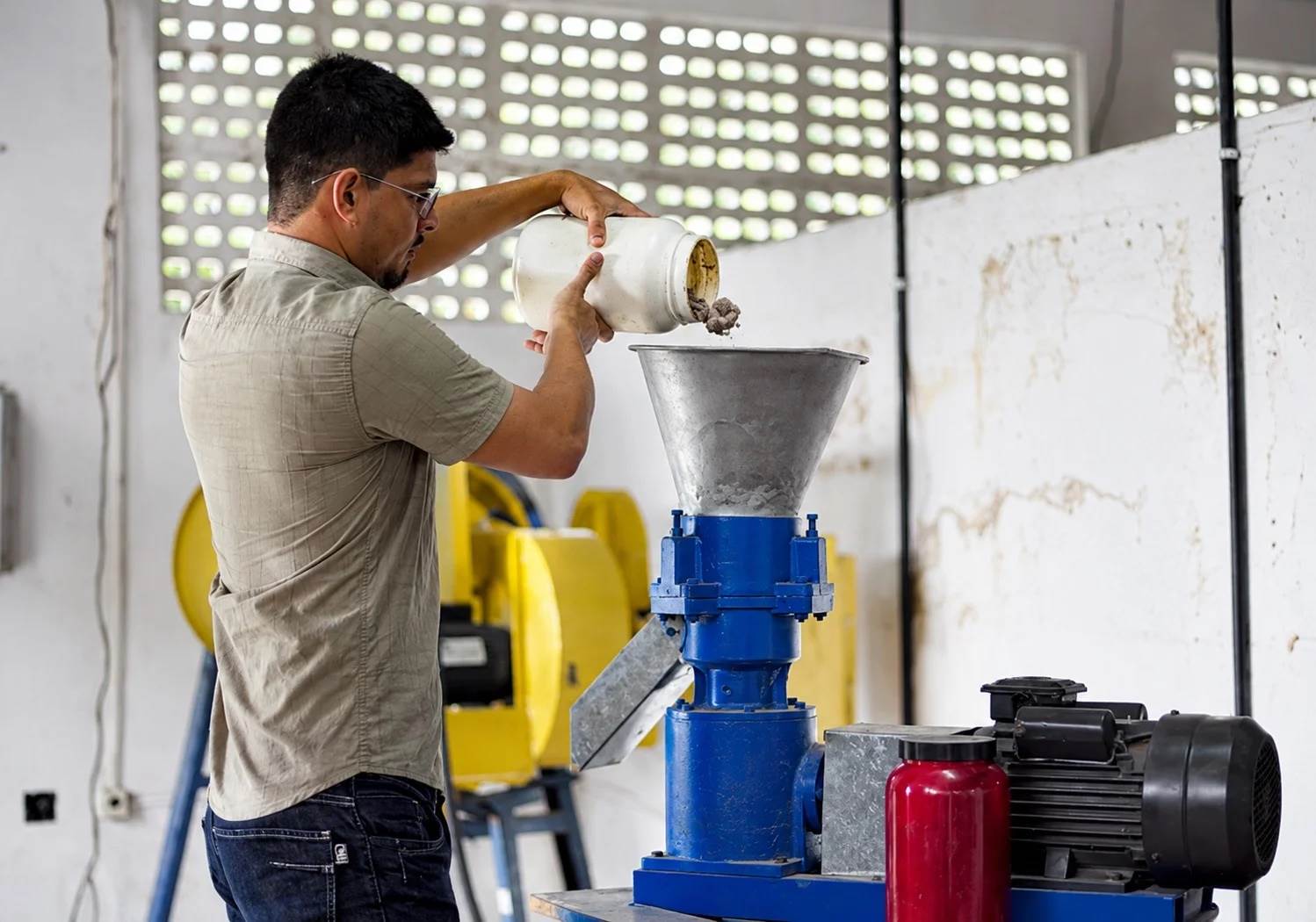
Photo: Canal FDR/YouTube
Malt undergoes fermentation, drying, and pelleting
The technology under development combines four steps: controlled fermentation, drying, nutritional formulation, and pelleting. The pellets are small, compacted grains that make storage, transport, and supply to animals easier. “Fermentation aims to improve the nutrient utilization; drying reduces moisture and promotes preservation,” Girão explains. The process includes physicochemical and microbiological characterization, stability assessment, and quality control.
The projected gains are the solution’s main commercial attraction. Activities supported by UECE assess the feed’s nutrition, safety, stability, and performance, as well as its effect on animal health“We are working with the potential to reduce feed costs by up to 20% and increase milk production by up to 10%,” says Girão.
Capacity of 240 tonnes per year and raw materials from small breweries
The facility available at UECE’s incubator has an operating capacity of 20 tons of feed per month, which corresponds to up to 240 tons per year if it operates at that rate for 12 months. For the pilot plant, the reference for utilization is up to 200 tons of bagasse per year. According to Girão, the two figures are not directly comparable. “These values are not directly comparable because drying removes water and the formulation may incorporate other ingredients,” he says.
Continues after the advertisement
The opportunity studies used by the company estimate that around 60 thousand tons of brewer’s spent grain are generated per year in Ceará. The bagasse used in development comes from the small-scale brewing industry and is transported to the experimental facility by a third party. A regular supply will be decisive in the commercial phase. “Organizing this supply chain is important for future commercial operations, as we need to ensure regularity, quality, and traceability of the batches”, says Girão.
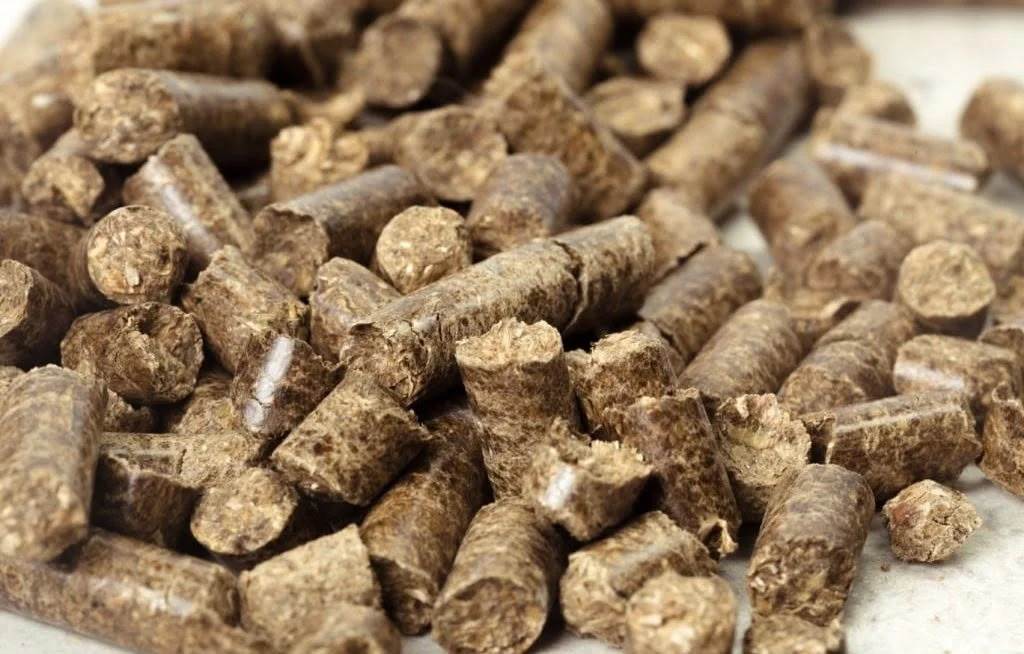
Photo: Disclosure
Investment of R$ 450 thousand and R$ 1 million in search
So far, Biovalor has received R$ 400 thousand from development funds and R$ 50 thousand from its partners, totaling R$ 450 thousand. Development funds account for about 89% of the total. The funds financed drying, mixing and pelletizing equipment, as well as research, formulation, analyses and organization of the production process. The company also has infrastructure, training and technical support from incubation programs and technology partnerships.
The next round is more than double the capital already invested. “For the next stage, we are seeking to raise R$ 1 million, earmarked for structuring and expanding the pilot plant, acquiring equipment, technological and zootechnical validations, and regulatory and commercial preparation,” says Girão. The potential market cited by the company is 73 thousand dairy farms in Ceará. The figure is used in the company’s materials as a reference for the potential market in Ceará. “Our initial focus is on family dairy farming and building access channels through cooperatives and associations,” says the entrepreneur.
The business design also points beyond product sales. “Our business model is moving toward consulting and advisory services for setting up and monitoring feed agroindustries at cooperatives, which will give us scalability, including outside Brazil,” says Girão.
The information comes from Movimento Econômico.
Also worth reading:
Ceará: Quixeramobim prepares to host the eighth edition of the Copa Leite
Dairy farming in Alagoas: Sebrae trains technicians to serve industries