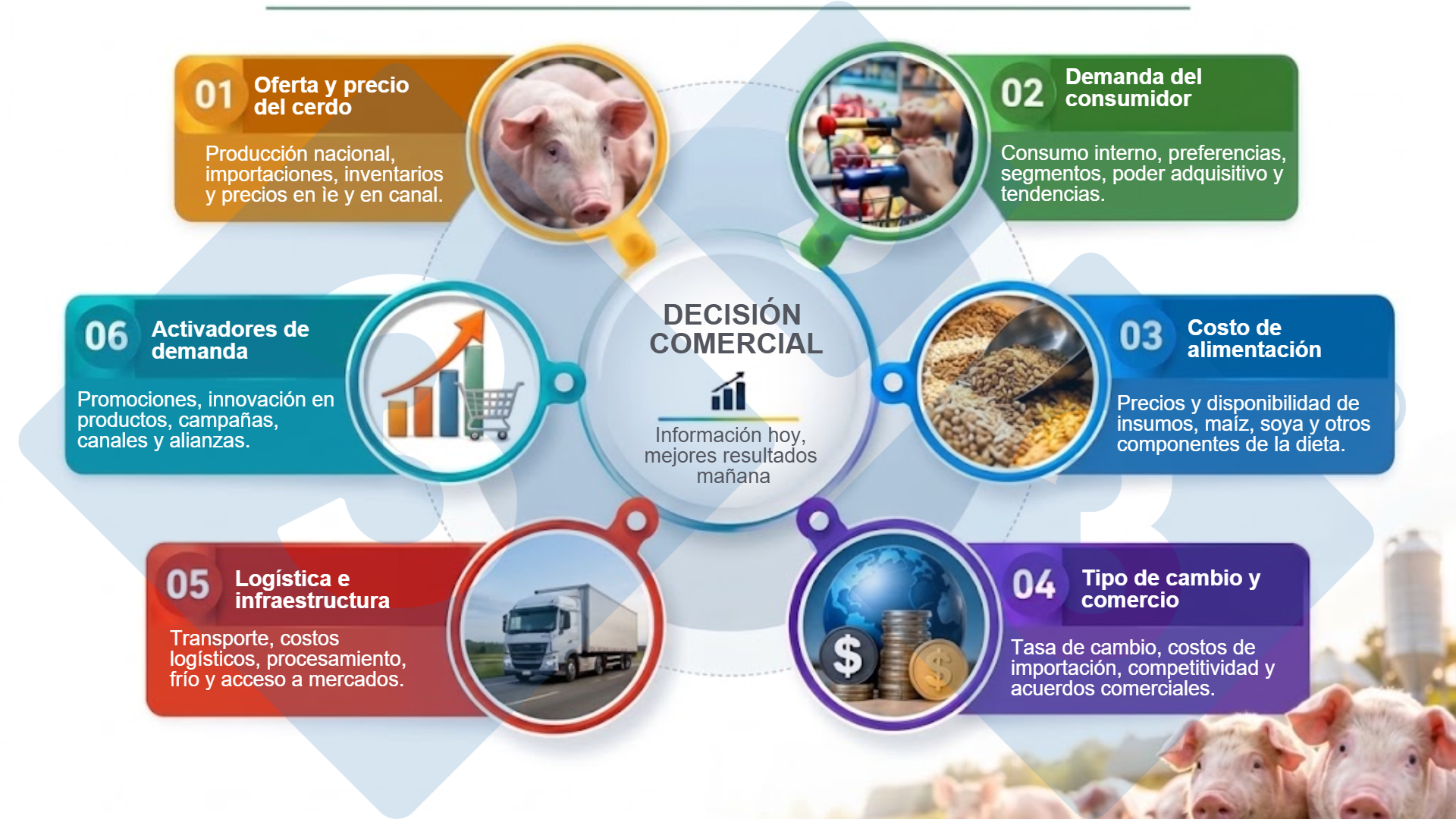
The last quarter of 2026 presents scenarios for pig farming in which management decisions cannot rely solely on the day-to-day price. A producer’s profit margins will be determined by feed costs, supply trends, demand for pork and its derivatives, consumer behavior, the exchange rate in each region, changes and/or adjustments in international trade, and the logistical conditions arising from international conflicts, among other factors. Therefore, October, November, and December should be analyzed as a key period for commercial management, not merely as the close of the production calendar.
Feed costs: a critical variable
Feed represents the main component of the production cost structure. For example, trends in the prices of corn, soybeans, and other feed used in the pig-rearing process should be part of the producer’s ongoing, rigorous monitoring. In August of 2026, the FAO Cereal Price Index increased by 2.2 percent compared with July, reaching its highest level since May of 2024. FAO (2026). The question is not only how much feed costs today, but also what price changes may be expected during this final stage of 2026. This means that, as producers, we should review current inventories versus the inventories needed to finish the year, in order to determine purchasing arrangements for any shortfalls, seek out and contact alternative suppliers, and use foresight to define scenariosincrement streams of the cost per kilogram produced in normal, pessimistic, and optimistic scenarios, and thus have a clear understanding of the cash flow that will be required to make purchases of raw materials and inputs.
| Variable | What to monitor | Attention level |
|---|---|---|
| Feed | Prices of corn, soy, and inputs | HIGH |
| Pig market | Supply, price, and international competition | MEDIUM |
| Demand | Consumption, substitutes, and the year-end season | MEDIUM |
| Finance | Exchange rate, interest rates, and working capital | MEDIUM |
| Logistics | Freight, routes, suppliers, and processing plants | HIGH* |
Supply, pork prices, and international competition
The second factor is the balance between supply and demand. According to the FAO, the international meat price index increased 1.0 % in August 2026, and pork prices rose, driven mainly by higher prices in the European Union, while Brazil recorded lower prices due to abundant supply. This shows how international variables have different impacts depending on the region. Each producer should carefully analyze the microeconomic and macroeconomic factors affecting their local market and, at the same time, monitor the movements of major producers and exporters at the regional, continental, or global level. In the United States, the USDA projects production of pork close to 27 900 million pounds for 2026 ( 1.1 % higher than 2025 ) and exports 2.9 % higher than the previous year. USDA (2026).
The fourth-quarter consumer
Producers should also analyze the behavior of end-consumer demand for pork. In different markets, the last quarter brings celebrations of various kinds, such as love and friendship celebrations, the Christmas season, school holidays, and tourism, which alter consumption of different products in the household shopping basket and of products considered luxury goods. However, greater demand does not automatically guarantee better margins. It is essential to analyze how certain economic variables may affect it, such as inflation, devaluation, exchange rates, household disposable income, the relative price of pork compared with chicken and beef, the behavior of supermarkets, butcher shops, distributors, and restaurants, and preferences for particular pork cuts or by-products.
Exchange rates, logistics, and foreign trade
In countries where production depends heavily on imported raw materials, exchange rate volatility can increase costs, even when international prices remain stable.
Added to this is the need to monitor freight rates, transport availability, road infrastructure, the condition of ports, and possible disruptions to trade flows resulting from international conflicts. Incorporating these variables into the budget and cash flow is essential to protect both input costs and the timely delivery of animals to market.
Colombia: assess the impact of the earthquake on August 10
The Colombian context adds a factor requiring priority attention. The earthquake, with a magnitude of 7.4, recorded on August 10, 2026, affected several departments, including Chocó, Caldas, Risaralda, Quindío, Cauca, and Valle del Cauca.
For pig producers located in or commercially connected to these areas, it will be important to assess possible effects on infrastructure, transport, public services, input supplies, delivery times, and the recovery of regional economic activity. In Caldas alone, the Governor’s Office reported damage to 741 rural production facilities, including pig farming facilities. Governor’s Office of Caldas (2026). Since the impact varies for each operation, each company should assess its level of exposure in terms of routes, suppliers, processing plants, customers, and additional logistics costs.
From analysis to decision-making
The fourth quarter requires collecting relevant information on the different variables that affect the pig farming market to conduct management analyses that lead to strategic decisions. Six indicators should be part of the pig producer’s dashboard: expected pig price, feed cost, cost per kilogram produced, estimated demand, expected margin, and demand stimulators such as discounts, promotions, tastings, etc. Monitoring these variables makes it easier to anticipate scenarios, adjust purchasing schedules, organize sales, and safeguard profitability. In a changing environment, having timely data is as critical as achieving good productivity levels on the farm.
In an increasingly dynamic market, pig farmers’ profitability will depend not only on how much they produce, but also on their ability to anticipate changes in their environment, mitigate risks, and turn market information into strategic decisions that ensure their business’s competitiveness and sustainability in the long term.