
[Livestock News reporter Lee Il-ho]
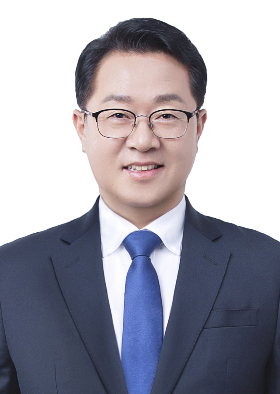
A tax law amendment to include pig farming among the activities eligible for the “family business inheritance” deduction is being pursued under the leadership of the National Assembly.
Despite being a representative capital-intensive industry that inevitably requires large-scale investment, the pig farming industry has long faced difficulties in passing farms down through generations while bearing a high inheritance tax burden, unlike other industries. A step toward addressing this longstanding concern has now been taken.
The Korea Pork Producers Association, which has continuously called for the family business inheritance deduction, immediately issued a statement and welcomed the move with open arms.
On 21, Democratic Party of Korea lawmaker Moon Geum-ju (Goheung, Boseong, Jangheung and Gangjin, South Jeolla Province; pictured) introduced a partial amendment to the Inheritance Tax and Gift Tax Act as its lead sponsor. The bill explicitly designates pig farming as eligible for the family business inheritance deduction to support stable succession of pig farming businesses, prevent farms from closing and strengthen national food security.
If this amendment is passed by the National Assembly, the inheritance deduction limit for the pig farming industry, which is currently covered by the “agricultural inheritance” provision, will increase by up to 20 times (30 hundred million won → 600 hundred million won).
Moreover, if the government’s policy of narrowing the sectors eligible for the family business inheritance deduction while expanding its limit (1 thousand hundred million won) is implemented, an increase of more than 30 times could also be expected.
According to Assembly Member Moon Geum-ju, pig farming has evolved beyond the scope of agriculture into a capital-intensive industry that combines advanced facilities and highly skilled technology, from breeding stock and reproduction management to disease prevention and quarantine, and the installation of manure and odor reduction systems.
As a result, it has the structural characteristics of requiring substantial capital investment and carrying a high debt ratio; moreover, it is an industry that operates year-round without a downtime period, relying on live livestock and facilities.
However, the current limit on the deduction for farm inheritance in the agricultural sector is far from sufficient to bear the excessive tax burden associated with succession.
In particular, excessive inheritance taxes have been cited repeatedly as a major factor leading to farm divisions, forced sales, and closures during succession, undermining the domestic pork production base, driving up food prices, and even threatening the national food security system.
Rep. Moon Geum-ju expected that this amendment would explicitly include pig farming under the Korean Standard Industrial Classification as eligible for the family business inheritance deduction, thereby increasing the effectiveness of tax support.
The amendment also includes safeguards to ensure that support is provided strictly to genuine farms with long-standing experience.
Representative Moon Geum-ju proposed establishing a “Family Business Inheritance Deduction Review Committee” to fairly verify eligibility, while setting the decedent’s business operation period requirement at at least 30 years and extending the heir’s post-inheritance management period to 10 years.
The point is that the obligations to ensure business sustainability and maintain employment must be clearly established.
Representative Moon Geum-ju emphasized, “Although the pig farming industry is an advanced equipment-based industry that operates without a break for 365 days and is a key pillar responsible for feeding the public, tax standards that fail to reflect reality have pushed farms into the risk of closure during succession. I therefore hope that amending the tax law will give young livestock farmers the confidence to carry on the skills and know-how of previous generations, boost productivity, and ultimately help stabilize food prices for the public.”
Meanwhile, in addition to Representative Moon Geum-ju, 11 members of the National Assembly from the Democratic Party of Korea participated in sponsoring this amendment: ▲Seo Sam-seok ▲Song Young-gil ▲Moon Dae-rim ▲Yoon Jung-byeong ▲Kim Yoon ▲Park Hye-cheol ▲Kwon Hyang-yeop ▲Yoon Jong-geun ▲Cho In-cheol ▲Hwang Hee ▲Min Hong-cheol.
Livestock Newspaper, CHUKSANNEWS