Body weight management in laying hens is one of the most important parameters monitored on the farm. In my experience, producers usually monitor growth during the rearing period, but stop weighing the flock once it starts laying eggs.
For different reasons, it is important to monitor body weight at every stage:
During the rearing period, target body weight is positively correlated with good performance during production. Regular monitoring during production allows producers to determine whether farm conditions enable the flock to achieve optimal productivity.
Why is body weight monitoring important?
Weekly body weight monitoring is necessary to track the flock’s actual progress: the earlier we detect deviations, the sooner we can make adjustments.
In addition, feeding techniques such as using an empty feeder once a day can only be implemented correctly if we understand how body weight is changing.
From 1 days of age to 3-4 weeks, once a week, calculate body weight based on the control group.
Chicks are weighed as a group.
Once a week from 3 to 26 weeks of age.
Weigh once every two weeks from 26 weeks of age to 35 weeks of age.
Weigh once every 4 weeks after 35 weeks of age.
As shown in Table 1, body weight management and uniformity also affect many important benchmarks.
To the surprise of many egg producers, your chickens’ growth is not linear.
Between 6 and 11 weeks, growth will reach its peak, gradually decrease until around 16 weeks, and then increase again. This is when medullary bone forms, which is important for strong eggshell quality.
Rearing - an investment in the flock
During rearing, it is important to achieve the optimum body weight at 4-5 weeks of age. At the end of rearing, good uniformity is crucial to ensuring that the right management decisions are made for most of the flock, including its feeding program.
Uniformity depends on:
Feeding space/bird.
Feeding time/selection:
Fewer feedings = larger meals = fewer choices.
Meal time.
Adaptation to feeding time:
Feeding techniques for rearing pullets are changed during the production period (starting at 5 weeks of age).
Sexual maturity and body weight
Finally, when pullets enter the sexual maturity stage, their body weight will determine the average egg weight.
Management of sexual maturity is also a key factor in controlling body weight at the beginning of egg production. For example, many trials have shown that, for brown-egg layers, changes in body weight at sexual maturity lead to changes in egg weight.
At this stage, the flock’s weight can be influenced by changing the feed and feeding plan. Particular attention should be paid to the feed’s energy level.
Lighting is another factor that affects the appetite and feeding of chickens.Increasing the amount of light during the rearing period can promote feed intake and growth.
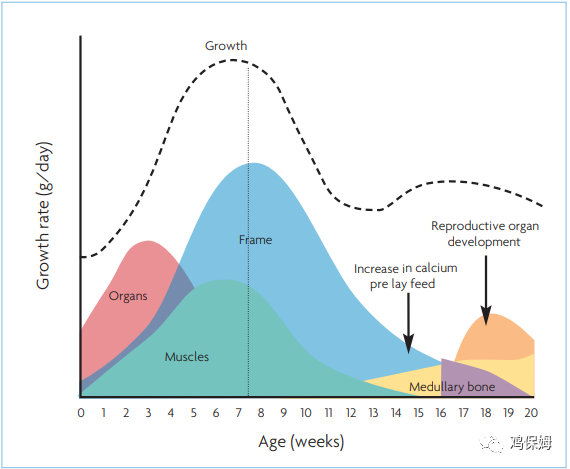
In summary, insufficient body weight early in production will affect total egg production during the laying period. The rearing period is a key developmental stage for future success and an investment phase. The rearing period is a training period. Transfer poultry before the start of egg production. Body weight is a key factor in flock management because it will affect the flock’s future production performance. Therefore, body weight should be controlled throughout the laying hen’s life cycle. Management, especially nutrition and lighting programs, can help control body weight and allow the flock to achieve 100% of its genetic potential.
Source: Chicken Nanny, authors: Hendrix et al.
Welcome to the Poultry Disease Professional Network forum to learn and exchange ideas!
Welcome to the Quotation Center to submit a quotation!
Official WeChat account of the Poultry Disease Professional Network for egg-laying hen information: 15237170695. Mobile phone number synchronized. You are welcome to provide us with information!
For comprehensive, timely updates on egg prices every day, following one public account is all you need.
You can scan the QR code.