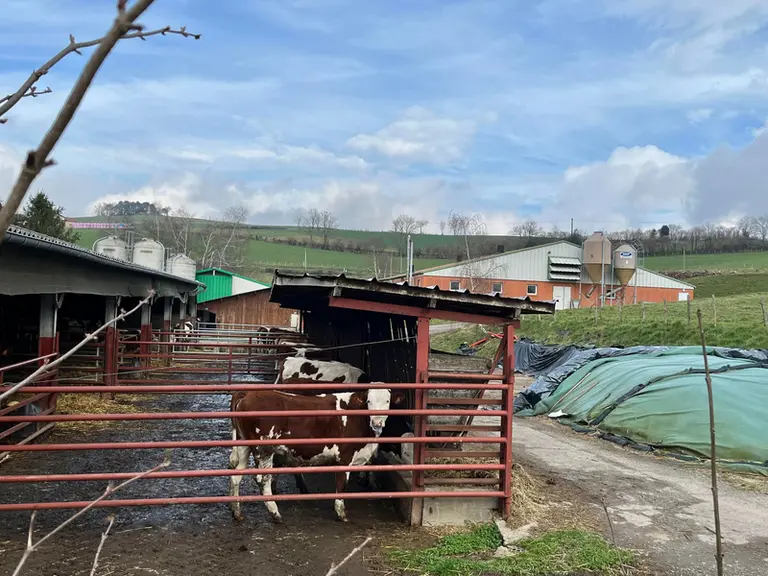
In the Massif Central, a mountainous area made up mostly of grassland, students at agricultural high schools are often familiar with and interested in herbivore farming, and less so in pig farming.
Read also: “ Our pig and cattle units complement each other”
This situation raises questions in a context of generational renewal in farming and a decline in the number of pig farms in this area. Yet, despite its limited presence, the pig sector plays a structuring role locally, particularly for the activity of slaughterhouses and charcuterie producers, and for the promotion of regional food specialties. To better understand the place of pig farming in the career plans of future farmers, a survey was conducted as part of the Aporthe project among students at agricultural high schools in the northern Massif Central. It shows that although pig farming is not a priority for most of them, they are interested in the economic, as well as agronomic, zootechnical and work-related aspects of pig production, which may still feature in their career plans.
Pig farming is rarely a priority
The survey results show that pig production is rarely the preferred choice among students. Thus, 33 % do not intend to work on a farm, 39 % want to work on a farm but without pigs, and 28 % are considering a farming project without ruling out pig production. The latter have often already had contact with this type of production through an internship, a job, or pig farmers in their circle. Among the learners surveyed who intend to work on a farm, only 3 % say they primarily want to raise pigs, while 67 % are primarily interested in cattle farming (36 % suckler cattle, 31 % dairy cattle). However, pig production is not rejected. Overall, 42 % of these 187 prospective farmers say they might consider raising pigs in their future occupation.
Mixed systems with pigs are popular
What unites these learners in their views on pigs is the value they see in combining pig farming with herbivores. Indeed, 82 % of the 280 respondents consider combining pigs and herbivores beneficial for a farm. Among learners who intend to work on a farm without ruling out the possibility of keeping pigs, the vast majority envision a mixed system primarily focused on herbivores (86 %), rather than mixed farming primarily focused on pigs (9 %) or a specialized pig system (5 %). In this respect, they “adhere” to the dominant pig farming model in their region of the Massif Central. They see this combination as a way to increase and secure farm income (respectively 23 % and 17 % of respondents), diversify the work (29 %), make use of livestock manure (21 %), and develop agricultural activity with little land (10 %). Theyidentify various limitations or barriers to pig farming: the many regulations (29 % of respondents), opposition from neighbors (16 %), the high investment or capital required (16 %), a lack of training and advisors (14 %), fluctuations in the sale prices of animals (13 %), and working conditions (10 %). This reflects the diversity of their perspectives on, and consideration of, the difficulties associated with this type of production.
Expectations that differ from current systems
Among learners more open to pig production, the type of pig farming that interests them varies widely and often does not match that of the pig farms currently operating in the Massif Central: 40% of respondents would opt for pigs raised outdoors, 36% for pigs raised in buildings on straw bedding, and only 24% for pigs raised in buildings with slatted floors, which predominates in the Massif. In discussions with learners at the end of the survey, the content of their responses showed that they value housing conditions like those used for cattle (outdoors, straw-bedded areas). These preferences reflect, in particular, an interest in systems perceived as closer to animals or more compatible with the image young people have of livestock farming.
Encouraging gradual adjustments
The study shows that these young people in agricultural technical training, a growing proportion of whom do not come from farming families, already have a perspective on pig farming that combines multiple dimensions of their professional outlook: the amount of capital required, securing income over time, the working environment, input savings, reactions from neighbors, the range of regulations to take into account, and training and support needs. The future of pig farming and the renewal of existing pig farms in grassland areas will depend on how stakeholders in the sector and in education address this multiplicity of questions and expectations, as well as these perspectives, which sometimes diverge from the reality of pig production in the region. It is therefore crucial to be able to accommodate the diverse interests, questions and plans of these young people and future professionals.
Christine Roguet and Hélène Rapey, [email protected]
Key facts
The survey was conducted in March 2025 as an online questionnaire, completed by 280 learners from 16 classes at three agricultural high schools in the northern Massif Central: Brioude-Bonnefont, Marmilhat and Roanne-Chervé.