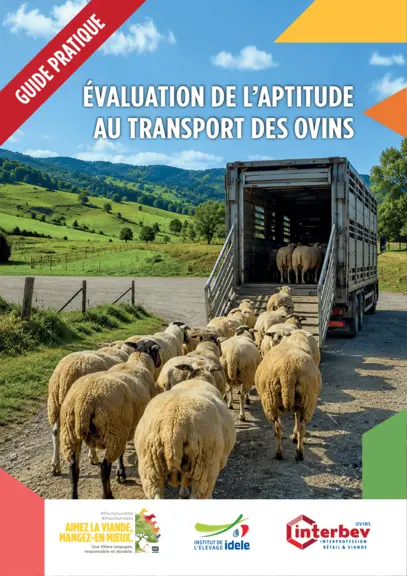
Is this sheep fit for transport? Interbev and the Institut de l’élevage worked together on a guide to assessing the fitness of sheep for transport. Although only a small number of sheep are actually unfit for transport, the issue is significant. The transportability of farm animals is subject to the European regulation.
As the guide reminds us, “transporting unfit animals may result in penalties, financial losses and a withdrawal of authorization from the carrier and/or the driver”. As these texts can sometimes be difficult to interpret, this new guide of 24 pages sets out the rules to follow and the points to watch. Livestock farmers, carriers, livestock handlers, and slaughterhouse staff therefore have a shared, tool available to establish a calm discussion basis. The kit provided by Interbev also includes a summary table for transporters, as well as in-house training materials.
Do not transport if in doubt
The document compiles the observable indicators for identifying animals unfit for transport or those for which the question should be considered. In general, animals injured, unable to move on their own without suffering are considered unfit, as are newborn lambs or females around the time of lambing. An animal slaughtered, tired, too thin, with breathing difficulties or an abnormal posture should alert the operators. In case of doubt, it is recommended to not to transport the animal, and to consult a veterinarian. As a reminder, it is prohibited to send or bring any injured sheep to the slaughterhouse.
Find the complete guide here: https://www.interbev.fr/ressource/guide-pratique-pour-evaluer-laptitude-au-transport-des-ovins/