
Jilin Province is located in the world’s “Golden Maize Belt.” Its annual grain output has remained above 800 hundred million jin, and in 2025 it slaughtered 2971.9 ten thousand pigs. Leveraging the ample feed supplied by the maize belt, Jilin has made distinctive black pigs a breakthrough for differentiated development, extending the industry from a “grain advantage” to a “meat advantage” and fostering a collaborative support structure involving the government, research institutions, leading enterprises, and farmers. Among these efforts, the “channel-based farmer support” and “guaranteed-price contract raising” models have become representative practices in Jilin’s exploration of its black pig industry.
“Channel-based farmer support” model
Traditional pig farmers have long been constrained by being small, scattered, and weak: they operate on a small scale and have little bargaining power, and want to expand production but lacktechnology…worry about finding buyers. In response to this challenge, a model that connects farmers with businesses and supports farmers, led by end-market channels, has emerged: pig-farming companies open their sales networks—which cover large supermarkets and fresh-food counters nationwide—to partner farmers, securing sales through orders. This allows farmers to raise pigs to specified standards and have them purchased as agreed, shifting from “raise first, sell later” to “produce according to sales.”
Taking Yongji County as an example, with support from government policies for contract rearing, commissioned rearing, and free-range rearing, farmers provide woodland or housing facilities that meet the standards. The Jilin Academy of Agricultural Sciences is responsible for selecting and matching breeding stock for the nucleus herd and monitoring pork quality, while the company provides feed and farmingTechnology, with personnel assigned to provide routine supervision. The compensation for contract raising is calculated by the company and each farmer individually and then written into the contract. Farmers earn a profit of 200-300 yuan per market hog sold, while farms that breed and raise their own pigs earn a profit of 400-500 yuan per head. The savings and efficiency gains go to the farmers. A uniform 300-day breeding-cycle management policy is implemented. Following designated-point slaughter and cold-chain transportation, the pigs enter consumer markets under the Acorn Black Pig brand, including Better Life, Sam's Club, and Yonghui.
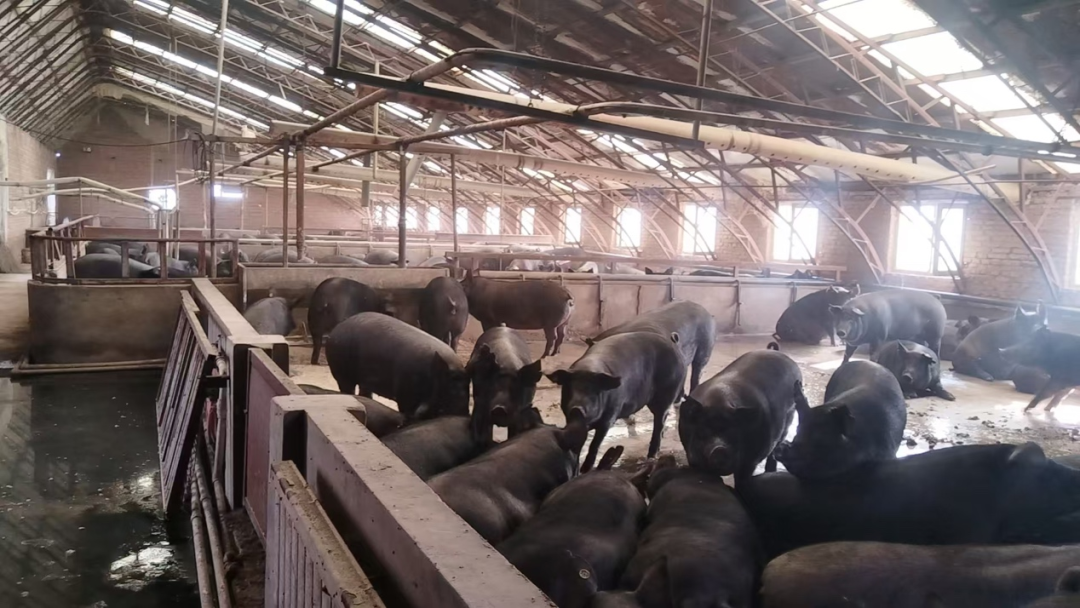
Figure 1 high-quality acorn-fed black pig
This farming model is driven by distribution channels and brings together four parties: the government providessubsidiesLowering the barriers to farmer participation, research institutions ensure breeding stock through ongoing breeding, enterprises open up sales channels through retail networks, and farmers organize production according to standardized farming protocols. Each of the four parties has a distinct role, shifting the risk from “raising livestock first and then looking for buyers” to “raising livestock to standard and selling as agreed.” This effectively addresses farmers’ concerns about “not daring to raise livestock and being unable to sell it well,” creating a channel-based model that supports farmers through government guidance, research support, enterprise leadership, and farmer participation.
“Guaranteed minimum price contract farming” model
Traditional smallholder pig farming has long been constrained by three major risks: capital, disease, and the market. Renovating pig housing requires a large investment, piglet mortality is high, and farmers commonly operate at a loss. In response, a model built around a closed loop of “providing, breeding, raising, and purchasing” has gradually taken shape: pig farming companies open their market-weight pig buyback systems and full-process contract-farming capabilities to partner farmers, securing a sales channel through guaranteed buyback and enabling farmers to raise pigs to standard and have them purchased as agreed.
Two key design features directly address farmers’ main concerns. First, the investment of 10 ten thousand yuan in pig housing renovations is fully refunded after three years of continuous cooperation, effectively covering the initial fixed investment. Second, piglets are raised at a standardized pig farm until they reach 100 jin before being delivered for fattening. The company handles the nursery stage, while farmers are responsible only for fattening, avoiding the stage with the highest disease risk. The company commits to a guaranteed purchase price throughout the year and continues purchasing as agreed even when market prices fall. Through this arrangement, the husband and wife earn a stable additional income of 12 ten thousand to 14 ten thousand yuan each year, and their idle pig housing is put to effective use.
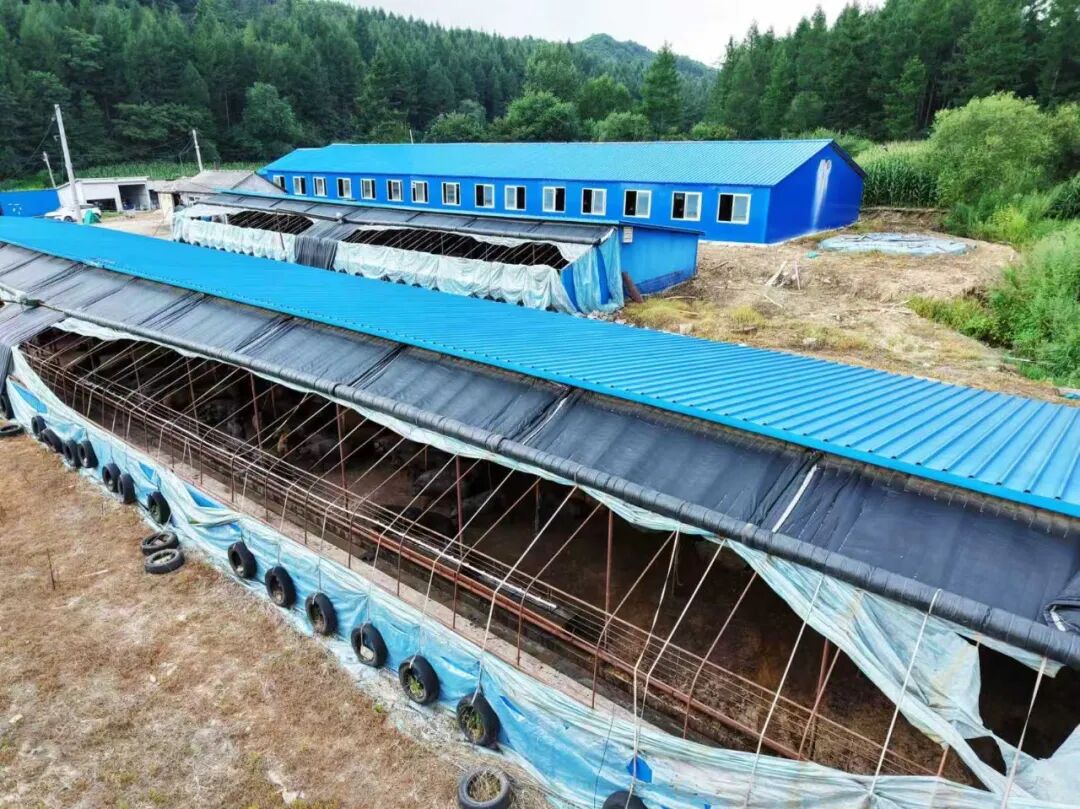
Standardized contract pig housing 2
This farming model shifts the risks from “buying their own piglets and finding their own buyers” to “the company supplies the piglets and buys back the pigs,” effectively solving farmers’ concerns that they “dare not raise them” and “cannot sell them well,” and establishing a guaranteed contract-farming model in which the company buys back the pigs and farmers raise them on the company’s behalf.
From the “golden corn belt” to the “high-end meat market,” the upgrading of Jilin’s black pig industry is not just a matter for a group of companies; it is also an exploration of ways to connect agricultural enterprises with farmers and support farmers. One approach uses sales channels to solve the problem of “being able to raise them but unable to sell them”; the other provides a safety net to address “lacking capital and fearing losses.” Each approach has its own focus, but both point to the same principle: connecting the capabilities of government policy, scientific research, and businesses with farmers, so they dare to raise pigs, are able to raise them, and do not have to worry about selling them. With support for breeding stock, reliable sales channels, and a safety net for investment, the black pig industry can truly turn its resource advantages into industrial advantages, enabling more farmers to earn stable incomes along this value chain.