
Jakarta (TROBOSLIVESTOCK.COM). To ensure that broiler (meat chickens) and layer (egg-laying chickens) businesses are managed in accordance with regulations, the Ministry of Agriculture (Kementan) is strengthening coordination with local governments (pemda) to oversee the supply and distribution of broiler chickens and eggs for consumption. In addition, this oversight is intended to strengthen guidance for farmers and business operators, and to maintain a balance between production and market demand so that broiler egg prices at the farm level can return to the reference price.
The Director General of Livestock and Animal Health at the Ministry of Agriculture (Dirjen PKH Kementan), Agung Suganda, said stabilizing egg prices requires joint efforts because most egg production comes from smallholder farmers. The government needs to ensure that selling prices remain balanced with production costs so that farmers’ businesses remain sustainable. “Egg prices have to rise, and this cannot be done by the government alone,” Agung said at the National Poultry Coordination Meeting held hybrid on Tuesday (6/10).
At the meeting, the East Java Provincial Livestock Service reported that the average price of chicken eggs in the region on Monday (5/10) was Rp 21.800 per kilogram (kg). The lowest price was recorded in Blitar Regency at Rp 20.100 per kg, and the highest in Lumajang at Rp 22.500 per kg.
“Price pressure is occurring mainly in production centers with abundant supply. Therefore, distribution from surplus areas to regions in need needs to be strengthened, alongside production adjustments to balance supply and demand remain stable. These production hub areas must continue to be supported so that egg prices can rise. One way is to distribute eggs to the eastern region, where prices are still quite high,” she suggested.
The Ministry of Agriculture is also encouraging measured production adjustments by regulating flock sizes and culling chickens that have reached the end of their productive period. These steps are intended to align production with market absorption capacity and prevent oversupply. The Ministry of Agriculture is strengthening the phased implementation of Minister of Agriculture Regulation Number 10 of 2024 concerning the Supply, Distribution, and Supervision of Broiler Chickens and Eggs for Consumption, in collaboration with regional governments.
In implementing this, regional governments play a primary role in supervision within their respective areas. Local governments need to establish and implement supervisory measures suited to regional characteristics, including monitoring population and production, mapping the conditions of supplyand demand, supervising the circulation and distribution of eggs, and monitoring the development of business capacity to prevent market supply imbalances.
In addition, local governments need to strengthen guidance and supervision of permits for livestock businesses layer, so that business development and production capacity in the regions can be recorded, monitored, and aligned with carrying capacity and market needs.
The scope of supervision also includes business operators’ compliance with the provisions of Permentan 10/2024, including the use of Poultry Slaughterhouses (RPHU) and cold-chain facilities, fulfillment of distribution documents, and implementation of partnerships.
Specifically, for broiler chicken businesses with a total of chick-inat least 60.000 DOC (day-old chicks) FS (final stock) per week, supervision is directed at ensuring the obligation to own and/or control an RPHU with a Veterinary Control Number (NKV) and equipped with cold-chain facilities, including ensuring that the actual slaughter of livebird at the RPHU complies with the provisions. Permentan 10/2024 stipulates the gradual fulfillment of slaughter capacity until it reaches 100 % of the total chick-in.
Supervision also covers the implementation of partnerships, including compliance with provisions on the supply and distribution of DOC FS, fulfillment of the rights and obligations of the parties, and ensuring that no practices harm partner farmers. Minister of Agriculture Regulation 10/2024 specifically includes partnerships as an object of guidance and supervision.
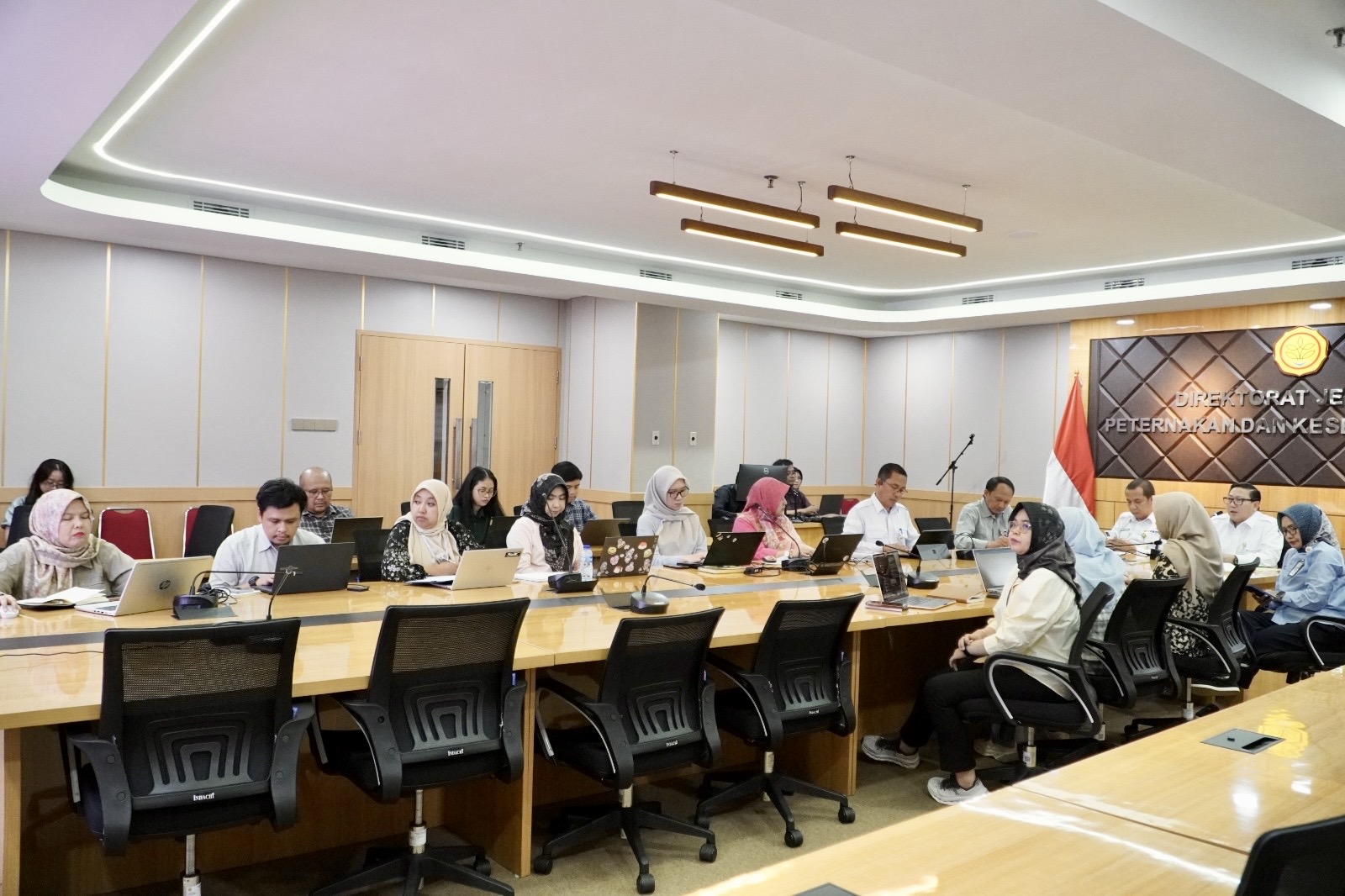 Photo: Ministry of Agriculture
This supervision is carried out routinely and on an ad hoc basis through business operator reports and field inspections. Under Minister of Agriculture Regulation 10/2024, routine supervision is conducted at least once every three months, while ad hoc supervision may be carried out based on public reports or suspected compliance violations.
Supervision needs to be carried out in stages, starting at the regency/city level, then the provincial level, and finally the central government level. Local supervision data and findings serve as a basis for the Ministry of Agriculture to provide guidance, conduct evaluations, coordinate across regions, and formulate national poultry policies.
Thus, the Ministry of Agriculture is responsible for ensuring policy consistency and nationwide supervision, while local governments are at the forefront of implementation, guidance, and direct field supervision. “Please ensure that this Minister of Agriculture Regulation 10 of 2024 is widely socialized, especially in areas that are production centers,” Agung urged.
According to him, resolving egg price issues must be coordinated and data-based. Local governments should not merely receive information; they must actively conduct supervision and take guidance measures in their respective areas, particularly to maintain a balance between production and market demand. “We facilitate this and work together in coordination,” he said.
Meanwhile, the Head of the Central Java Province Department of Agriculture and Livestock, Defransisco Dasilva Tavares, said he was ready to follow up on the directive by coordinating with regency and city governments. “We will promptly carry out the Director General of Livestock and Animal Health’s directive by coordinating with our colleagues in the regencies and cities. Strengthening data collection is an important step toward gaining an overview of conditions in the field,” Defransisco added.
The Ministry of Agriculture confirmed that the measure is intended to maintain a balance between national poultry production and supply, strengthen business governance, ensure compliance with regulations, and give smallholder farmers room to sustain and develop their businesses sustainably.bella