
A circular approach to animal resilience
Sustainability in animal production is often viewed through feed conversion, carbon footprint and resource use. While major feed ingredients dominate this discussion, low-inclusion functional supplementation plays an important role in how animals cope with modern production pressures and limit losses in performance or meat quality.
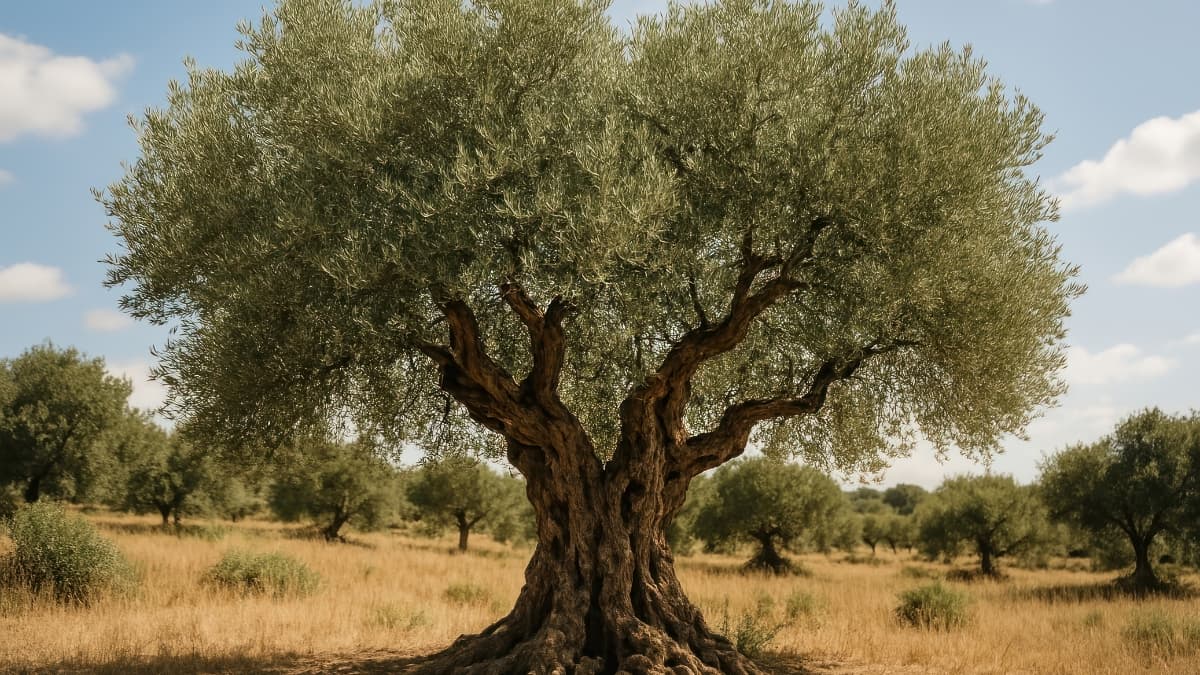
Olive pulp provides an interesting example. Generated during extra virgin olive oil production, it can be standardised and used as feed material. It retains a complex matrix containing fibre, residual lipids, phenolics and triterpenes naturally present in the fruit. Its sustainability value therefore combines side-stream valorisation with potential support for animal resilience.
More than just oil comes from an olive In a typical 2-phase extraction process, 1,000 kg of olives yield approximately 200 kg of olive oil and around 800 kg of wet pulp and associated solids. The balance varies with cultivar, fruit maturity and processing conditions. Olive-processing side-streams have traditionally been directed towards energy generation, composting or, less desirably, landfill waste.
Poorly controlled spreading may create environmental burdens. Olive pulp nevertheless retains compounds supporting higher-value use: approximately two-thirds of olive triterpenoids and a large proportion of several phenolic classes remain in residual fractions rather than in the oil itself.
Circularity across the value chain
Olive orchards capture and store carbon in trees and soils. Figures from the International Olive Council indicate that a 40-year-old olive tree absorbs ~110 kg of CO₂ per year, corresponding to an estimated 11.6 kg of CO₂ captured per kg of olive oil produced. Against the 4.07 kg of CO₂ emitted during production and packaging of 1 kg of extra virgin olive oil in 500-ml glass bottles, this offsets a net balance of -7.53 kg of CO₂ (Figure 1). Although these values vary with agricultural practices, packaging and life-cycle boundaries and cannot be directly allocated to olive pulp, using the co-product as feed material extends the value obtained from orchard biomass, particularly when lower-impact energy is used for drying.
The olive oil extraction process also influences the environmental profile of olive oil and its side-streams. Compared with a 3-phase decanter, a 2-phase system typically requires no additional water and avoids a high-volume wastewater stream.
Figure 1 - Illustrative carbon balance of the olive oil value chain.
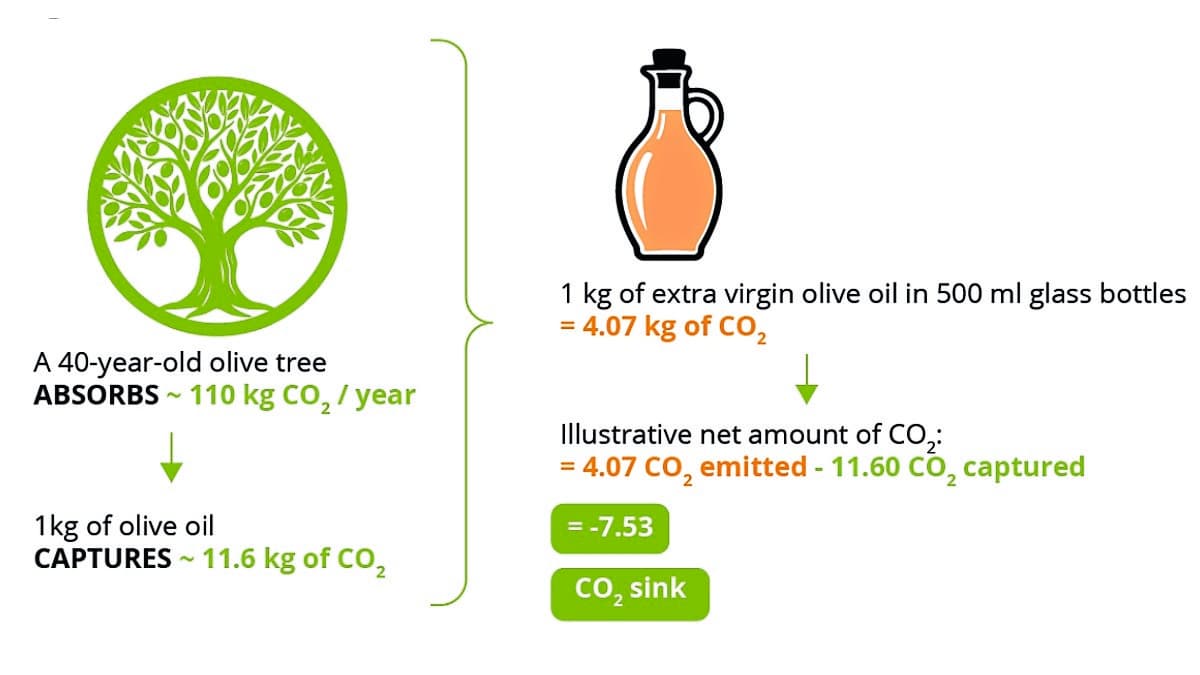
Source: International Olive Council. Figures may vary with orchard type, production practices, packaging, and life-cycle boundaries.
Why the olive totum matters
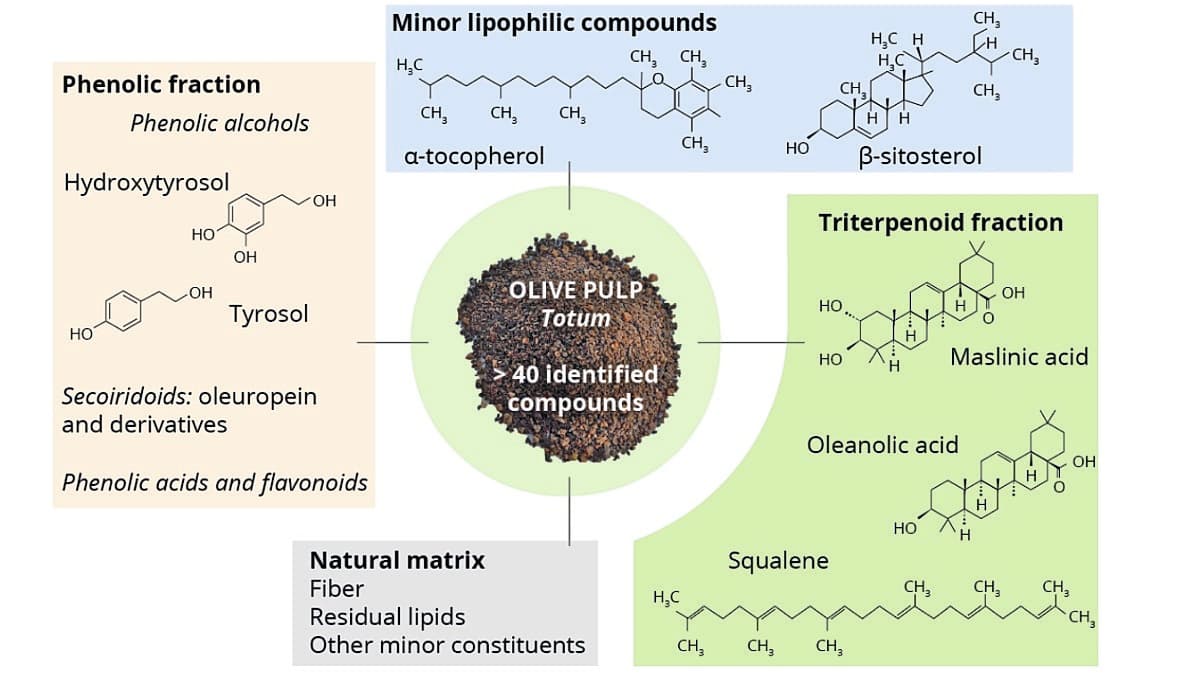
Olive pulp has the advantage of retaining the olive totum (Figure 2): namely, the naturally associated diversity of compounds within the plant matrix. This includes hydroxytyrosol and tyrosol, oleuropein, phenolic acids and flavonoids, together with the acyclic triterpene squalene and pentacyclic triterpenes such as maslinic and oleanolic acids.
Research suggests that such compounds, spanning several classes, act synergistically. Phenolics can scavenge reactive species, chelate metals, and interact with cellular redox signalling, while pentacyclic triterpenes have been shown to have antioxidant and anti-inflammatory mechanisms. The overall response may therefore be enhanced by the complete matrix rather than one isolated molecule.
Figure 2 - Representative components of the olive pulp totum.
However, retaining this natural complexity also means managing variability. Olive-pulp composition is influenced by cultivar, terroir, harvest maturity, olive oil extraction conditions, drying and storage. Purified extracts may be preferred for consistency, but olive-pulp standardisation can provide similar control while preserving the broader biochemical diversity of the totum. The material evaluated here is derived from Koroneiki olives, a Greek cultivar associated with high phenolic content, and is standardised through traceable sourcing and analytical processes that guarantee specific chemical specifications.
Additionally, in a cellular oxidative-stress study conducted by an expert university laboratory, Korevion's standardised olive pulp was compared with an isomolar combination of hydroxytyrosol and tyrosol. While both reduced intracellular reactive oxygen species, only the olive pulp enhanced several antioxidant defences, including increased glutathione, reduced lipid peroxidation, and modulated stress-induced NFE2L2 expression, the gene encoding the antioxidant regulator Nrf2. This indicates broader cellular protection against oxidative damage and supports a totum effect not reproduced by hydroxytyrosol and tyrosol alone.
A battery of additional in vitro tests spanning several mechanisms, from radical scavenging and electron transfer to oxidative-stress mitigation, confirmed broad antioxidant activity, supporting the animal’s antioxidant defences. Although these assays do not reproduce digestion and metabolism in animals, the results provided a strong basis for further biological evaluation.
Broilers as a first proof of concept
Broiler studies then evaluated effects on performance, oxidative status and meat quality under different production conditions. In one 42-day study, the standardised olive pulp, Korevion, was evaluated in diets containing either 80 mg/kg of supplemental vitamin E or a reduced level of 40 mg/kg. Olive pulp was added at 40 or 60 mg/kg to the reduced-vitamin E diet.
As expected, lowering vitamin E increased oxidative pressure. Although performance across treatments (body weight, feed intake, feed conversion and carcass yield) was maintained, the reduced-vitamin E level affected tissue and meat quality. The 60 mg/kg olive-pulp treatment was the most consistent, reducing lipid-peroxidation markers in breast and digestive tissues and increasing antioxidant capacity in thigh tissue. This indicated better tissue protection under oxidative pressure. It was also associated with the lowest wooden breast severity.
Other studies have generated complementary signals involving plasma antioxidant capacity, tissue lipid oxidation and meat water-holding capacity, including under heat stress.
From protection to efficiency
Oxidative imbalance can affect how efficiently feed, water and energy are converted into performance and meat quality. Heat, high stocking density, oxidised dietary fats, health challenges, and rapid breast-muscle development can increase oxidative pressure. Impaired performance, mortality, tissue damage, downgraded meat and processing losses all reduce the useful output obtained from invested resources.
Here we present a credible sustainability link for functional supplementation. Its contribution does not arise simply because a material is natural or circular, but when it helps maintain resilience, performance or product quality and thereby reduces avoidable losses.
Further work is needed across species. Our olive-pulp supplementation provides a practical example of how feed innovation can support more resource-efficient modern animal production by linking co-product valorisation to measurable biological outcomes.