
The third quarter is traditionally a peak season for egg consumption, and egg prices remained high. With holiday-related support fading in 10-11, demand may weaken, putting downward pressure on egg prices. In 12, the market’s supply-demand balance may tighten, and egg prices may rise month on month.
Egg prices remained high in the third quarter, with a quarterly average of 4.79 yuan/jin, up 12.44% month on month and 52.55% year on year. The high was 5.36 yuan/jin in mid-9, the highest level of the year; the low was 4.11 yuan/jin in early 7. Changes in demand drove the trend in egg prices during the third quarter, while supply provided a floor for prices.
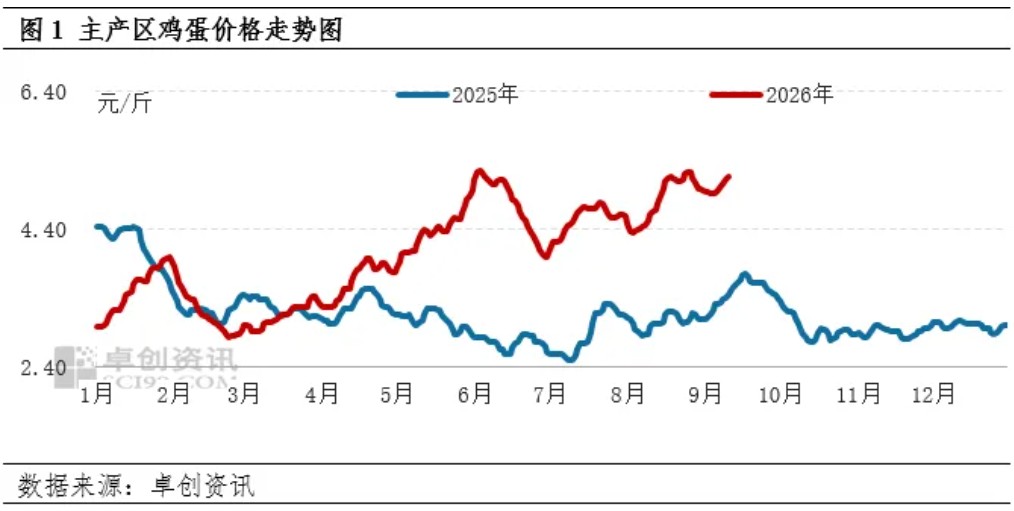
Seasonal demand release is the core driver of rising egg prices.
The third quarter is traditionally the peak consumption season in China’s egg market. The simultaneous recovery in demand from food companies and end markets is the main driver supporting the egg market.
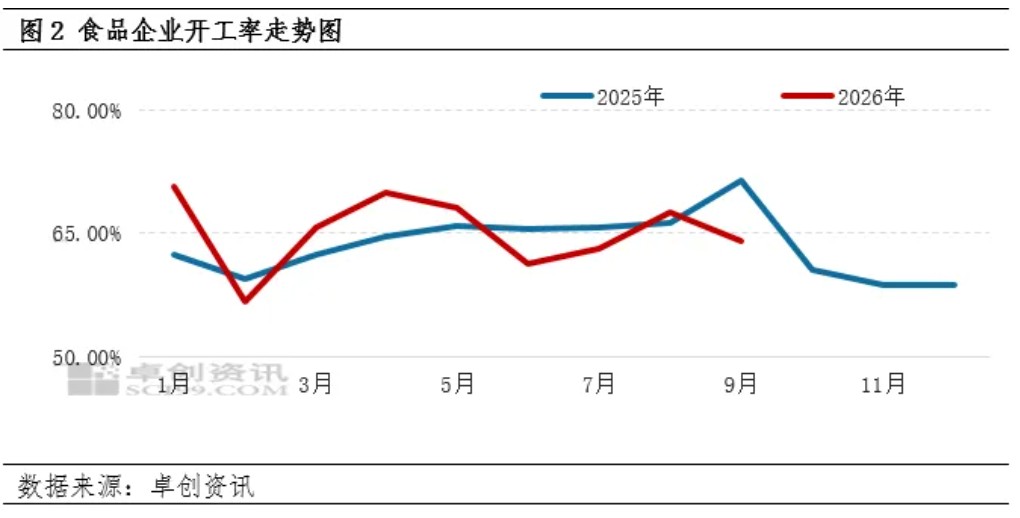
Affected by the Mid-Autumn Festival, food companies entered a peak production period, and their egg purchasing volume increased significantly. According to monitoring data from SunSirs, the operating rates of sampled food companies rose by 2 percentage points and 5 percentage points month over month in 7-8, respectively. In 9, food companies’ Mid-Autumn Festival stockpiling entered its final stage, and the operating rate edged down by 4 percentage points month over month, but remained at a year-to-date high. Increased egg purchases by food companies in the third quarter provided solid support for the sustained rise in egg prices.
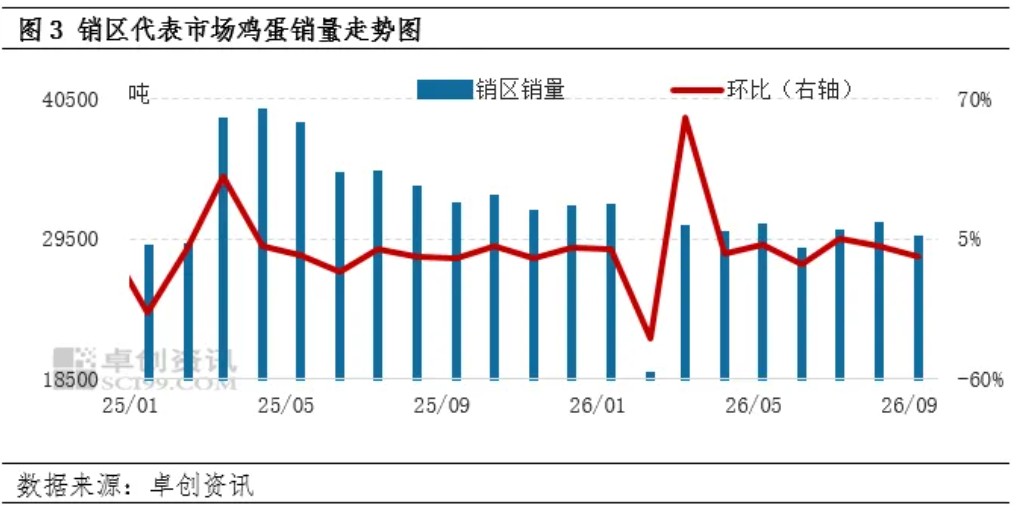
Egg prices rose seasonally in the third quarter, traders became more active in the market, and egg purchases increased. At the end of 8 and beginning of 9, schools reopened, and demand for eggs from school cafeterias recovered, also driving egg demand. Before the Mid-Autumn Festival, consumers’ holiday shopping and gift-box purchases picked up, and demand in the end market recovered. From 7 to the first half of 9, overall demand for eggs in the end market showed an increasing trend. In the second half of 9, overall demand weakened as downstream markets finished stocking up for the holiday. According to monitoring data from Zhuochuang Information, egg sales in representative markets in the sales regions increased by 5 percentage points and 2 percentage points month over month, respectively, from 7 to 8. Sales decreased slightly in 9, falling by 3.39 percentage points month over month.
The market entered a slow recovery phase in the fourth quarter
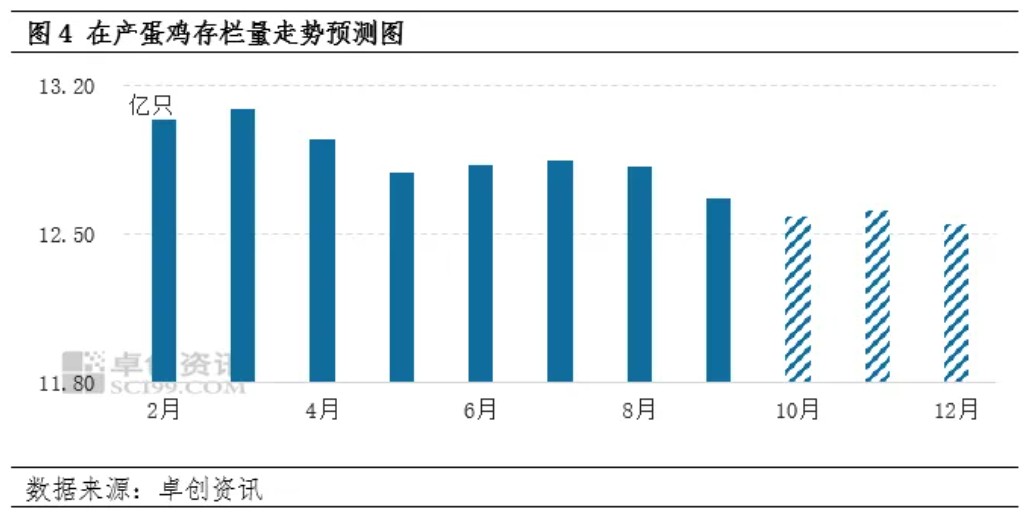
Supply-side factors will provide support for egg prices. The laying hen population in 10 month is expected to decrease slightly, with a theoretical estimate of 12.58 hundred million birds, a month-on-month decline of 0.71%. However, as the effects of hot weather fade, the flock's overall laying performance is recovering. The increase in the laying rate is offsetting the impact of the smaller population, and total egg output may increase. In 11 month, newly productive hens will continue to enter production, further increasing egg supply. In 12 month, producers are expected to cull in batches the older hens they previously kept in production, increasing the number of birds shipped out. Egg supply is expected to decline, and the population may fall to 12.55 hundred million birds. Overall, although egg supply is expected to increase in 10-11 months, the increase will be limited. Supply may decline in 12 month, and egg supply pressure is expected to remain low in the fourth quarter, providing support for egg prices.
Demand recovered slowly. After the Mid-Autumn Festival and National Day holidays, the boost from the holidays faded, and consumption entered its traditional off-season. Traders slowed their purchasing pace and showed limited willingness to buy in bulk, leaving overall market demand subdued in 10 month. Market demand in 11 month was neither strong nor weak. However, as temperatures fell, eggs could be stored for longer, and traders and producers began rotating their stocks, providing a floor of support for egg prices. In 12 month, preparations for New Year’s Day and the Spring Festival gradually got underway. End-consumer demand recovered, which was expected to provide an effective boost to egg prices.
Overall, after the Mid-Autumn Festival and National Day holidays in 10 month, the holiday-related boost faded, and the egg market entered its traditional consumption off-season. Market supply and demand shifted to a looser balance, and egg prices are expected to trend lower, with the monthly average in 10 month possibly falling to 3.80-3.90 yuan/jin. Market demand in 11 month is expected to be lackluster, but stock rotation by farming enterprises and traders may provide some support for egg prices. Prices are expected to fluctuate at low levels between 3.80-4.20 yuan/jin, with a monthly average of 4.00 yuan/jin. In 12 month, preparations for New Year's Day and the Spring Festival will get underway, supply and demand will tighten, and downstream consumption will gradually recover. Egg prices are expected to strengthen gradually, with the peak in the latter part of the month possibly rising to 4.40 yuan/jin and the monthly average recovering to around 4.20 yuan/jin.