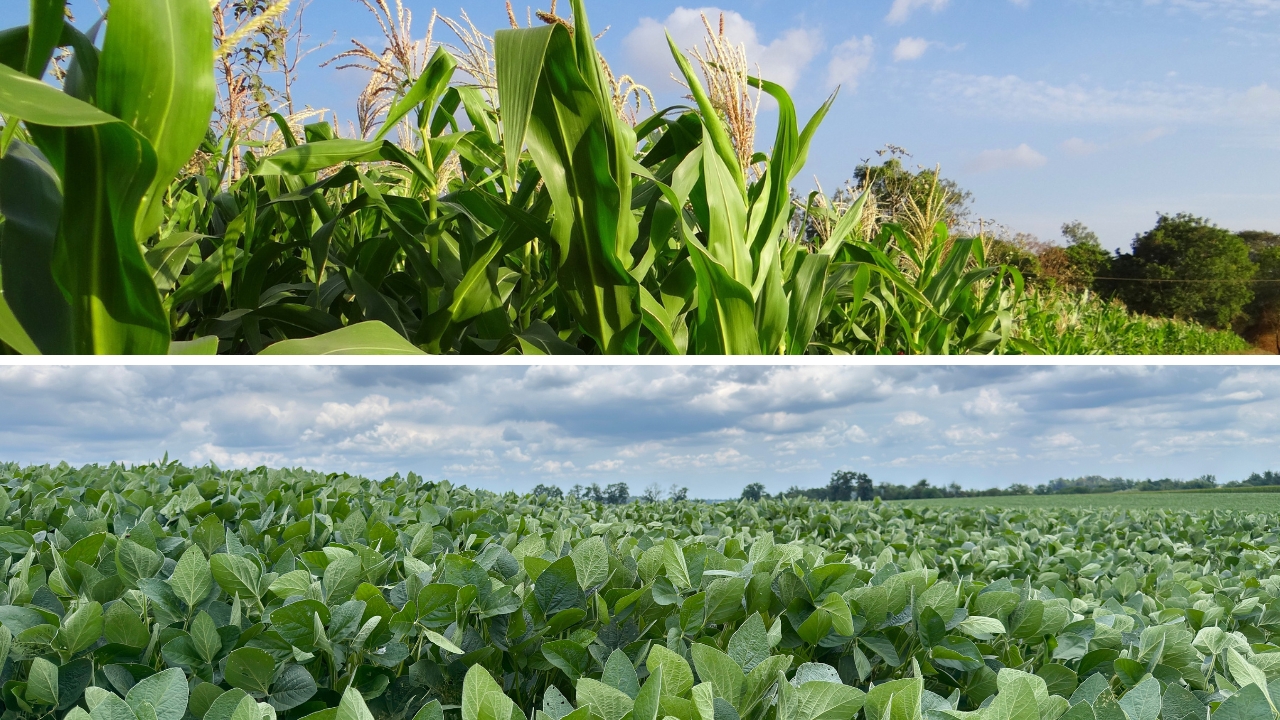
Soybean begins its season in the core region with more hectares in the plans and strategies aimed at getting ahead of the water surpluses projected by the El Niño phenomenon. The first planting estimate is 4,5 million hectares, 2 % more than in the previous season, though below the average for the last 15 years, which stands at 5,2 million hectares. The increase reflects small changes that favor the oilseed over crops that are more sensitive to water, such as sunflower, or that are being phased out in the region, such as peanuts and sorghum.
Tactical soybean planting: five adjustments to get ahead of El Niño
Planting will begin in the coming days with a clear goal: minimize establishment problems and maximize kilograms per lot. To that end, producers and technicians in the region are working out a series of adjustments.
The first is to bring planting dates forward. Instead of the usual start after 20 October, the intention is to start from 15, bringing planting forward by between four and seven days. The goal is to maximize yields, optimize logistics, and reduce the risk of establishment problems in the face of the rains expected in the second half of October, when moisture inflow from the north is expected to intensify as the cold front that has been holding it back moves away.
The second adjustment aims to increase planting density. In several areas, plans call for increasing the number of seeds per square meter and narrowing the spacing between rows, with the aim of ensuring emergence in the event of excessive rainfall.
Weed control is the third key area. In Bigand, they point out that the planting date for each field will be determined once adequate prior control has been achieved, with particular attention to problematic weeds and finding the most effective herbicide combinations for each case.
The fourth adjustment is differentiation by environment: higher-potential varieties for the best fields and more stable materials for lower-productivity fields. An increase in the use of certified seed is also expected, estimated at close to 50 percent of the area, replacing farm-saved seed.
The fifth change is the move toward shorter-cycle varieties. In areas where long Group IV varieties predominate, the share of short Group IV and long Group III varieties is expected to increase, to make better use of the planting window in a higher-rainfall scenario.
Wheat: conditions improve, but Fusarium head blight raises concern
This week’s rainfall, more scattered and moderate than the previous week’s, totaled 7 mm on average across the 36 stations in the GEA/BCR network. The effect on wheat was positive: the percentage of fields in excellent or very good condition rose from 62 to 70 percent. Fields in fair condition fell to 2 percent of the area, while those in good condition account for 28 percent.
In Pergamino, where yellowing, bacterial disease, yellow spot, and frost damage had been observed two weeks ago, technicians report that “the situation has improved considerably.” In Corral de Bustos, they sum it up this way: “the early-planted crop looks very good for heading.”
Attention is now focused on crop health monitoring. Yellow spot and rust have begun to appear in Carlos Pellegrini, although they are not widespread. Yellow spot is predominant in Bigand, with low levels of orange rust. Fungicide applications are underway in General Villegas and Piedritas, and significant rust presence has been recorded in some fields.
The sector’s main concern is fusarium head blight. 15 % of the region’s wheat is already at flowering, the stage of greatest susceptibility to this disease. 50 % is at heading, 20 % at booting, 15 % at flag leaf, and the remaining 2 % at stem elongation. For now, cool temperatures are limiting conducive conditions: fusarium head blight requires wet periods and high temperatures to develop. In Pergamino, they report that soils have good drainage and that low temperatures are keeping the risk at bay for now. However, if cold air circulation subsides in the second half of the month, the situation could change and monitoring would intensify.
Early corn: planting almost complete
Only 2% of the intended area remains to be planted, concentrated in northwestern Buenos Aires Province. In General Villegas, delays are due to a lack of moisture before the latest rains and difficulties finding work windows after the precipitation. Planting the 2,3 million hectares would be completed in time to prevent the crop’s critical period from coinciding with the first half of January.
As for the condition of fields already planted, low temperatures and limited solar radiation are slowing growth and affecting plant color. In Corral de Bustos, they describe a pale appearance, although the overall condition is very good. In General Villegas, they attribute it to the cold and lack of sunshine in recent days.
15 October 2026 | Rosario Stock Exchange | Argentina www.bcr.com.ar